INQUIRE NOW
Content
Every rotary screw or reciprocating compressor introduces lubricating oil into the air stream, and a portion of that oil escapes as fine aerosol droplets and vapour that a standard compressed air filter alone cannot fully capture. In food packaging lines, pharmaceutical dosing, electronics assembly, and paint spraying, even trace oil carryover translates into rejected batches, clogged nozzles, and contaminated product surfaces.
The scale of the problem is easy to underestimate. A typical 37 kW oil-injected rotary screw compressor can carry over between 3 and 5 mg of oil per cubic meter of compressed air at the outlet flange before any filtration stage is applied. Left untreated, that oil load accumulates downstream as sludge in pipework, varnish on valve seats, and residue on finished parts.
Typical raw oil carryover at compressor discharge before filtration
ISO 8573-1 Class 1 residual oil limit after full-stage filtration
Minimum filtration stages typically needed to reach Class 1 air
Reaching a low residual oil target is rarely the job of a single component. It is the outcome of a filtration chain that removes bulk liquid, then aerosol droplets, then oil vapour in sequence, with each stage designed for a different particle size range.
Understanding where oil vapour removal fits requires seeing the full pathway from compressor discharge to point of use. Skipping a stage, or undersizing one, shifts contamination load onto the next component and shortens its service life.
The first two stages remove bulk liquid, rust, and pipe scale so they never reach the coalescing media. The coalescing filter and mist eliminator then merge sub-micron oil aerosols into larger droplets that drain away, leaving only oil vapour, a gas-phase contaminant that mechanical coalescing cannot trap. That vapour is the target of the activated carbon adsorption stage.
The terms coalescing filter and mist eliminator are often used interchangeably, but they describe different points in the same mechanism. A coalescing filter is typically rated for aerosol removal down to around 1 micron and residual oil content near 0.5 mg/m3. A mist eliminator, sometimes called a high-efficiency coalescer, targets sub-micron droplets down to roughly 0.01 micron and pushes residual oil toward 0.01 mg/m3, which aligns with ISO 8573-1 Class 1.
| Stage | Target Particle Size | Removal Mechanism | Typical Residual Oil |
|---|---|---|---|
| Pre-Filter | Above 5 micron | Bulk separation and drainage | 3 to 5 mg/m3 |
| Coalescing Filter | 1 to 5 micron | Fiber bed aerosol coalescence | 0.5 mg/m3 |
| Mist Eliminator | 0.01 to 1 micron | Sub-micron fiber coalescence | 0.01 mg/m3 |
| Activated Carbon Tower | Vapour phase | Physical adsorption | Below 0.003 mg/m3 |
Note that residual oil figures drop by an order of magnitude at each stage, which is why skipping the mist eliminator and jumping straight from a coalescing filter to a carbon tower routinely overloads the carbon bed with liquid aerosol it was never designed to absorb.

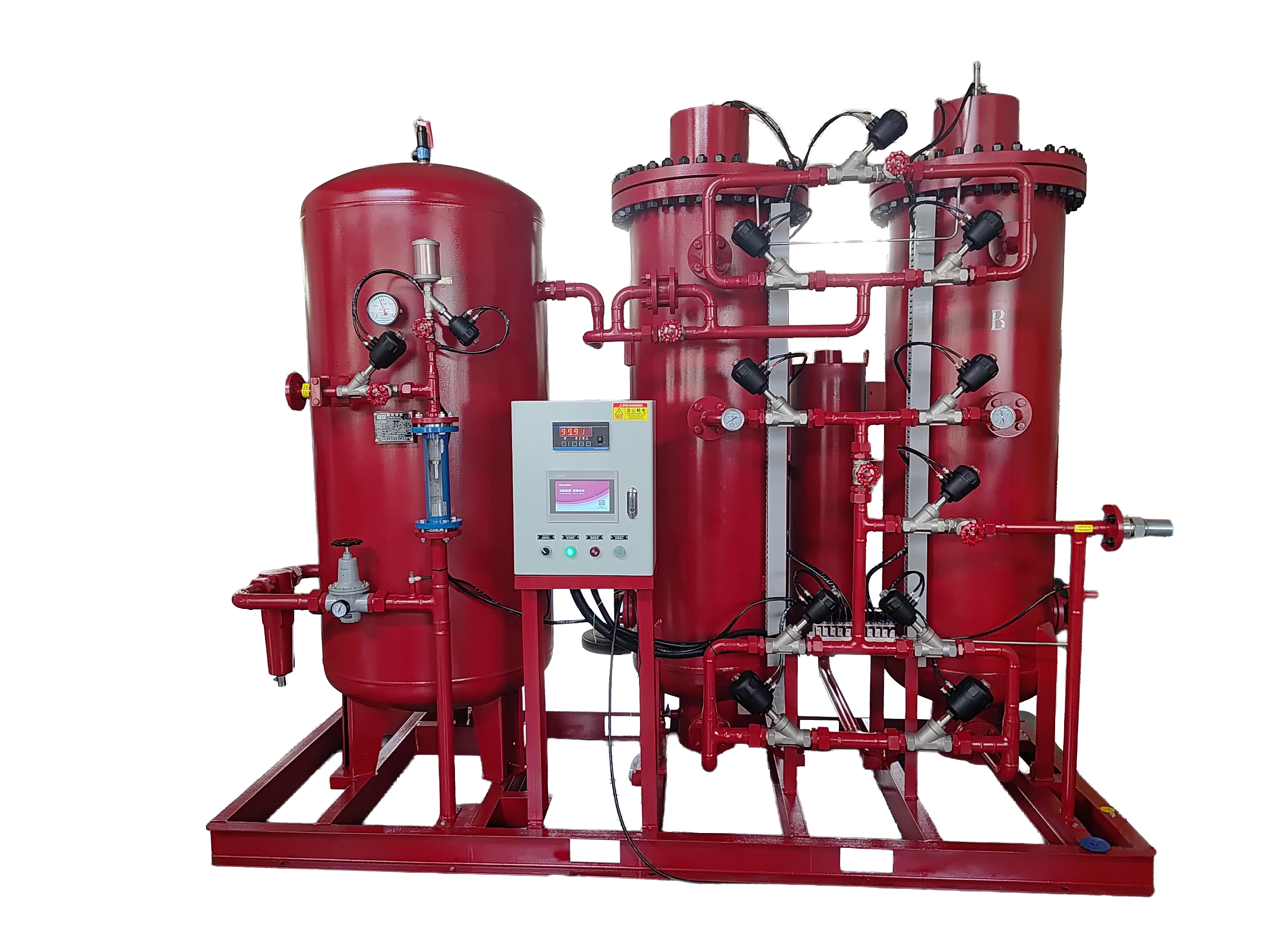
Mechanical coalescing filters, no matter how fine, cannot remove oil in vapour phase because vapour molecules are not droplets and will not merge onto fiber media. This is the specific job of an high efficiency oil remover built around an activated carbon bed. As oil-laden air passes through the carbon granules, vapour molecules adsorb onto the porous carbon surface through van der Waals attraction, leaving the air stream essentially oil-free.
Carbon bed performance is not constant over its service life. Adsorption capacity declines as the internal pore structure fills with oil, and the rate of decline depends on inlet oil loading, operating temperature, and relative humidity. A bed that receives properly coalesced air with residual oil already at 0.01 mg/m3 will last significantly longer than one asked to strip raw aerosol.
Feeding a carbon tower air that has already passed a mist eliminator, rather than raw compressor discharge, is one of the simplest ways to extend adsorption bed life and delay replacement intervals.
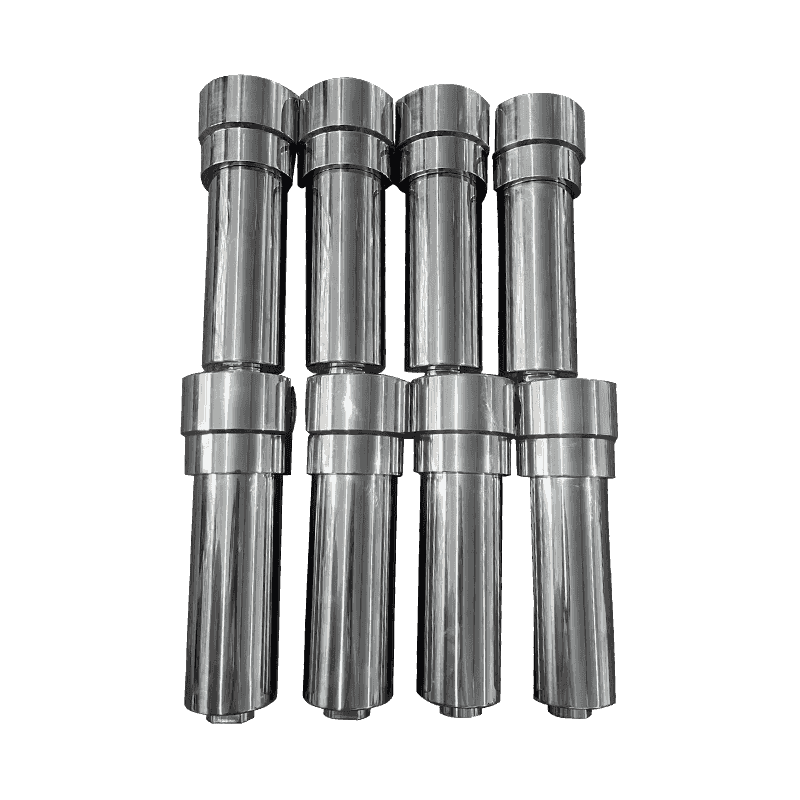
Filter housing material is frequently an afterthought, yet it determines corrosion resistance, cleanability, and suitability for hygienic environments. Carbon steel housings with internal coating are the standard choice for general industrial air, but a stainless steel compressed air filter becomes necessary wherever condensate chemistry is aggressive, ambient humidity is high, or the application falls under food, beverage, or pharmaceutical hygiene rules.
Stainless steel housings score highest on corrosion resistance and hygienic compliance because their passive oxide layer resists condensate acids and wipes clean without pitting. The tradeoff is upfront cost, which is why the material is typically specified for applications with strict cleaning validation requirements rather than applied across an entire plant by default.
ISO 8573-1 defines air purity classes for particulate, water, and oil content, with Class 1 requiring total oil content at or below 0.01 mg/m3. Comparing filtration technologies against the criteria that matter most for reaching that class clarifies why a layered approach outperforms any single stage.
The pattern is consistent across duty types: coalescing filters and mist eliminators dominate aerosol and particulate removal but contribute almost nothing to vapour phase contamination, while carbon towers dominate vapour removal but depend entirely on upstream stages to protect their service life. No single technology covers every axis, which is the practical argument for staged filtration rather than a single oversized component.
Undersizing any stage in the chain raises air velocity through the media, which increases differential pressure and pushes captured oil back into the air stream, a phenomenon known as re-entrainment. Correct sizing is based on actual flow rate at operating pressure and temperature, not the compressor nameplate rating alone.
| Parameter | Recommended Practice | Consequence If Ignored |
|---|---|---|
| Flow Sizing | Size to actual site flow, pressure, and temperature | Elevated pressure drop and oil re-entrainment |
| Differential Pressure | Replace coalescing elements at 0.5 to 0.7 bar drop | Rising energy cost per cubic meter delivered |
| Carbon Bed Life | Monitor inlet loading and replace on schedule, not only on odor | Vapour breakthrough with no visible warning |
| Condensate Drainage | Use automatic zero-loss drains on every stage | Liquid carryover overwhelming downstream media |
A common maintenance mistake is judging carbon tower saturation by smell alone. Oil vapour breakthrough is frequently odorless at the concentrations that matter for Class 1 compliance, which means scheduled replacement based on operating hours and inlet loading is more reliable than sensory inspection.
Oil aerosol refers to fine liquid droplets suspended in the air stream, which mechanical coalescing filters and mist eliminators can capture. Oil vapour is oil in gas phase, which requires adsorption media such as activated carbon because it cannot be filtered mechanically.
Generally not. Class 1 requires both aerosol removal down to sub-micron level and vapour phase adsorption, which typically means a coalescing filter, a mist eliminator, and an activated carbon tower working in sequence.
Replacement interval depends on inlet oil loading, temperature, and humidity, but scheduling based on operating hours and monitored inlet conditions is more reliable than waiting for a detectable odor, since vapour breakthrough is often odorless.
Stainless steel is generally justified where condensate is corrosive, ambient humidity is persistently high, or the application falls under hygienic or cleaning validation requirements common in food, beverage, and pharmaceutical processing.
Re-entrainment happens when air velocity through a filter element is too high for the media, usually because the component is undersized for actual flow conditions, which strips previously captured oil back into the air stream.
Related Products

ADD: No. 9, Lane 38, Caoli Road, Fengjing Town, Jinshan District, Shanghai, China
Tel: 0086-17321147609
Email: [email protected]
Copyright © Demargo (Shanghai) Energy Saving Technology Co., Ltd. Rights Reserved. Custom Gas Purifiers Factory