INQUIRE NOW
Content
When you start comparing options for a new compressed air system, the first fork in the road is usually the same: should the compressor itself use oil for lubrication or should it run dry? In some shops this question is settled by a single requirement, such as a food plant that cannot allow any oil in the air. In others, the decision is a cost calculation. There is no universal winner. The right choice depends on your air quality requirement, your maintenance capacity, and your total cost of ownership. And one thing is often overlooked: no matter which type you pick, the air still needs proper drying and filtration to be truly usable. This guide compares oil-free and oil-lubricated compressors in practical terms, so you can match the machine to your process and then design a downstream treatment package that actually works.
In an oil-lubricated compressor, injected oil enters the compression chamber to cool, seal and lubricate the rotating elements. This design is what makes oil-flooded compressors attractive: they are usually more affordable upfront, run quieter, last longer under heavy duty cycles, and are more efficient than dry-running units.
The trade-off is contamination risk. Oil carries over into the compressed air as aerosol or vapor. Without proper separation, that oil can coat pneumatic tools, spoil paint, damage instruments and burden downstream filters. Regular oil changes, air filter replacements and condensate management become part of routine maintenance.
For many industrial applications in manufacturing, construction and general utility air, an oil-lubricated compressor is a sound cost-performance choice. But the air leaving it is not clean enough for food processing, painting, electronics or pharmaceutical lines unless you add serious aftertreatment. When you plan for oil removal, start with a coalescing type filter or a dedicated oil remover. In high-temperature environments, better airend cooling and appropriate oil viscosity are critical to preventing sludge. In cold climates, the oil must remain fluid enough for startup.
These operational factors are exactly why an oil-lubricated system needs a well-thought-out oil management strategy.
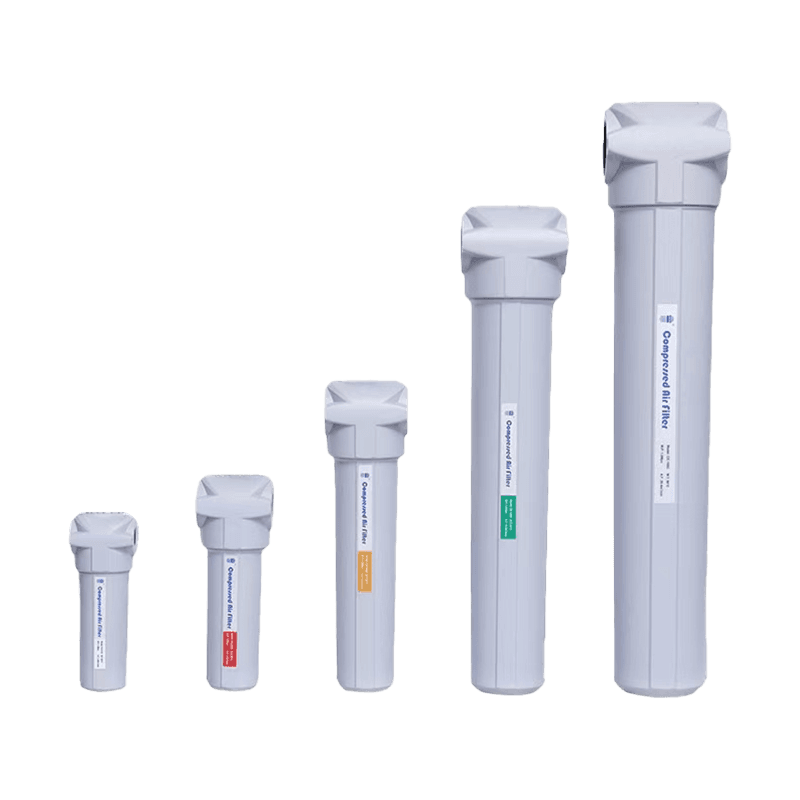
Demargo high-efficiency oil remover High Efficiency Oil Remover for Compressed Air SystemsThis three-stage purification unit uses ultrafine fibers to remove oil, water, and dust, achieving 0.01μm filtration and residual oil under 0.1 mg/m³, protecting downstream equipment.View Product →
For any lubricated compressor, a high-efficiency oil removal stage is the practical way to protect your downstream equipment and processes.
Oil-free compressors achieve compression without any lubricant in the air end. Some use dry-running screws with special coatings, while others use water as a lubricant and coolant. Water-lubricated compressors are increasingly popular in food and beverage plants because they eliminate the risk of oil carryover completely.
The main advantage is a cleaner output: no oil carryover to contaminate products, instruments or processes. This makes oil-free machines the standard in food and beverage, pharmaceutical, electronics, paint finishing and breathing air applications where ISO 8573-1 Class 1 or Class 0 air is required. However, you pay for that purity. Oil-free compressors generally cost more to buy, run hotter, are noisier and often need more frequent bearing and rotor service than their oil-lubricated counterparts.
The absence of oil also means higher internal operating temperatures, which can shorten the life of seals and bearings if the compressor is not properly ventilated. Even with an oil-free compressor, the air leaving the compression chamber is still saturated with water vapor and contains atmospheric dust. The machine removes oil, but it does not remove moisture.
A downstream dryer is always required to achieve the dew point your process demands.
Demargo energy-saving stainless steel plate-type cold dryer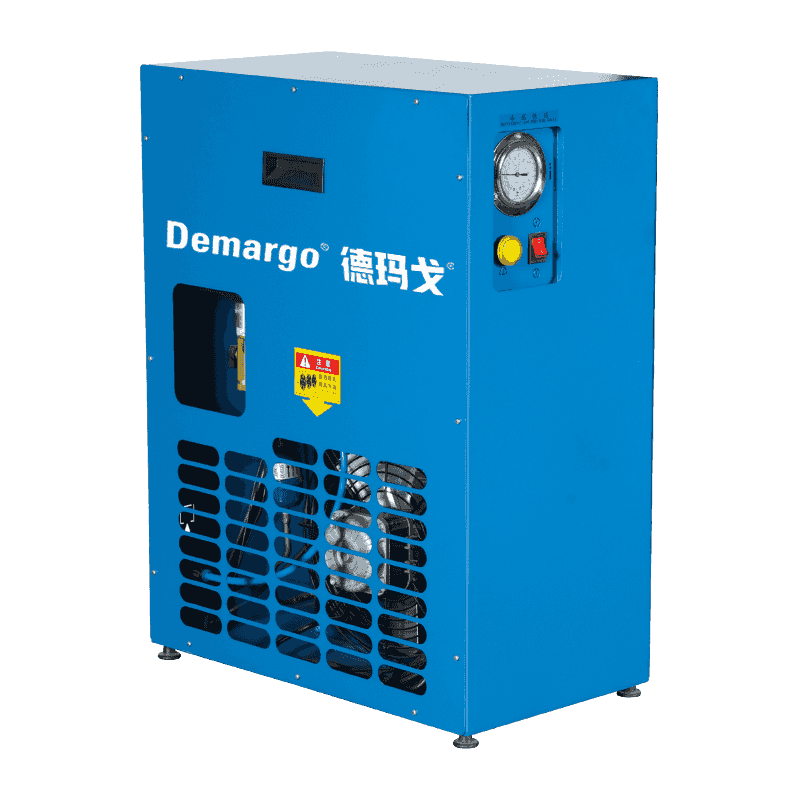 Stainless Steel Plate-Type Refrigerated Air DryerIts large-area stainless steel plate heat exchanger ensures efficient cooling and low pressure loss, while the intelligent drain system provides stable dew point with minimal maintenance and no air consumption.View Product →
For most oil-free installations, a stainless steel plate-type refrigerated dryer delivers reliable moisture control with low energy consumption.
| Feature | Oil-Lubricated | Oil-Free |
|---|---|---|
| Lubrication | Injected oil | Dry coating or water |
| Initial purchase cost | Lower | Higher |
| Operating cost | More energy-efficient | Less efficient, higher energy cost |
| Noise level | Quieter | Louder |
| Air quality | Oil carryover present | No oil in air |
| Maintenance | Oil changes, filters, condensate | More frequent bearing/rotor service |
| Typical lifespan | Longer | Shorter |
| Best for | General industrial, utility air | Food, pharma, electronics, critical air |
These general rules help you narrow the field, but they are not absolute. Application factors such as duty cycle, ambient temperature and required dew point can shift the balance. For example, a water-lubricated oil-free compressor can be very quiet and low-maintenance compared to a dry-running oil-free type, while a standard oil-flooded compressor is still the most energy-efficient option for large-scale utility air. The table above summarizes the most common expectations, not guarantees.
The compressor is only one stage of the compressed air system. After compression, the air may still have a high dew point, carry oil mist or contain particles. ISO 8573-1 divides compressed air quality into classes for particles, water and oil. For a typical factory with tools and general equipment, a pressure dew point of +3 to +10 degrees Celsius and Class 3 oil content may be enough. For spray painting, Class 1 oil and a lower dew point are usually required. For food and pharmaceutical lines, you may be looking at Class 0 oil, which means the compressor itself should be oil-free and the filtration should be certified.
The safest approach is to determine your lowest acceptable quality class before buying any equipment. Then choose the compressor based on that class and let the aftertreatment take care of the rest. When an oil-lubricated compressor is used, a high-efficiency oil remover plus a refrigerant dryer and final filters will usually bring the air to Class 1 or 2 standard. An oil-free machine may need only a dryer and a particulate filter, but the dryer is still the most important component for the water part of the quality equation.
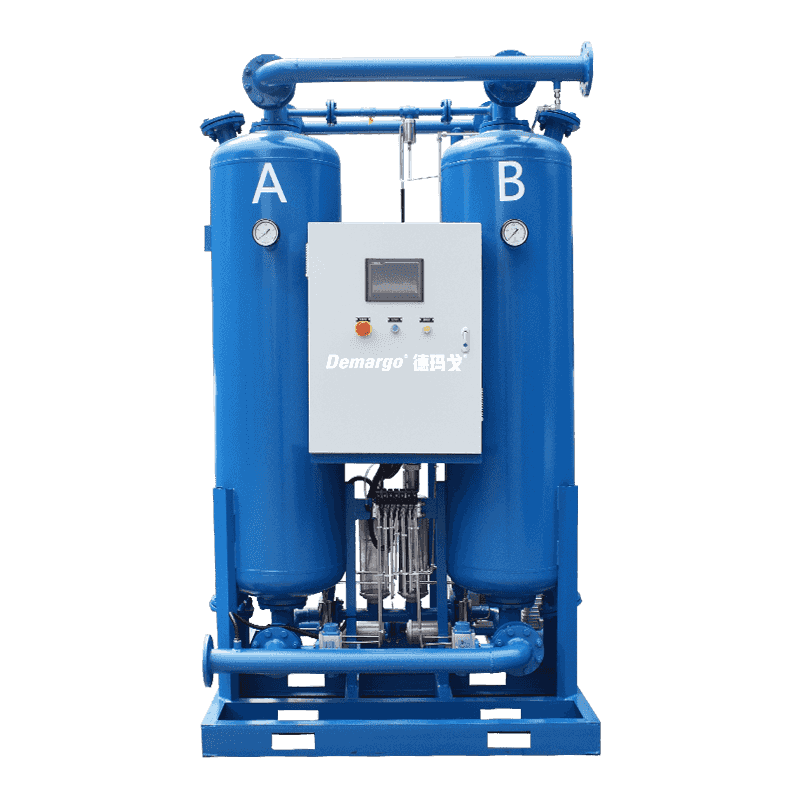
If your process demands a very low dew point, you will need a desiccant dryer or a combined refrigerated-desiccant system. The choice between these technologies comes down to energy cost, maintenance simplicity and target dew point. A practical, step-by-step approach is covered in our guide on how to choose the right compressed air dryer.
Use this short list as a filter before you commit to any compressor type:
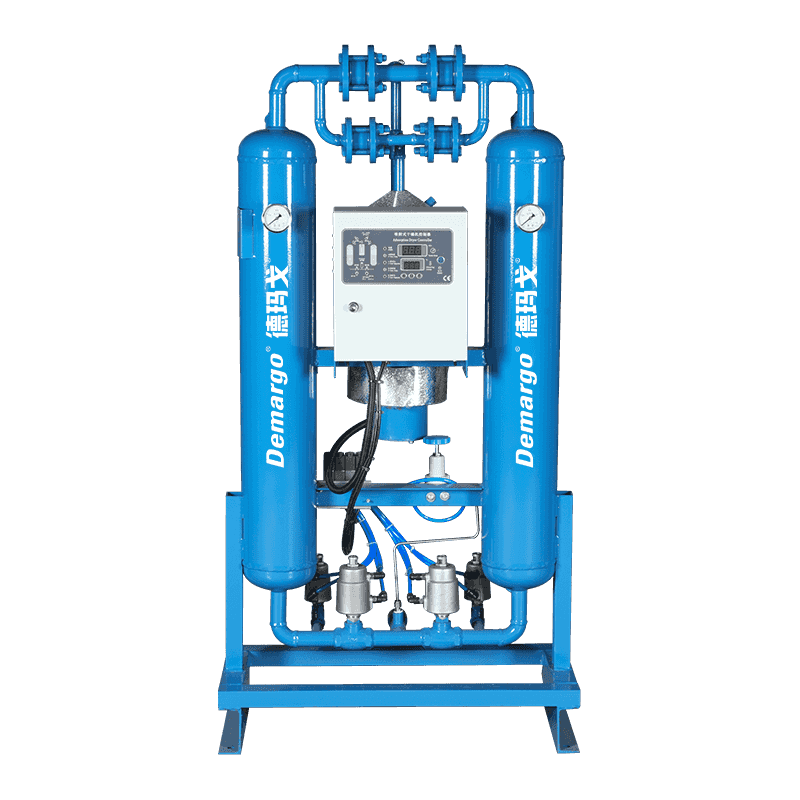
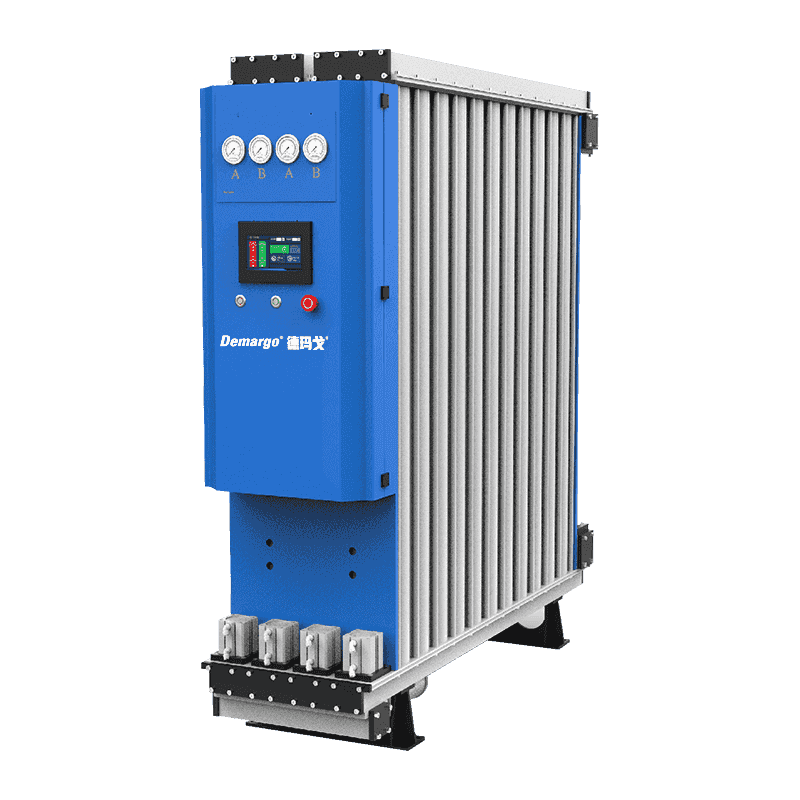
If your plant requires a very low dew point and a compact footprint, a module-type adsorption dryer may be the most cost-effective way to reach -40 degrees Celsius or lower.
Demargo heatless core dryer Modular Heatless Desiccant Dryer for Compact Dew Point ControlWith a dual-tower design and modular adsorption chambers, this dryer achieves -40°C dew point in a compact footprint, featuring low pressure drop and reliable automatic switching.View Product →
This type of dryer pairs easily with both compressor families, especially when space is tight.
No. Oil-free compressors are better when your process cannot tolerate any oil in the air. For general industrial use, an oil-lubricated compressor is often more economical and durable, provided you install the right filtration.
Yes, but only with a properly designed oil removal and filtration train that meets ISO 8573-1 Class 1 or Class 0 requirements. Many plants choose oil-free to reduce the complexity and risk.
Absolutely. An oil-free compressor does not remove water vapor. A refrigerated or desiccant dryer is needed to prevent condensation and protect your tools, instruments and processes.
Oil-lubricated machines require regular oil changes and filter replacements. Oil-free machines often need more frequent bearing or rotor service and have higher energy consumption, so lifetime maintenance cost can be similar or higher.
True oil-free means the air end uses no oil for lubrication or sealing. The resulting compressed air is free from oil carryover by design, which is why it is used in critical applications such as food, electronics and breathing air.
Condensation is a problem for every compressor type. It can corrode pipes, damage tools and cause process failures. That is why reliable condensate removal and drying are essential, regardless of whether your compressor is oil-lubricated or oil-free.
Choosing between oil-free and oil-lubricated air compressors comes down to your product quality, your staff, and your budget. But do not stop at the compressor. The drying and filtration stage is what turns raw air into truly useful compressed air. A reliable aftertreatment package from Demargo can help you get the most out of either compressor type, deliver the dew point and purity you need, and keep your production running smoothly.
Related Products

ADD: No. 9, Lane 38, Caoli Road, Fengjing Town, Jinshan District, Shanghai, China
Tel: 0086-17321147609
Email: [email protected]
Copyright © Demargo (Shanghai) Energy Saving Technology Co., Ltd. Rights Reserved. Privacy Custom Gas Purifiers Factory