INQUIRE NOW
Content
Moisture carried inside a compressed air line is one of the most common causes of unplanned downtime in manufacturing plants. Water droplets and vapor corrode pipework, wash away pneumatic tool lubrication, and freeze inside valves during cold weather operation. Selecting the correct drying technology, whether a refrigerated air dryer style unit or a desiccant based system, is not a cosmetic decision. It directly affects instrument accuracy, product quality in coating and packaging lines, and the service life of downstream components.
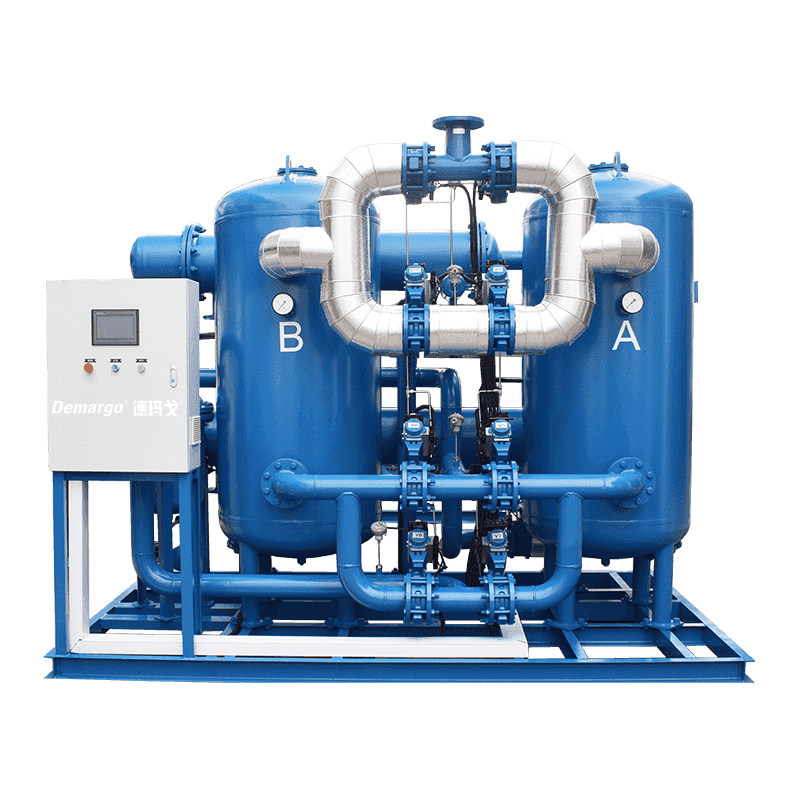
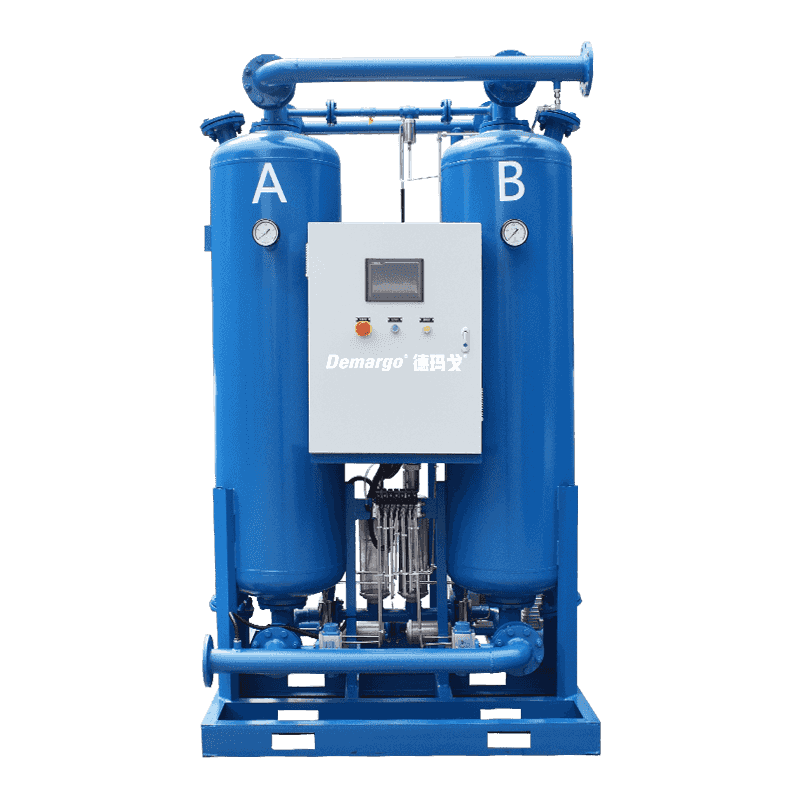
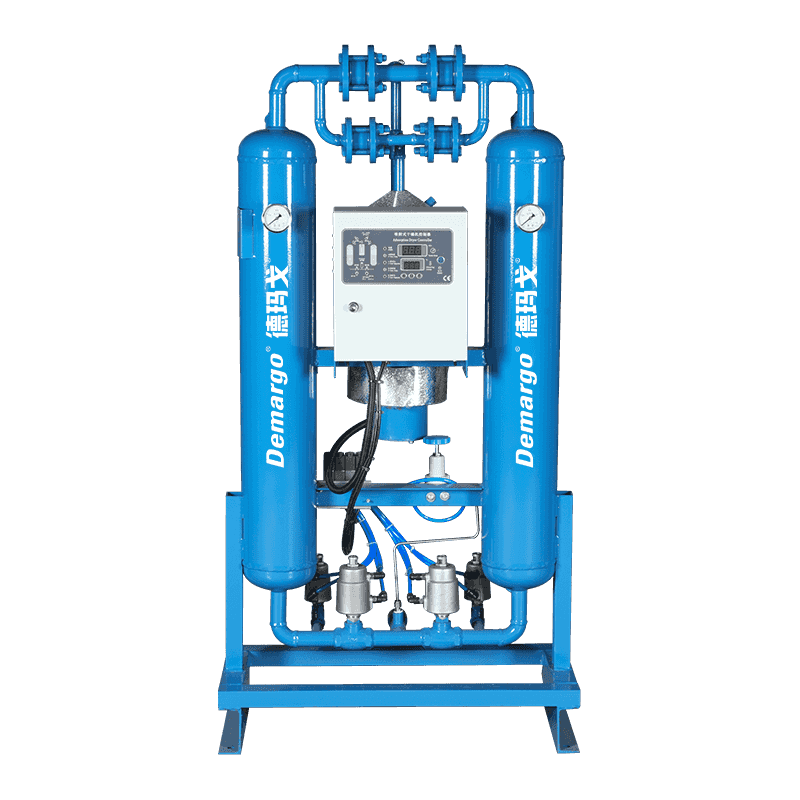
Two families of dryers dominate industrial applications today. The first uses refrigeration to chill air below its dew point so water condenses out mechanically. The second, known as an Adsorption Dryer (Double Tower Type), forces air through a desiccant bed that physically captures moisture at a molecular level. Understanding when each approach fits a given process is the foundation for any equipment selection or replacement project.
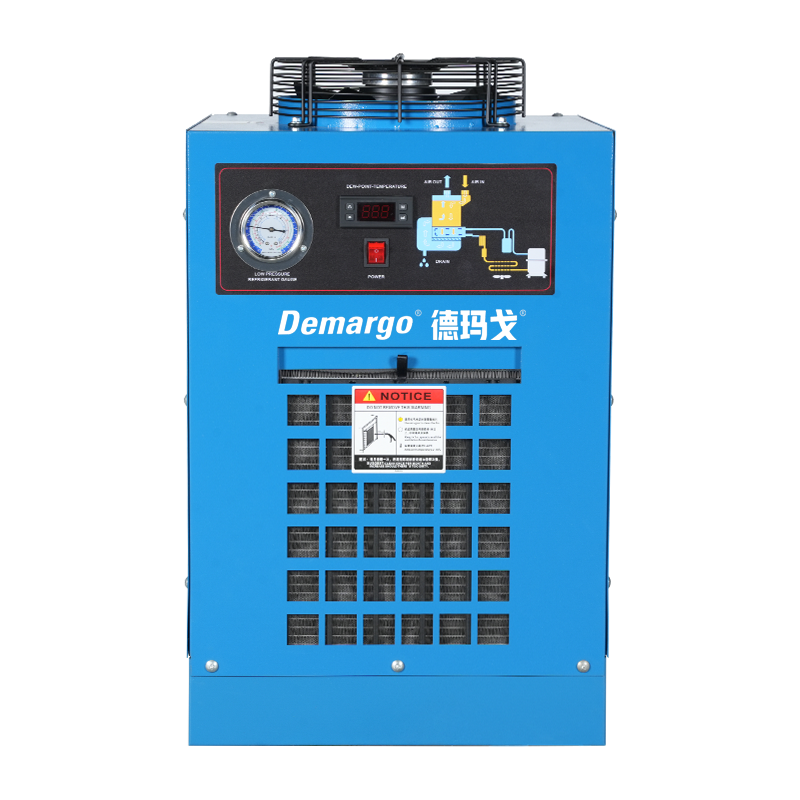
Refrigerated systems remain the default choice for general workshop and factory floor air because they balance capital cost, energy consumption, and dew point performance well for most compressed air uses. Adsorption systems step in when a process cannot tolerate residual moisture, such as instrument air, pharmaceutical packaging, or outdoor pneumatic lines exposed to freezing temperatures.
Units marketed under the aircel dryers family are built around a straightforward refrigeration cycle. Compressed air passes through an air to air heat exchanger, then an air to refrigerant heat exchanger where a closed refrigeration loop pulls the air temperature down to roughly two to four degrees Celsius. Condensed water is separated mechanically and discharged through a drain, while the outgoing air is reheated slightly by the incoming warm air stream to prevent external pipe sweating.
An aircel air dryer typically achieves a pressure dew point between two and ten degrees Celsius, which is adequate for the majority of indoor industrial environments. Because the refrigeration compressor cycles based on load, energy consumption scales with actual air demand rather than running at a fixed rate, which is one reason this category remains popular for continuous shift operations.
Sizing an aircel style unit requires matching three variables: actual compressed air flow in cubic feet per minute, inlet air temperature, and ambient temperature around the dryer cabinet. Undersizing any one of these leads to dew point creep during peak demand, which is one of the most frequently reported field issues in plants running near their rated capacity.
The nano dryer product category generally refers to compact, modular refrigerated or membrane based drying units designed for point of use applications rather than centralized plant air treatment. Rather than treating the entire compressed air header, a nano air dryers unit is installed close to a specific machine or workstation that has a stricter dryness requirement than the rest of the facility.
| Location | Reason for Point of Use Drying | Common Dryer Type |
|---|---|---|
| CNC machining center | Prevents rust on precision tooling | Compact refrigerated |
| Laser cutting head | Protects optics from condensation | Membrane or mini desiccant |
| Robotic paint arm | Avoids finish defects from moisture | Compact refrigerated |
| Analytical instrument panel | Requires very low dew point | Mini desiccant cartridge |
Because a nano compressed air dryer only conditions a fraction of total plant flow, its footprint and power draw are small compared to a central drying system. This makes it attractive as a supplemental solution rather than a replacement for main header drying, particularly in older facilities where the primary dryer was sized for a smaller plant and cannot economically be upgraded.
The chart below summarizes typical pressure dew point achieved across common configurations, based on aggregated field data rather than any single manufacturer specification sheet.
Refrigerated systems, whether central or point of use, cluster in a similar dew point band because they are limited by the practical freezing point of condensed water inside the heat exchanger. Adsorption technology reaches far lower dew points because it removes moisture chemically rather than by condensation, which explains why it is specified for instrument air and outdoor freeze prone lines.
Refrigerated dryers score higher on simplicity and lower upfront cost, while adsorption dryers score higher on dryness performance at the expense of energy consumption from the regeneration cycle and, in heatless designs, purge air loss.
Rather than choosing a dryer type based on habit or what a previous facility used, a short qualification process avoids costly oversizing or undersizing. The flow below outlines the decision sequence most reliability engineers follow when specifying new drying capacity or replacing an aging unit.
After the dew point requirement narrows the technology choice, the next step is confirming flow capacity against the compressor rating, checking ambient temperature at the installation point, and reviewing whether a single central unit or several distributed point of use units better matches the plant layout.
When a dryer reaches end of life or a plant is consolidating vendors, a straightforward capacity and dew point match is usually more reliable than trying to match a model number exactly. The table below outlines the parameters worth confirming before ordering a replacement unit.
| Parameter | Why It Matters |
|---|---|
| Rated flow (CFM or m3/min) | Undersized units cause dew point spikes during peak demand |
| Maximum working pressure | Affects internal component ratings and seal materials |
| Inlet air temperature | High inlet temperature reduces effective drying capacity |
| Ambient temperature range | Determines whether a standard or tropical rated unit is needed |
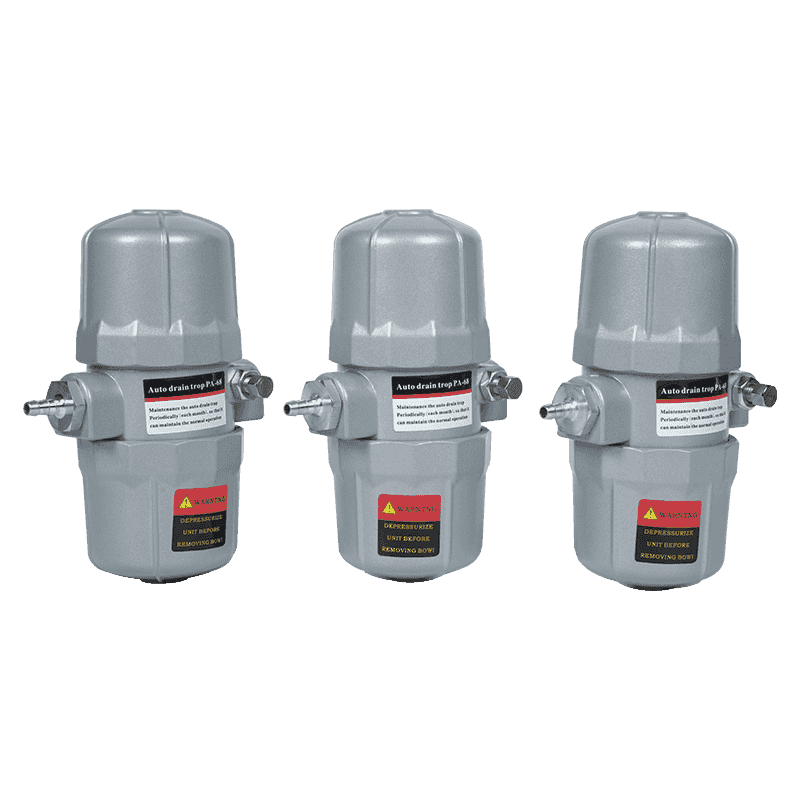
| Drain type | Electronic no loss drains reduce compressed air waste versus timed drains |
For facilities pairing air treatment equipment with adjacent utility hardware, some plants also standardize peripheral components such as a serrated radiator for auxiliary cooling loops or structural framing built from a 4040 Flow aluminum wire profile when building service platforms around new dryer installations. These choices are typically driven by existing facility standards rather than the dryer specification itself.
Dew point drift rarely appears without warning. Most cases develop gradually over weeks as a fouled heat exchanger, failing drain, or degraded desiccant bed loses efficiency. Tracking outlet dew point over time, even with a basic handheld meter taken weekly, catches this trend long before it becomes a quality problem downstream.
A structured maintenance calendar prevents the majority of dryer related downtime. The chart below reflects a general purpose schedule that fits most industrial refrigerated and adsorption units, though manufacturer documentation should always take precedence for specific torque values and part numbers.
Condensate drains and pre filters need the most frequent attention because they handle contaminants continuously, while coil cleaning, refrigerant checks, and desiccant bed inspection can follow longer intervals if upstream filtration is functioning correctly. Facilities that also maintain structural fixtures, such as an Aluminum square tube mounting frame around a dryer skid, should include a visual inspection of that hardware during scheduled service visits as well.
Most pneumatic tool and general assembly applications operate reliably with a dew point between two and ten degrees Celsius, which a standard refrigerated dryer provides without added desiccant cost.
Desiccant systems are needed whenever compressed air lines are exposed to freezing temperatures, or when the application involves instrumentation, pharmaceutical packaging, or any process where residual moisture cannot be tolerated at any level.
A point of use unit supplements a central dryer for specific sensitive equipment, but it is not a substitute for adequate main header drying capacity across the whole facility.
Service life varies with contamination load and cycle frequency, but desiccant condition should be checked during scheduled maintenance and replaced once regeneration no longer restores the rated dew point.
A stuck or failed condensate drain is the most frequent cause, since it allows liquid water to bypass separation and travel downstream even though the refrigeration or desiccant stage is otherwise functioning normally.
Related Products

ADD: No. 9, Lane 38, Caoli Road, Fengjing Town, Jinshan District, Shanghai, China
Tel: 0086-17321147609
Email: [email protected]
Copyright © Demargo (Shanghai) Energy Saving Technology Co., Ltd. Rights Reserved. Custom Gas Purifiers Factory