INQUIRE NOW
Content
In most medical and pharmaceutical facilities, compressed air is treated as a utility rather than a process input. Yet the quality of that air directly influences how long instruments, valves, actuators, and packaging lines remain in service. Moisture carried in an air stream corrodes internal components. Oil aerosols contaminate sterile processes. Solid particulate abrades seals and blocks micro-orifices in pneumatic controls. None of these problems appear overnight, which is exactly why they are so costly: by the time a technician notices reduced actuator response or pitting inside a valve body, the damage has already compounded over months of operation.
This article looks at the mechanisms that shorten equipment life in regulated environments, the standards that define acceptable medical compressed air quality, and the filtration and drying strategies that keep facilities compliant and their hardware intact.
Compressed air used in pharmaceutical manufacturing or clinical settings is rarely inert. It touches product surfaces, powers instruments in sterile suites, and in some cases contacts patients directly. Regulatory frameworks such as ISO 8573-1 classify compressed air by three contaminant categories: solid particulate, water content, and total oil. Facilities operating under pharmaceutical manufacturing guidelines typically target the stricter classification bands, since even trace contamination can compromise batch integrity or instrument calibration.
| Contaminant Class | Particulate Limit | Pressure Dew Point | Oil Content |
|---|---|---|---|
| Class 1 | Less than 20,000 particles per cubic meter | Below -70 C | 0.01 mg per cubic meter |
| Class 2 | Less than 400,000 particles per cubic meter | Below -40 C | 0.1 mg per cubic meter |
| Class 3 | Less than 10,000,000 particles per cubic meter | Below -20 C | 1 mg per cubic meter |
Facilities supporting sterile compressed air applications generally aim for Class 1 or Class 2 conditions. Meeting these bands is not achieved by a single component; it requires a coordinated train of filtration and drying equipment sized correctly for the compressor output and downstream demand.
It helps to separate the failure modes by contaminant type, since each one attacks equipment differently.
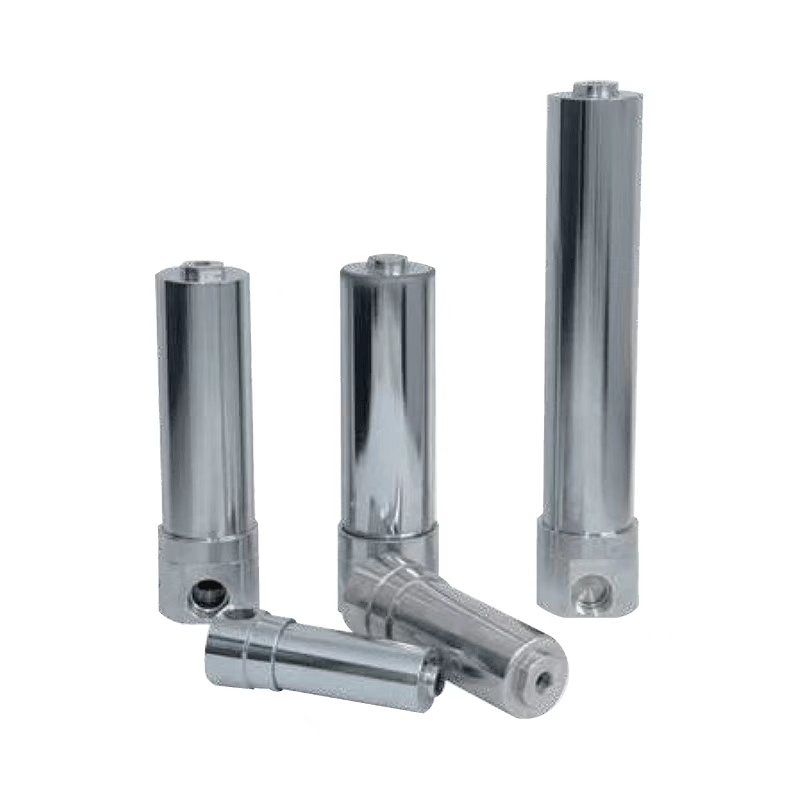
Filtration removes solid particulate, bulk moisture, and oil aerosols before they reach sensitive equipment. In pharmaceutical and clinical settings, filter housings are commonly specified in stainless steel rather than aluminum or coated carbon steel, since stainless resists the corrosive effects of humid air and is compatible with the cleaning and validation protocols these facilities already run for other process equipment.
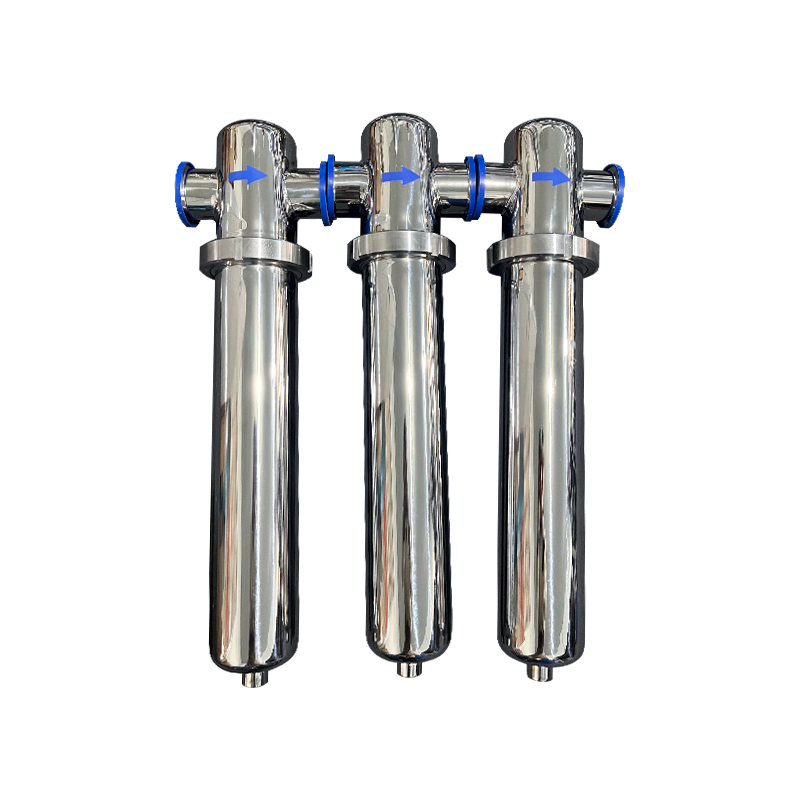
A stainless steel compressed air filter is typically installed in a staged arrangement: a coarse pre-filter to capture bulk particulate and bulk liquid, followed by a coalescing stage to remove fine oil aerosols and sub-micron droplets. This staged approach extends the service interval of the finer element, since it is not immediately loaded with larger debris.
| Stage | Function | Removal Target |
|---|---|---|
| Pre-filter | Bulk separation | Particulate down to 5 microns, bulk water |
| Coalescing filter | Fine aerosol removal | Oil aerosols and particulate down to 0.01 micron |
| Activated carbon stage | Odor and vapor removal | Residual oil vapor, hydrocarbon odor |
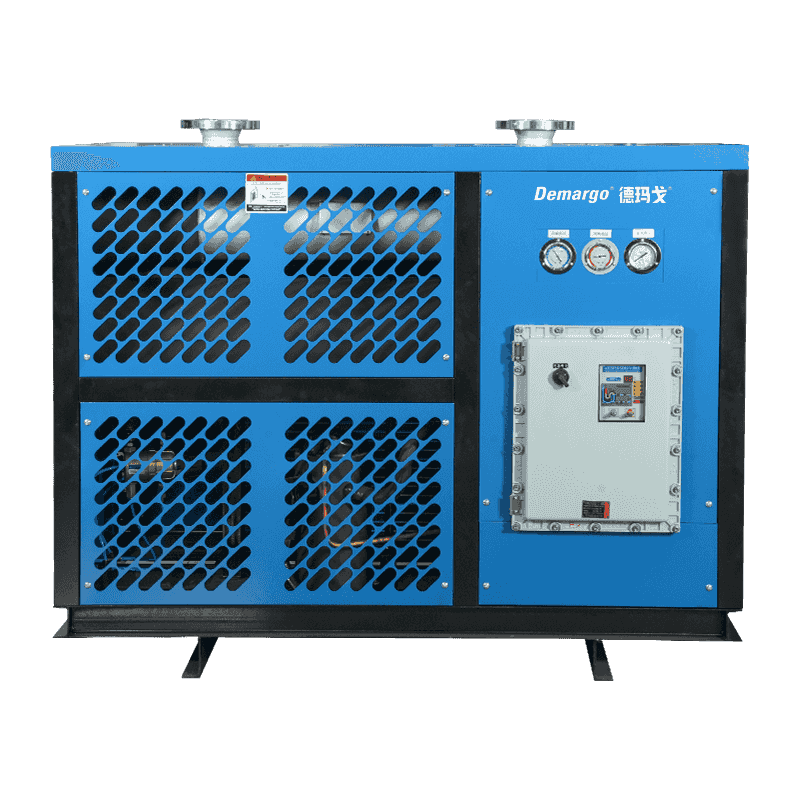
Filtration alone does not address moisture that remains in vapor form. A refrigerated dryer can bring the pressure dew point down to around 3 to 10 C, which is adequate for many industrial applications but often insufficient for pharmaceutical processes or facilities located in humid climates where seasonal swings push moisture load higher. This is where a combined drying approach becomes relevant.
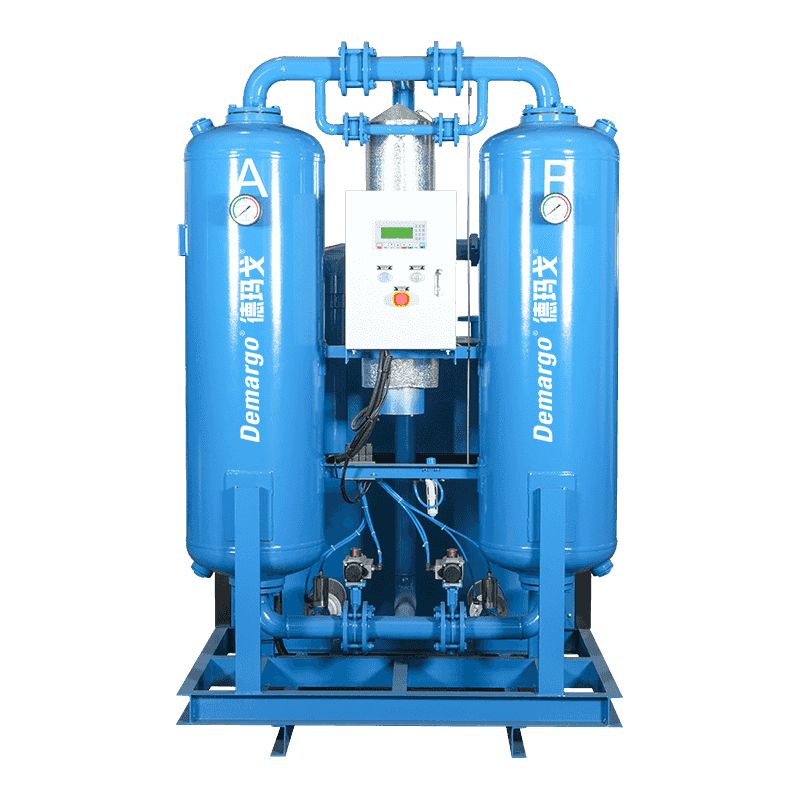
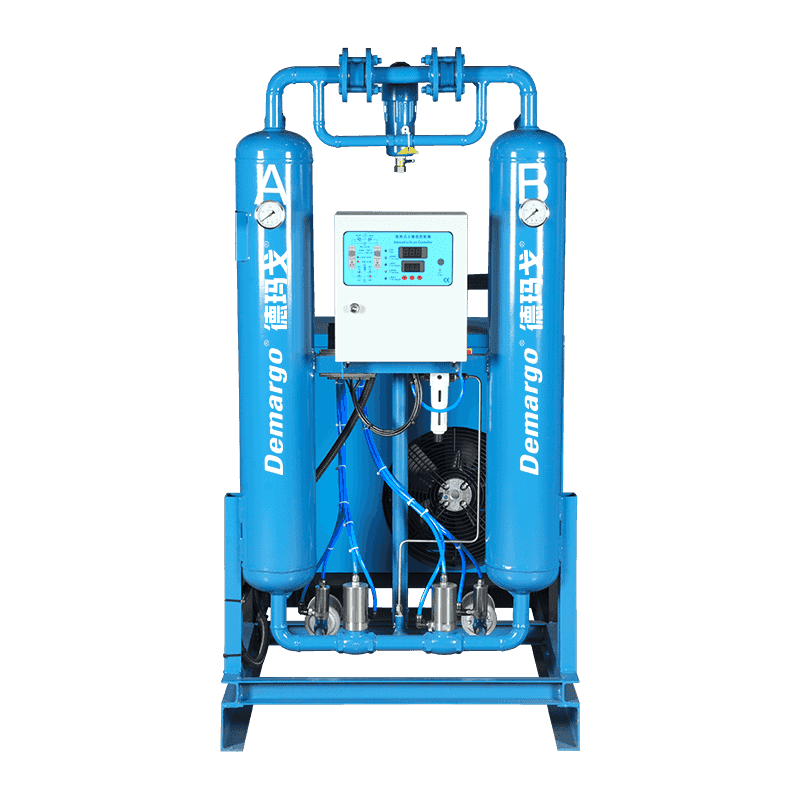
A combined low dew point compressed air dryer pairs a refrigeration stage with an adsorption stage, allowing the system to reach dew points as low as -40 C or lower without the full energy penalty of a standalone desiccant dryer. The refrigeration stage removes the bulk moisture load efficiently, and the adsorption stage handles the residual trace moisture needed to hit stringent classification targets consistently, including during humid seasons when a refrigerated-only system would struggle to keep pace.
Practical note: Facilities that rely solely on refrigerated drying often see intermittent dew point excursions during summer months, precisely when cooling load on the compressor room is already highest. A combined system smooths out this seasonal variability rather than requiring oversized refrigeration capacity to compensate.
Not every point of use requires the same filtration grade. Matching filter selection to the actual risk at each connection point avoids both under-protection and unnecessary pressure drop from over-filtering low-risk lines.
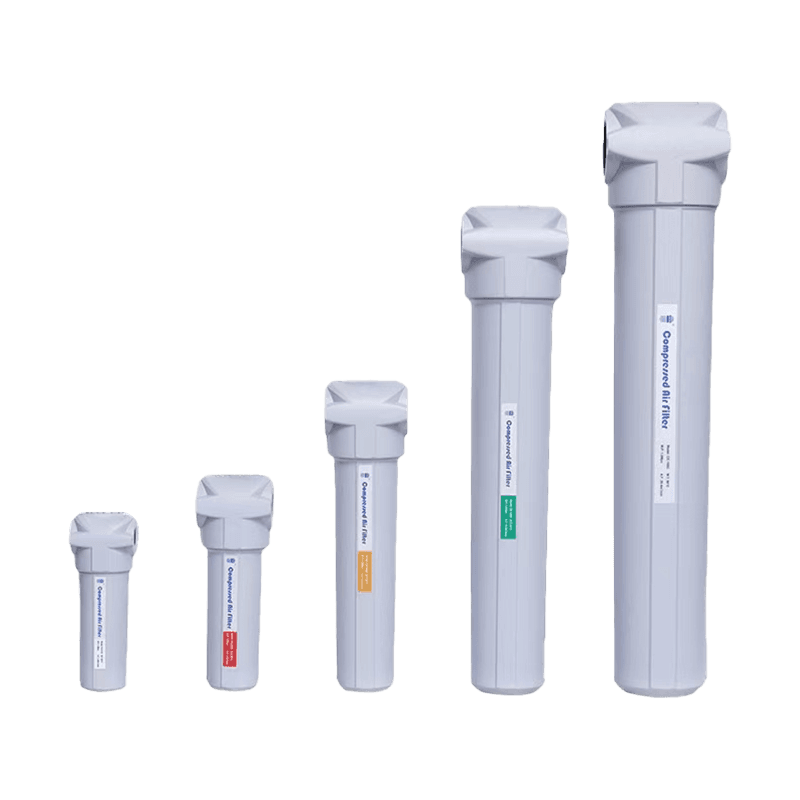
A general-purpose compressed air filter line typically covers three tiers of protection, summarized below.
Used for pneumatic tools and general plant air. Coarse filtration is usually sufficient.
Feeds control valves and actuators. Requires coalescing filtration to protect small orifices.
Contacts product or patient. Requires coalescing plus carbon stages and low dew point drying.
Even well-specified equipment underperforms without a maintenance rhythm. The table below outlines a practical schedule many regulated facilities follow, adjusted for local humidity and duty cycle.
| Task | Typical Interval | Why It Matters |
|---|---|---|
| Pre-filter element replacement | Every 3 to 6 months | Prevents bulk contaminant carryover into finer stages |
| Coalescing element replacement | Every 6 to 12 months | Maintains oil aerosol removal efficiency |
| Dryer dew point verification | Monthly | Confirms adsorption or refrigeration stage is performing to spec |
| Condensate drain inspection | Weekly | Prevents standing moisture from re-entering the air stream |
| Pipework corrosion check | Annually | Identifies scale buildup before it dislodges into instrument lines |
A mid-sized sterile packaging line once traced a recurring valve failure not to the valve itself, but to a saturated coalescing filter that had gone three service cycles past its differential pressure limit. Once the filtration schedule was corrected, the same valve type ran without failure for the following two years.
The most durable results come from treating filtration and drying as a single coordinated system rather than isolated purchases. A typical arrangement for a pharmaceutical suite places a pre-filter directly after the receiver tank, a coalescing filter downstream of that, a combined drying unit next, and a final polishing filter immediately before any process-contact point of use. This sequencing protects the drying media from oil fouling while ensuring the final air delivered to sensitive equipment has passed through every necessary stage.
Monthly verification is a reasonable baseline, with continuous monitoring recommended for process-contact air where excursions could affect product quality.
Generally not on its own. Refrigerated dryers typically reach dew points suitable for Class 3 applications, while Class 1 requires an adsorption stage to remove residual trace moisture.
Stainless steel resists internal corrosion from humid air and is compatible with cleaning and validation procedures already used elsewhere in pharmaceutical environments.
Inconsistent actuator response or intermittent valve sticking is often the first visible symptom, appearing well before any obvious leak or pressure loss.
Yes. Excessive filtration on low-risk utility air lines adds unnecessary pressure drop and increases energy consumption without a corresponding quality benefit.

ADD: No. 9, Lane 38, Caoli Road, Fengjing Town, Jinshan District, Shanghai, China
Tel: 0086-17321147609
Email: [email protected]
Copyright © Demargo (Shanghai) Energy Saving Technology Co., Ltd. Rights Reserved. Custom Gas Purifiers Factory