What Is an Air Dryer and Why Compressed Air Drying Matters
Compressed air leaving a compressor is hot, saturated with moisture, and laden with contaminants. Without proper drying, this moisture leads to pipe corrosion, pneumatic component failure, product spoilage, and ice formation in cold environments. Compressed air drying is the process of removing water vapor to achieve a specific pressure dew point (PDP). Two dominant technologies serve this purpose: refrigerated and desiccant dryers. Understanding their operating principles, performance boundaries, and cost profiles is the foundation for a wise selection.
The global industrial sector wastes nearly 15–20% of compressed air energy due to inadequate drying or oversized dryers. By matching the dryer type to your actual dew point requirement, you can reduce energy consumption by up to 30% while maintaining reliable production quality. This article provides a technical, brand-neutral comparison to help you answer: desiccant air dryer vs refrigerated — which one serves your application best?
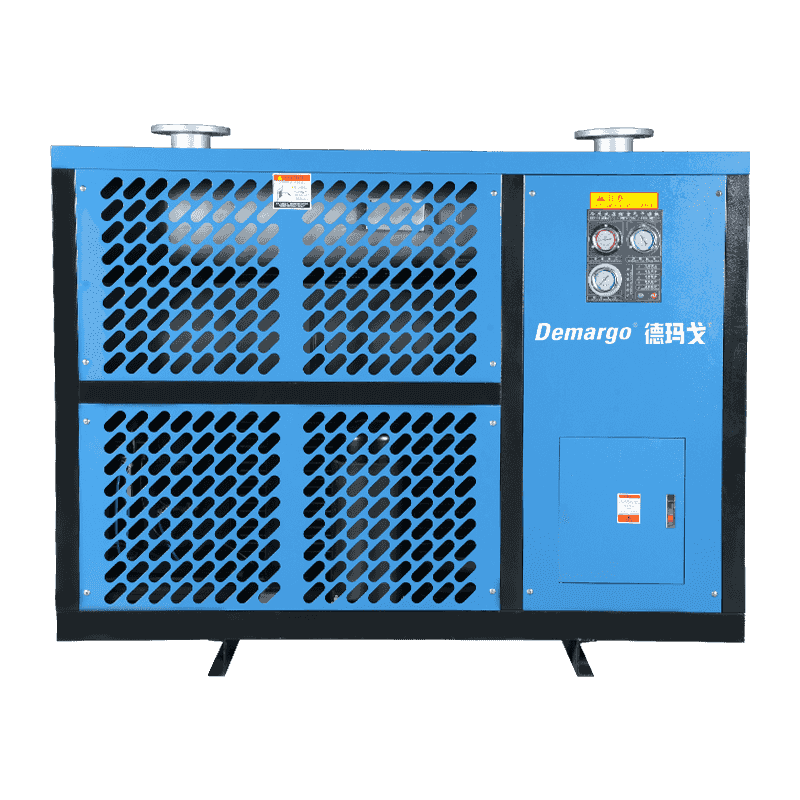
The Main Types of Compressed Air Dryers: Refrigerated and Desiccant
Before diving into selection criteria, it is essential to categorize the types of compressed air dryers available. While membrane and deliquescent dryers exist for niche applications, over 85% of industrial installations use either refrigerated or desiccant technology. The choice hinges on how each removes moisture and the resulting dew point performance.
Refrigerated Air Dryers – Principle and Performance
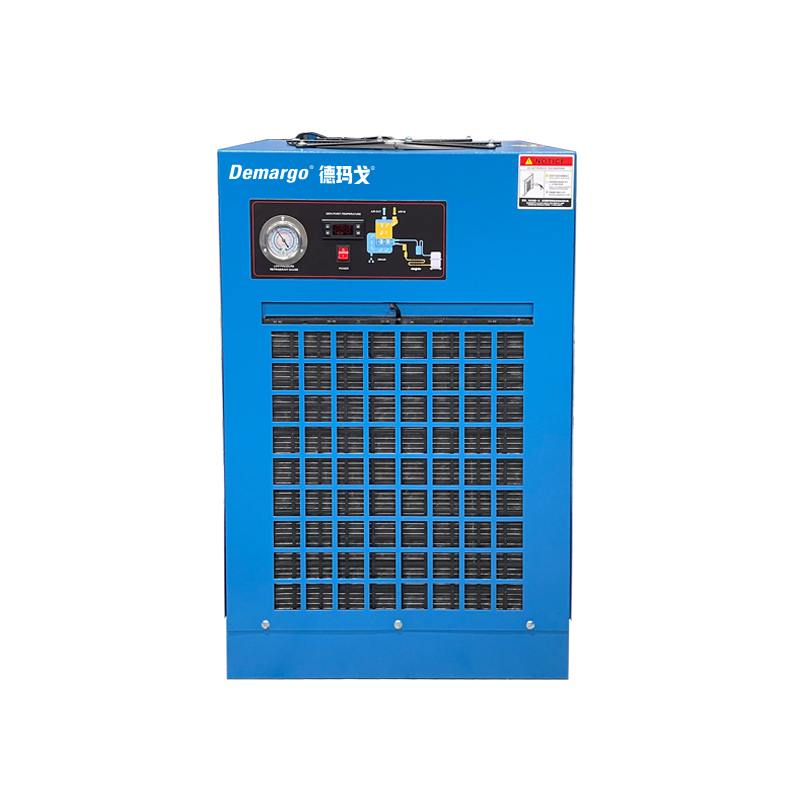
A compressed air refrigerated dryer cools compressed air to approximately +3°C to +10°C, causing water vapor to condense into liquid. A separator and drain remove the condensate. These dryers deliver a pressure dew point between +3°C and +10°C, preventing condensation in most ambient-temperature pipelines. They are best suited for general shop air, blow-off operations, and applications without sub-zero exposure.
Desiccant Air Dryers – Adsorption Technology
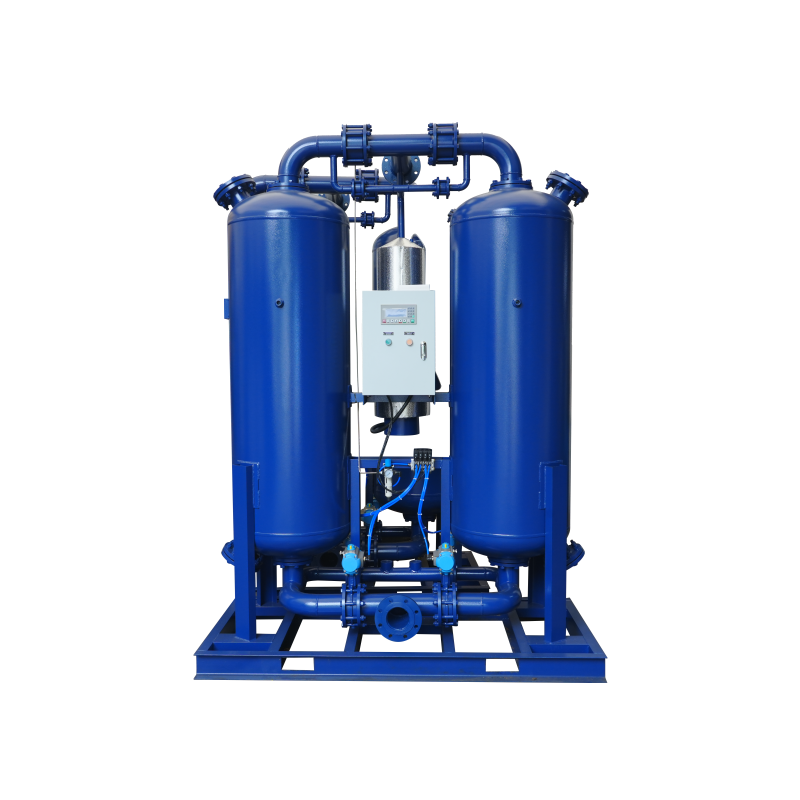
Desiccant dryers use hygroscopic materials (silica gel, activated alumina, or molecular sieves) to adsorb water vapor directly from the air stream. They achieve pressure dew points as low as -40°C to -70°C, essential for processes like pharmaceutical manufacturing, instrument air in cold climates, food packaging, and painting. A typical twin-tower design regenerates one tower while the other dries, using either heatless purge air (15–20% of rated flow) or heated blower regeneration.
- Heatless desiccant dryers: Purge air consumption 15–18% → high energy cost but simple design.
- Heated desiccant dryers: Use electric heaters plus reduced purge (5–7%) → better energy efficiency at medium flows.
- Blower purge dryers: Ambient air blower + heater → nearly zero compressed air loss, best for large systems.
Dew Point Requirement: The Decisive Selection Factor
The single most important technical parameter is the required pressure dew point. Every application has a maximum allowable moisture level, defined by ISO 8573-1 air quality classes. Selecting a dryer that delivers a PDP lower than necessary wastes energy; selecting one that cannot reach the required PDP causes production failures.
| Application / Industry | Required PDP (°C) | Recommended Dryer Type |
|---|---|---|
| General shop air, blow-off, pneumatic tools | +3°C to +10°C | Refrigerated |
| Painting, powder coating, packaging | -20°C to -40°C | Desiccant (heatless or heated) |
| Pharma, food & beverage, breathing air | -40°C | Desiccant (heated / blower purge) |
| Instrument air in cold climates (outdoor pipes) | -40°C to -70°C | Desiccant with low purge |
| Electronics manufacturing, clean rooms | -40°C | Desiccant + filtration |
It is a common misconception that a desiccant dryer always improves air quality. If your facility only requires a +5°C PDP (ISO class 4 or 5), installing a desiccant dryer increases energy spend by 200–300% without any benefit. Conversely, if your process requires -40°C PDP (ISO class 1 or 2), a refrigerated dryer cannot physically reach that level — its cooling circuit freezes below 0°C. Dew point requirement must be matched with technology capability.
Energy Efficiency and Operating Costs: Refrigerated vs Desiccant
Energy consumption often dominates the lifecycle cost of an industrial air dryer. Over a 10-year period, electricity for drying can exceed the initial purchase price by 3 to 5 times. Therefore, energy-efficient drying is a critical part of the selection process.
Refrigerated Dryer Energy Profile
Modern cycling refrigerated dryers adjust refrigerant compressor speed to match actual load, reducing energy use by 40–60% compared to fixed-speed units. Typical specific power ranges from 0.2 to 0.4 kW per m³/min of compressed air. They have no purge loss, making them highly efficient for moderate dew point requirements.
Desiccant Dryer Energy Profile
Energy consumption for desiccant dryers is dominated by purge air loss and, in heated types, electric or steam regeneration. A standard heatless desiccant dryer consumes 15–18% of the rated air flow as purge — that air is fully compressed and then vented. For a 5 m³/min system, purge loss represents roughly 7–9 kW of equivalent compressor power. Heated desiccant dryers reduce purge to 5–7% but add electrical heater load (2–5 kW). Blower purge models nearly eliminate compressed air loss but have higher capital cost.
- Lowest operating cost (PDP +3°C): Refrigerated dryer — no purge, low electrical draw.
- Moderate cost (PDP -20°C to -40°C): Heated desiccant dryer or blower purge for >10 m³/min.
- Highest cost (PDP -40°C, small flows): Heatless desiccant dryer — simple but purge intensive.
Real data insight: A manufacturing plant with 12 m³/min average flow switching from a heatless desiccant dryer (PDP -40°C) to a cycling refrigerated dryer (PDP +5°C) reduced annual drying energy cost from $9,800 to $2,200 — a 78% saving — because the process never required -40°C. Matching dew point to reality is the biggest energy lever.
How to Select a Compressed Air Dryer: A Step-by-Step Method
Following a structured process ensures you pick the right technology without over- or under-specifying. Use these six steps as your how to select a compressed air dryer checklist.
- Define the required pressure dew point (PDP) – Consult equipment manuals or ISO 8573-1 class. If unknown, measure existing moisture issues.
- Determine minimum, average, and peak flow rates – Size the dryer for average flow with correction factors for ambient temperature and inlet conditions.
- Assess ambient temperature range – Refrigerated dryers lose capacity above +45°C; desiccant dryers require pre-cooling if inlet air is hot.
- Calculate total lifecycle cost – Include capital, energy, maintenance, and for desiccant: purge air cost or regeneration heat.
- Consider air quality class continuity – If downstream processes change (e.g., adding a painting line), future-proof with a dryer that can be upgraded or dual-technology units.
- Evaluate control strategy – Dew point dependent switching (DDS) for desiccant dryers saves purge during low load; cycling refrigerated dryers save energy at partial load.
Air Quality Classes and Industrial Standards (ISO 8573-1)
The ISO 8573-1 standard defines three main contaminants: solid particles, water (pressure dew point), and oil. For water, classes 1 through 6 correspond to specific PDP ranges. Understanding air quality classes helps you translate technical requirements into a dryer specification.
| ISO Class | Pressure Dew Point (°C) | Typical Dryer Technology | Example Application |
|---|---|---|---|
| Class 1 | ≤ -70°C | Desiccant (blower purge + molecular sieve) | High-purity electronics, offshore instrument air |
| Class 2 | ≤ -40°C | Desiccant (heated or heatless) | Pharmaceutical, food contact, painting |
| Class 3 | ≤ -20°C | Desiccant (energy-efficient cycle) | Outdoor pipelines (cold regions) |
| Class 4 | ≤ +3°C | Refrigerated (cycling) | General manufacturing, pneumatic controls |
| Class 5 | ≤ +7°C | Refrigerated (standard) | Workshop air, blow guns |
| Class 6 | ≤ +10°C | Refrigerated (basic) | Non-critical cooling, dust blowing |
Selecting a dryer that meets the required ISO class is mandatory for regulated industries like food and pharmaceutical. However, for general industry, over-specifying to class 2 when class 4 is sufficient imposes unnecessary energy penalties. Always verify your actual class requirement before purchasing.
Industrial Air Dryer Comparison: Side-by-Side Technical Summary
For quick reference, the table below consolidates the critical differences between refrigerated and desiccant technologies. Use this industrial air dryer comparison when discussing options with engineering teams or reviewing proposals.
| Parameter | Refrigerated Air Dryer | Desiccant Air Dryer |
|---|---|---|
| Pressure dew point range | +3°C to +10°C | -70°C to -20°C |
| ISO 8573-1 water class | Class 4 to 6 | Class 1 to 3 |
| Typical energy consumption (per m³/min) | 0.2 – 0.4 kW (cycling type) | Heatless: 0.8 – 1.5 kW equivalent; Heated: 0.5 – 0.9 kW |
| Purge air loss | None | 5% to 20% depending on regeneration type |
| Maintenance frequency | Annual (filter, refrigerant check) | Desiccant replacement every 1-3 years; valve service |
| Suitable ambient temperature | +2°C to +50°C (with low-temp options) | -20°C to +45°C (inlet air must be pre-treated) |
| Upfront capital cost (relative) | Low to medium | Medium (heatless) to high (blower purge) |
Frequently Asked Questions – Desiccant Air Dryer vs Refrigerated
Q1: Can I replace a desiccant air dryer with a refrigerated dryer to save energy?
Only if your process allows a pressure dew point higher than +3°C. If your application requires -40°C PDP (e.g., pharmaceutical or outdoor instrument lines), a refrigerated dryer cannot meet the specification. Always compare the required dew point before switching.
Q2: What is the typical lifespan of desiccant material in a compressed air dryer?
With proper pre-filtration (oil and particulate removal), activated alumina or silica gel lasts 8,000 to 12,000 operating hours (roughly 1 to 3 years). Oil contamination drastically shortens life due to pore blockage.
Q3: How does ambient temperature affect the selection of compressed air dryer types?
High ambient temperatures (above +45°C) reduce refrigerated dryer capacity, requiring oversizing or a high-inlet model. Desiccant dryers work well at high ambient but need an aftercooler to lower inlet air temperature below +40°C to avoid damaging the desiccant.
Q4: Are there hybrid solutions combining refrigerated and desiccant drying?
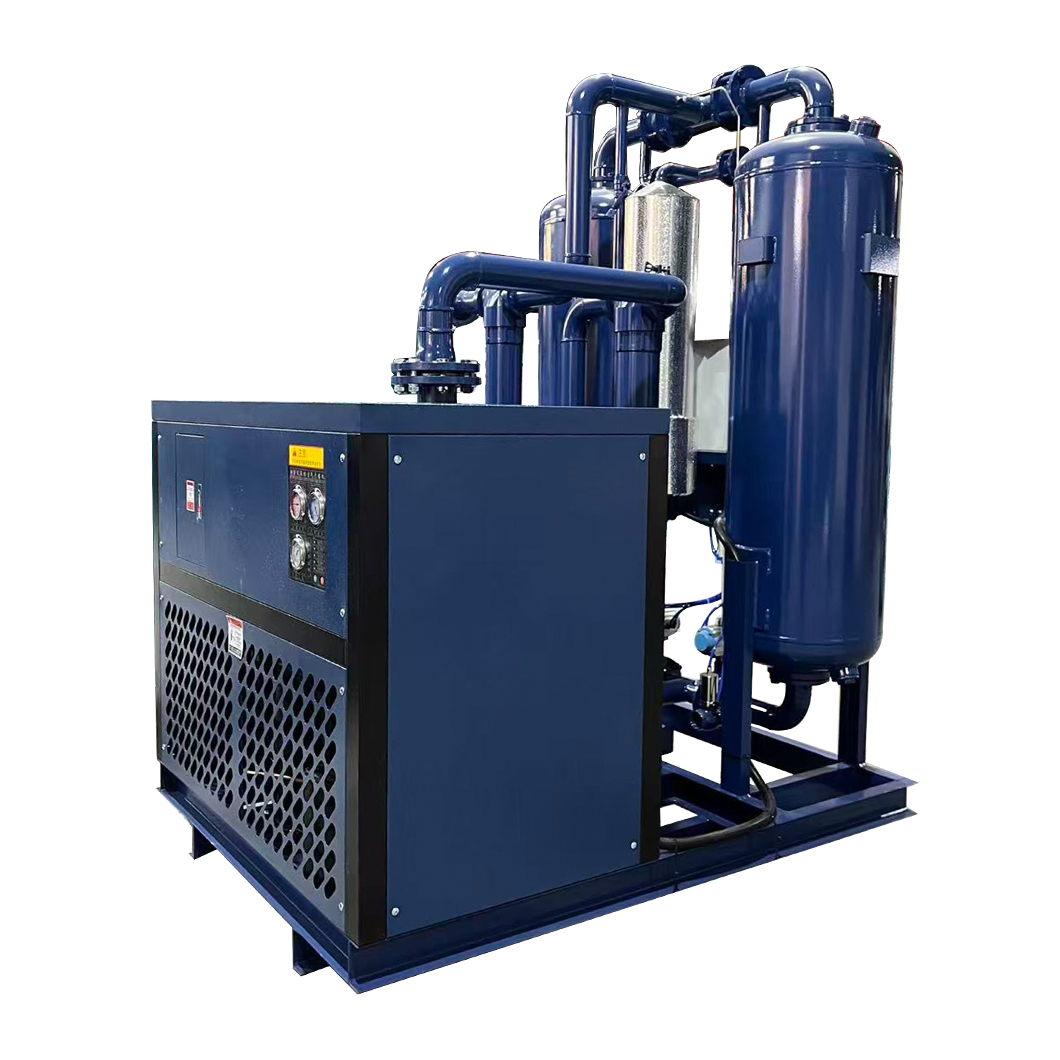
Yes. Some systems use a refrigerated dryer as a pre-cooler / bulk moisture remover followed by a desiccant dryer to achieve very low dew points efficiently. This configuration reduces purge losses because the desiccant only polishes the air, not removes all moisture.
Q5: What is the real-world energy cost of purge air in a heatless desiccant dryer?
For a 10 m³/min system, 15% purge means 1.5 m³/min of compressed air is vented continuously. Assuming compressor specific power of 7 kW per m³/min, this equals 10.5 kW of electrical load — over 8,000 hours, that's 84,000 kWh or roughly $8,400 per year at $0.10/kWh.
Q6: How often should dew point be monitored in industrial air dryers?
Continuous monitoring is recommended for critical applications. For general use, check dew point quarterly with a portable meter. If PDP rises more than 5°C above specification, service the dryer immediately.
Final Recommendation: Right-Size, Right-Technology, Right-Dewpoint
Selecting between a refrigerated and a desiccant dryer does not have a universal answer. The correct choice always depends on your specific moisture removal target, energy prices, and operating pattern. For dew points of +3°C and above, a modern cycling compressed air refrigerated dryer offers the lowest total cost of ownership. For dew points at or below -20°C, a desiccant dryer is not optional — it is a technical necessity. Use the decision framework in this guide, calculate your actual dew point requirement, and avoid the two most common mistakes: undersizing a desiccant dryer that wastes purge air, or oversizing a refrigerated dryer that cannot protect sensitive processes. When in doubt, consult your air treatment specialist with the six-step method presented here.