INQUIRE NOW
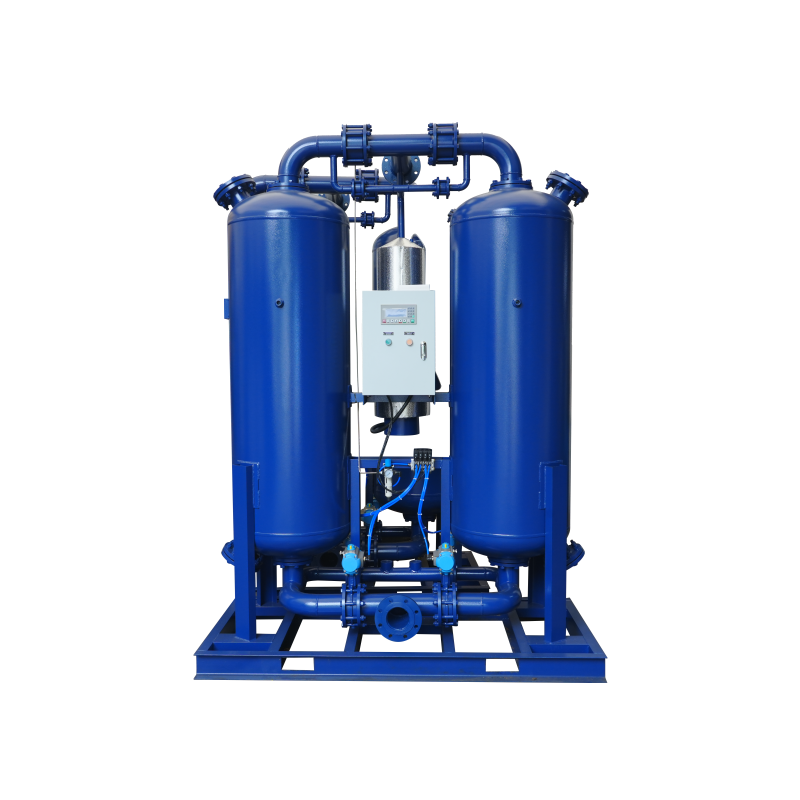
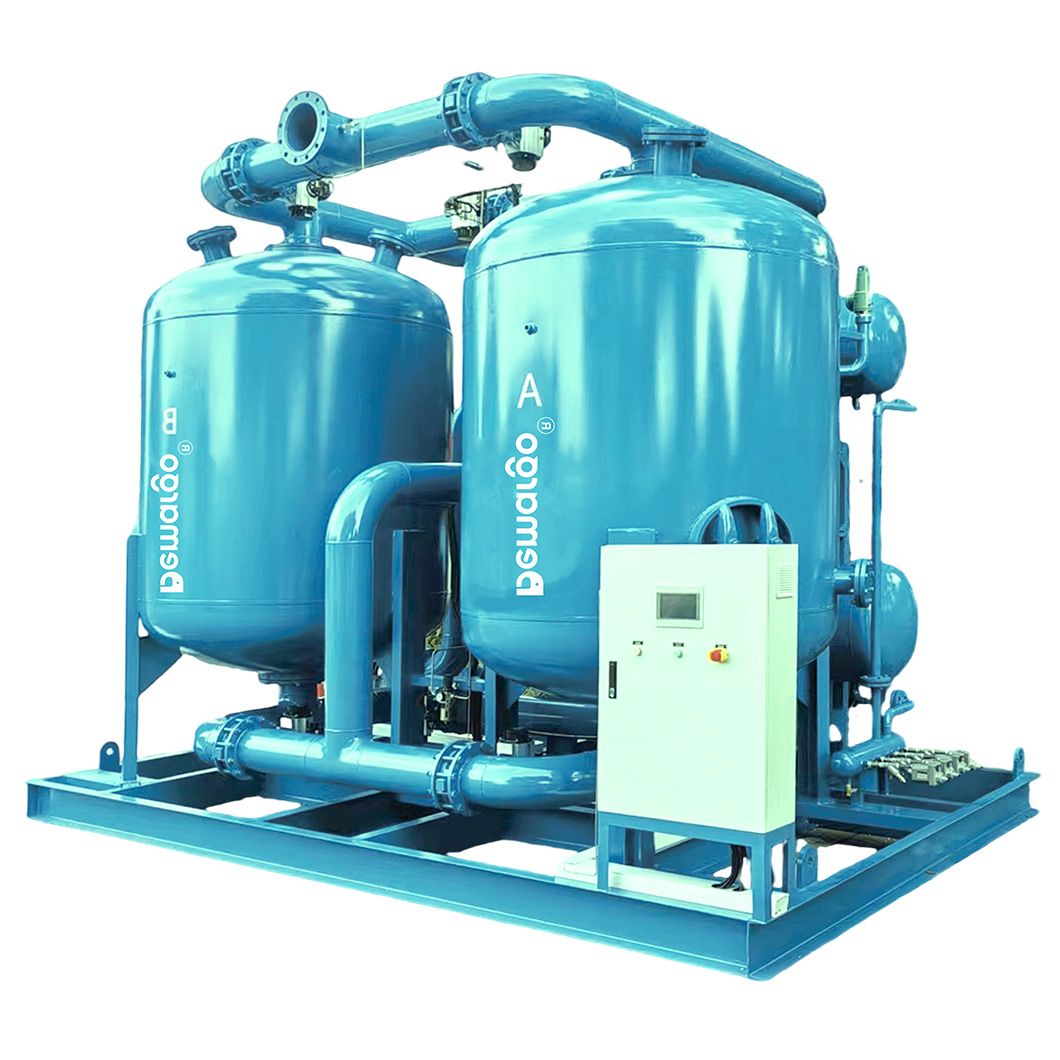
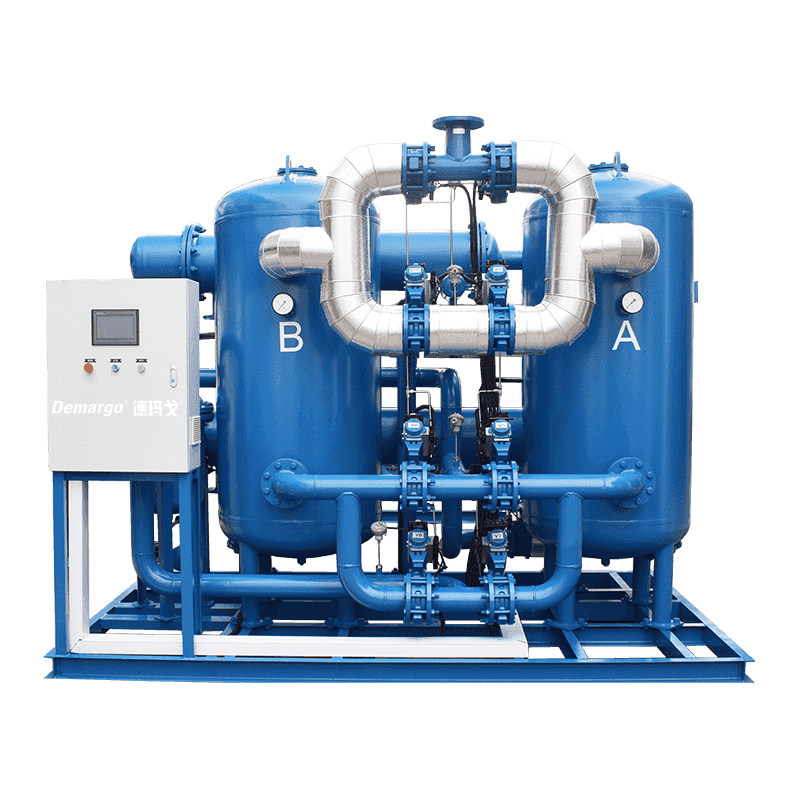
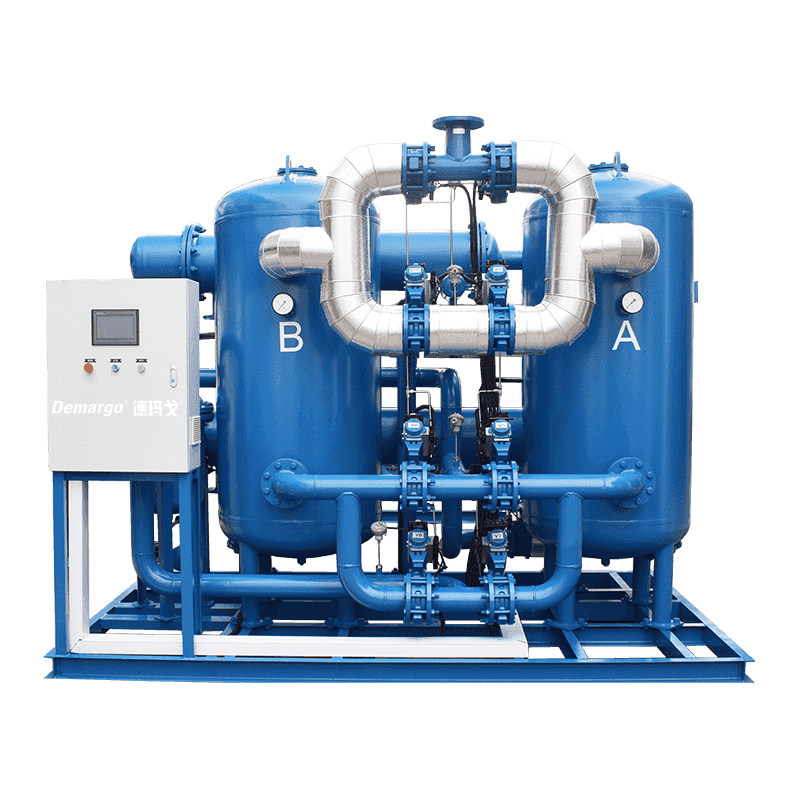
The Compression Heat Zero Gas Consumption Adsorption Dryer uses the waste heat from oil-free air compressors to regenerate its adsorbent, delivering energy-efficient drying without a separate heater. By reclaiming compressor heat the unit achieves zero additional purge gas consumption during regeneration while producing a typical outlet dew point of −40 °C. The system is controlled by a self-developed PLC controller for stable operation and uses a long-life butterfly control valve and an advanced diverter design to ensure even adsorbent contact and eliminate channeling.
Inquiry




Product Description
| Feature / Trait | Compression Heat Zero Gas Consumption Adsorption Dryer | Heatless (Pressure Swing) Adsorption Dryer | Heated (Hot-air) Regenerative Dryer |
|---|---|---|---|
| Regeneration energy source | Waste heat from compressor (no external heater) | Uses dry purge gas (sacrifices product gas) | External heater (electric or fuel) |
| Purge / gas consumption | Zero (no purge gas loss) | High (typically 10–20% purge) | Low (requires fuel/electric energy) |
| Typical outlet dew point | ≤ −40 °C | −40 °C to −70 °C (model dependent) | −20 °C to −70 °C (depends on design) |
| Operating cost | Low (uses waste heat) | Medium-high (purge gas loss) | Medium (energy for heaters) |
| Control complexity | PLC with heat-management logic | Simple timer/valve control | Heater control + timer/valve |
| Suitability with oil-free compressors | Optimized | Suitable | Suitable |
| Maintenance | Moderate (valves, adsorbent) | Low-moderate (valve wear due to purge cycles) | Moderate (heater maintenance + adsorbent) |
| Best use case | Plants with available compressor waste heat and need for low running cost | Simple installations where capital cost is low | Installations missing waste heat but where external energy is acceptable |
|
Working conditions and technical indicators |
|
|
Power |
220V/50HZ |
|
Working pressure |
0.6~1.0Mpa |
|
Pressure drop |
≤0.04Mpa |
|
Inlet temperature |
110℃-140℃ |
|
Cooling water inlet pressure |
0.2-0.4Mpa |
|
Cooling water inlet temperature |
≤32℃ |
|
Dew point |
-12.2℃~-40℃ |
|
Purge air |
≤1% |
| Model | DM150YR | DM180YR | DM200YR | DM250YR | DM300YR | DM350YR | DM400YR | DM500YR | DM600YR | DM800YR | DM1000YR | DM1200YR | DM1500YR | DM2000YR | DM2500YR | DM3000YR | DM3500YR | DM4000YR | |
| Capacity (Nm3/min) | 15 | 18 | 22 | 25 | 30 | 35 | 45 | 55 | 65 | 85 | 100 | 120 | 150 | 200 | 250 | 300 | 350 | 400 | |
| Weight (Kg) | 1000 | 1200 | 1650 | 1880 | 2000 | 2200 | 2350 | 2500 | 2800 | 3250 | 4350 | 5000 | 6500 | 7800 | 9700 | 12500 | 13100 | 13700 | |
| power consumption (W) | 150 | 150 | 150 | 150 | 150 | 150 | 150 | 200 | 200 | 200 | 200 | 200 | 200 | 200 | 200 | 200 | 350 | 250 | |
| Inlet/outlet flange size | DN65 | DN65 | DN65 | DN80 | DN80 | DN100 | DN100 | DN100 | DN100 | DN125 | DN125 | DN150 | DN150 | DN150 | DN200 | DN200 | DN200 | DN200 | |
| Dimensions (mm) | Length | 2000 | 2000 | 2000 | 2300 | 2300 | 2300 | 2840 | 2500 | 2500 | 3000 | 3200 | 3500 | 3900 | 3900 | 4500 | 4800 | 4800 | 5100 |
| Width | 1400 | 1500 | 1500 | 1800 | 1800 | 1800 | 2050 | 2000 | 2000 | 2000 | 3200 | 2200 | 2200 | 2200 | 3700 | 2800 | 2800 | 3000 | |
| Height | 2500 | 2800 | 3000 | 2800 | 3000 | 3000 | 2726 | 2700 | 2900 | 2900 | 2200 | 3200 | 3200 | 3500 | 3400 | 3800 | 3800 | 3700 | |
| Cooling water circulation rate (Nm3/min) |
6 | 7 | 8 | 10 | 12 | 13 | 15 | 17.3 | 19 | 23 | 31 | 35 | 39 | 46 | 58 | 68 | 78 | 84 | |
Construction Cases
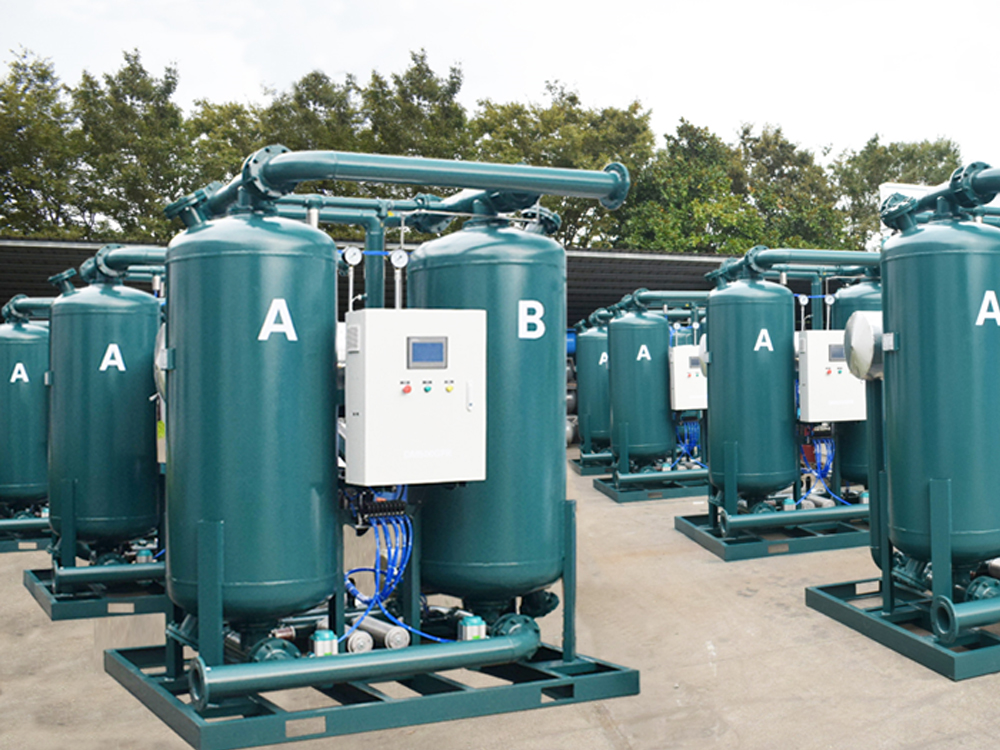
Dalian Dahua Group Co., Ltd.
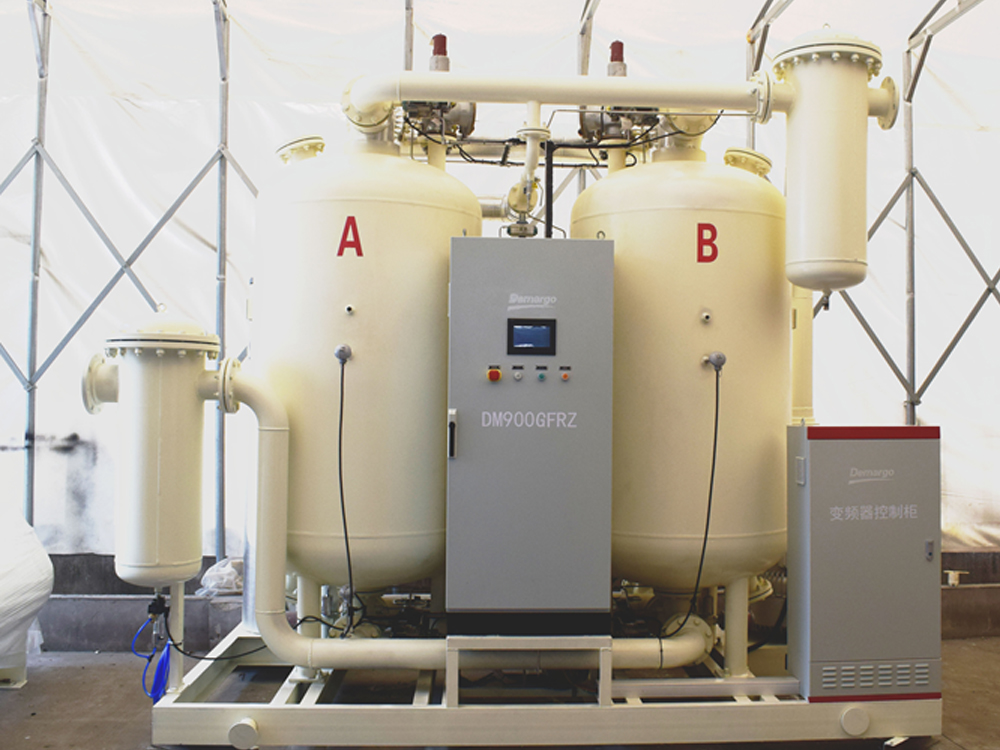
A large-scale electronic new material company in Jiangsu (Fortune 500)
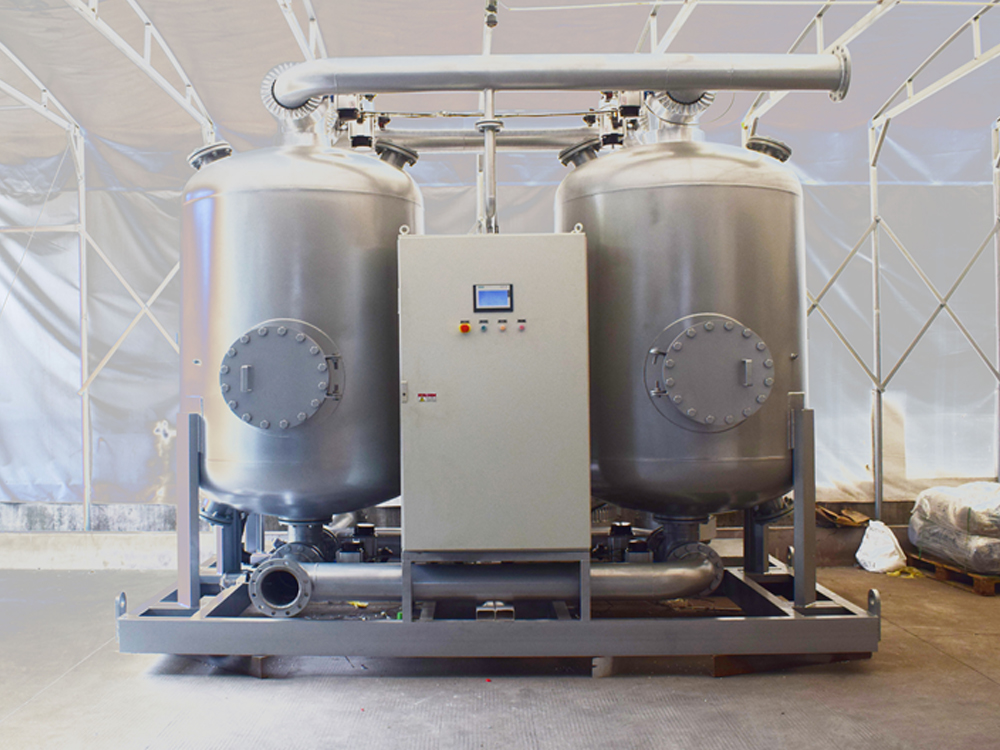
Shenyang Engine Research Institute
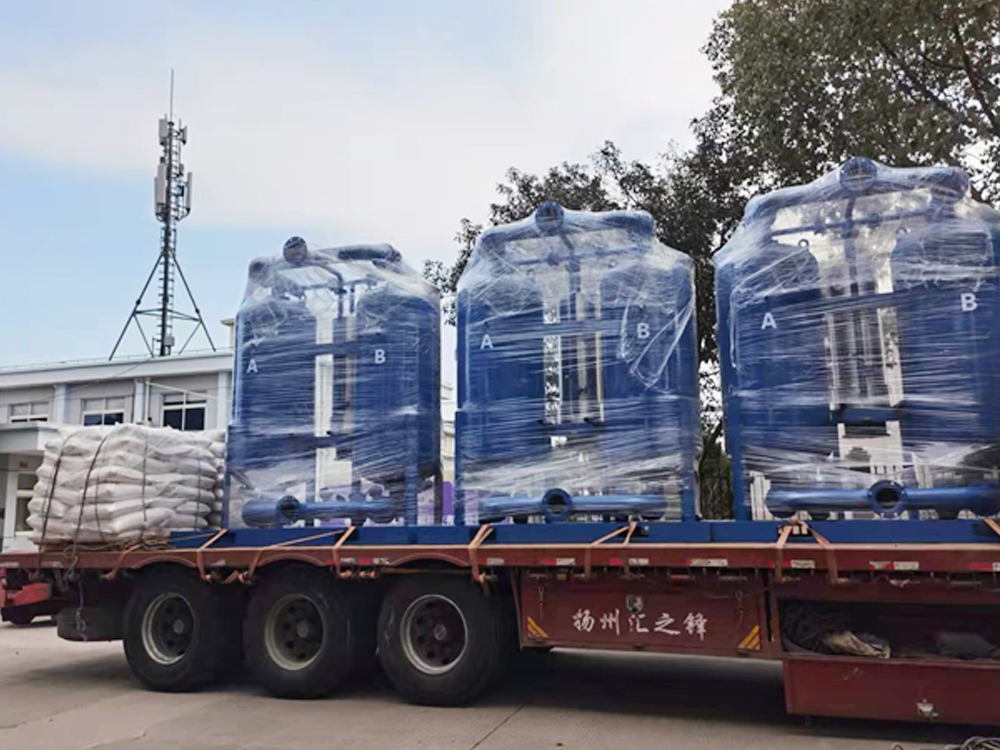
A large optoelectronics factory in Jiangsu
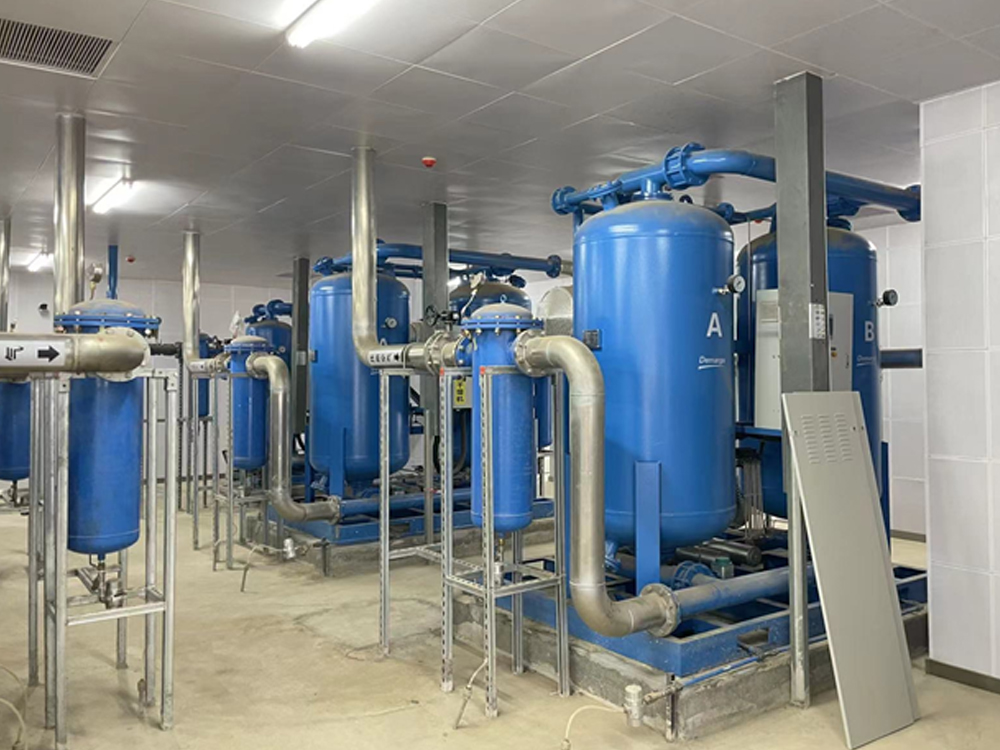
Hainan Haikou Airport
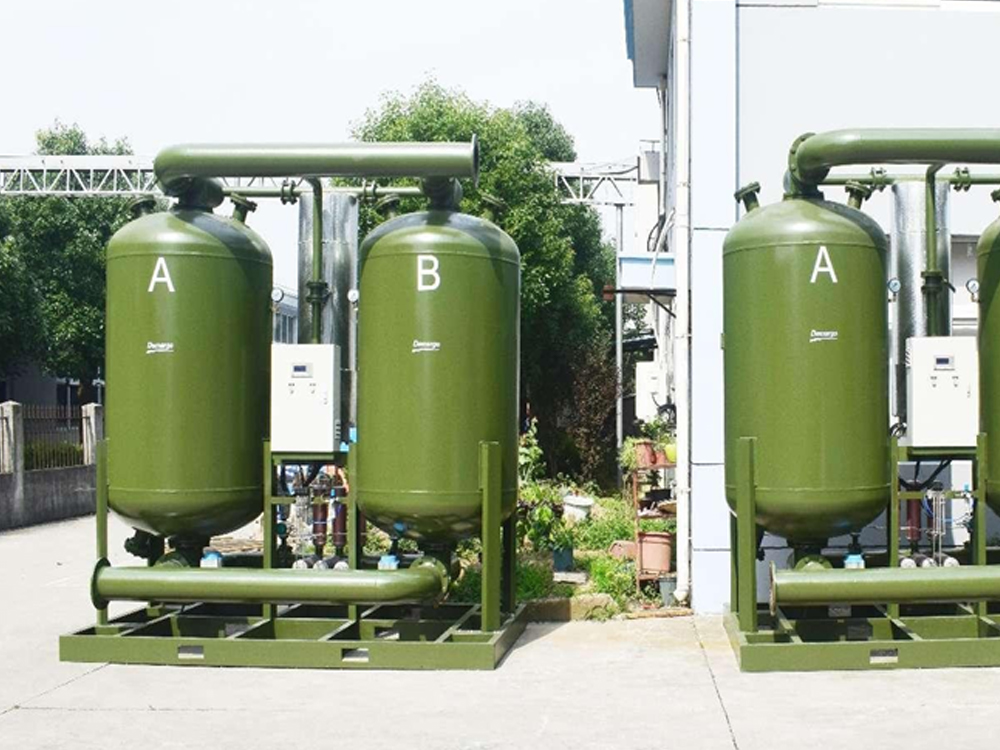
Equipment of a military factory in Shanghai
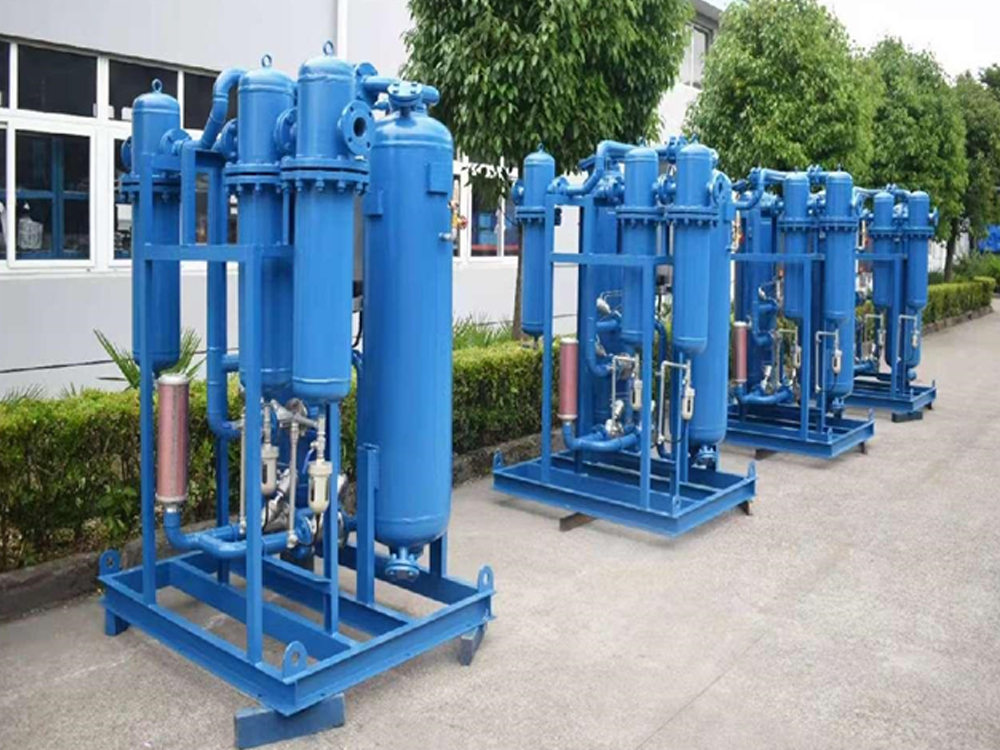
PetroChina offshore drilling platform
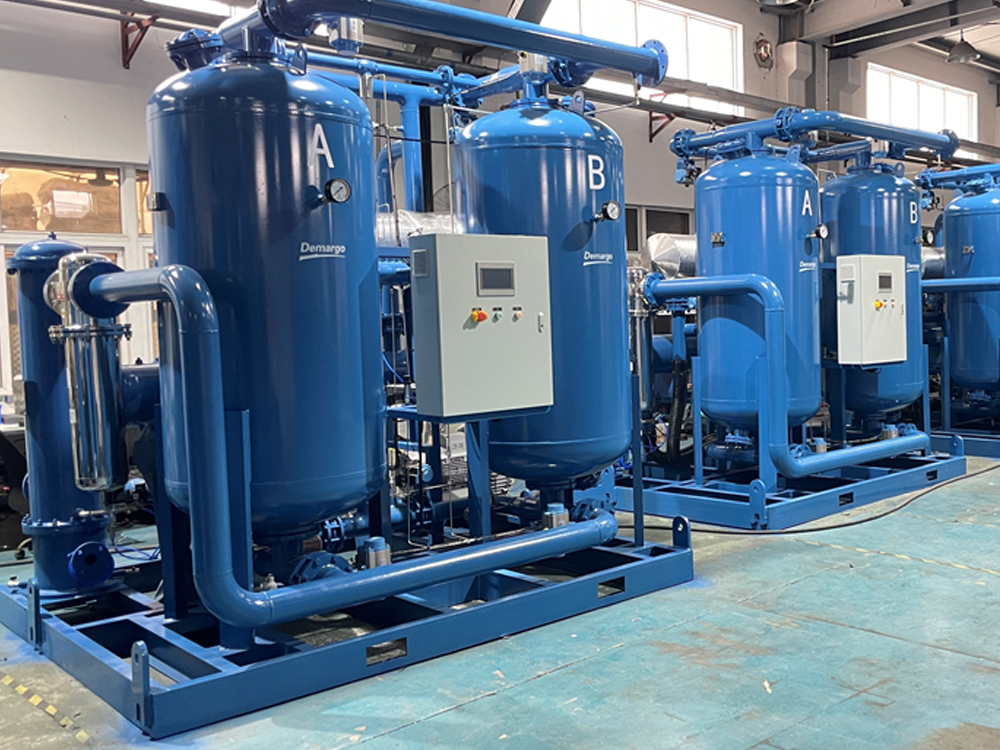
A chemical company in Shandong
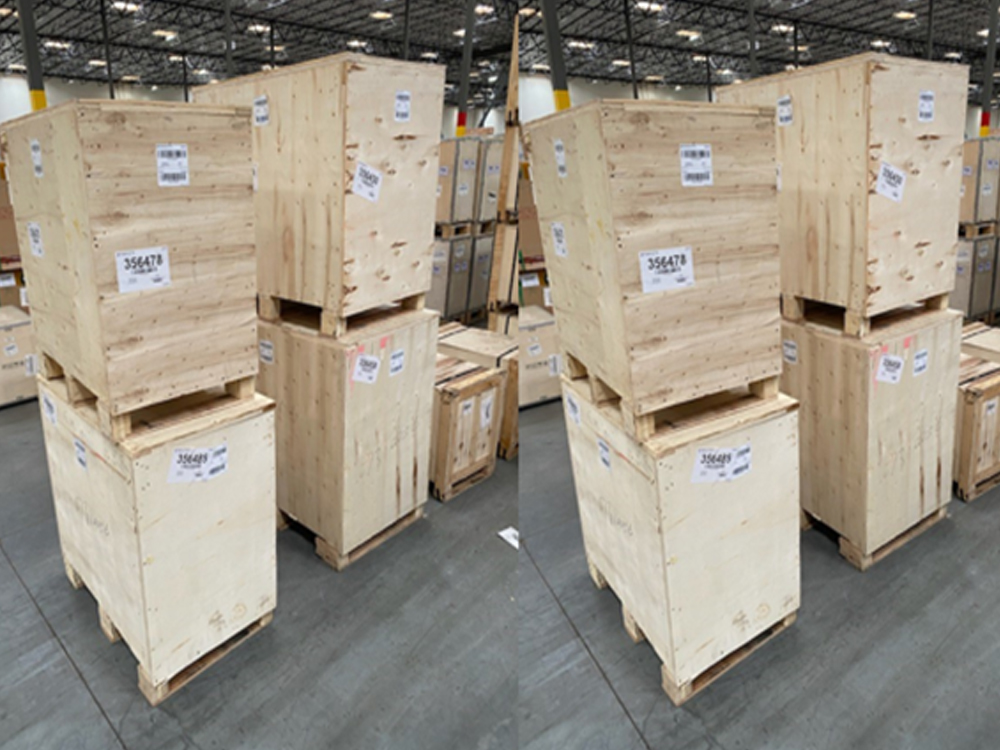
A company in California, USA
Contact Us for More Details
Don't hesitate to contact when you need us!
Related Products


Conclusion up front: If you compress air, you need an oil-water separator. If you have one, you need to maintain it. A well-maintained separator protects your ...
View MoreWalk through any plant that runs pneumatic tools, laser cutters, or precision control valves, and you will eventually hear the same complaint: the air line is ...
View MoreAt a petrochemical plant, a sticking control valve, a drifting analyzer, or a slow-acting emergency shutdown valve usually has one root cause: contaminated or ...
View MoreChemical process cooling equipment is not just about making process fluids cold. It is about controlling temperature precisely enough to protect reactors, stab...
View More
ADD: No. 9, Lane 38, Caoli Road, Fengjing Town, Jinshan District, Shanghai, China
Tel: 0086-17321147609
Email: [email protected]
Copyright © Demargo (Shanghai) Energy Saving Technology Co., Ltd. Rights Reserved. Wholesale Compression Heat Zero Gas Consumption Adsorption Dryer Suppliers