INQUIRE NOW
Content
Chemical process cooling equipment is not just about making process fluids cold. It is about controlling temperature precisely enough to protect reactors, stabilize products, and keep utilities running safely. In a typical plant, heat removal happens in several places at once: the reactor jacket, the distillation overhead condenser, the product cooler, the compressor aftercooler, and the compressed air dryer. Each of these steps requires equipment that can handle corrosive liquids, high pressures, and changing flow rates. Demargo brings field-proven experience in compressed air drying and filtration to this equation, because many of the same heat transfer and separation principles apply across both process utilities and production streams.
In chemical process cooling, the approach temperature, which is the difference between the required process outlet temperature and the available cooling medium temperature, is often the deciding factor between air cooling and water cooling.
This broad term covers any device or system that removes heat from a chemical process stream or from the equipment that runs that process. The most common categories include:
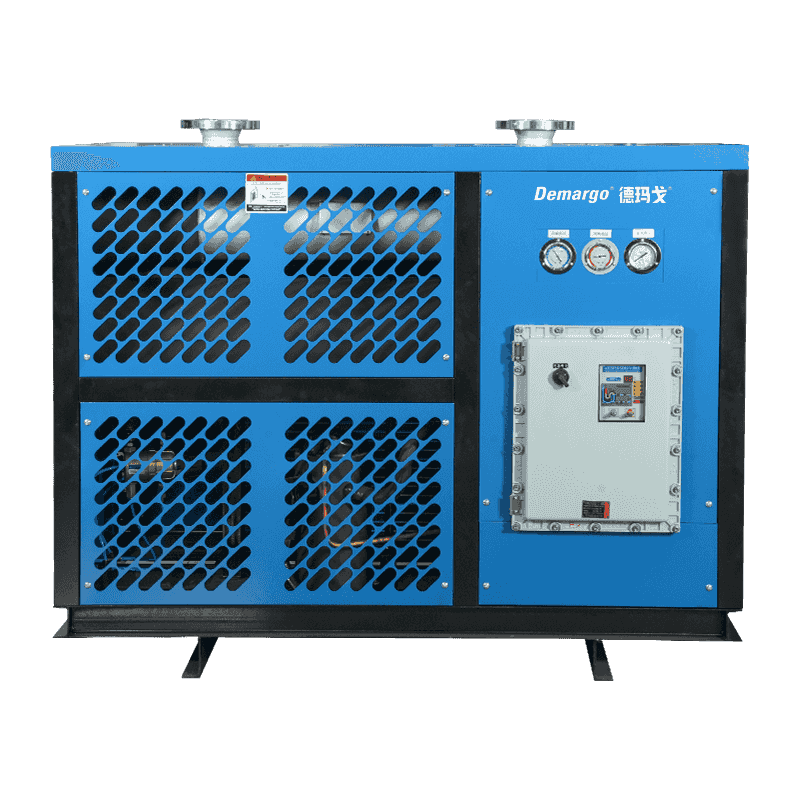
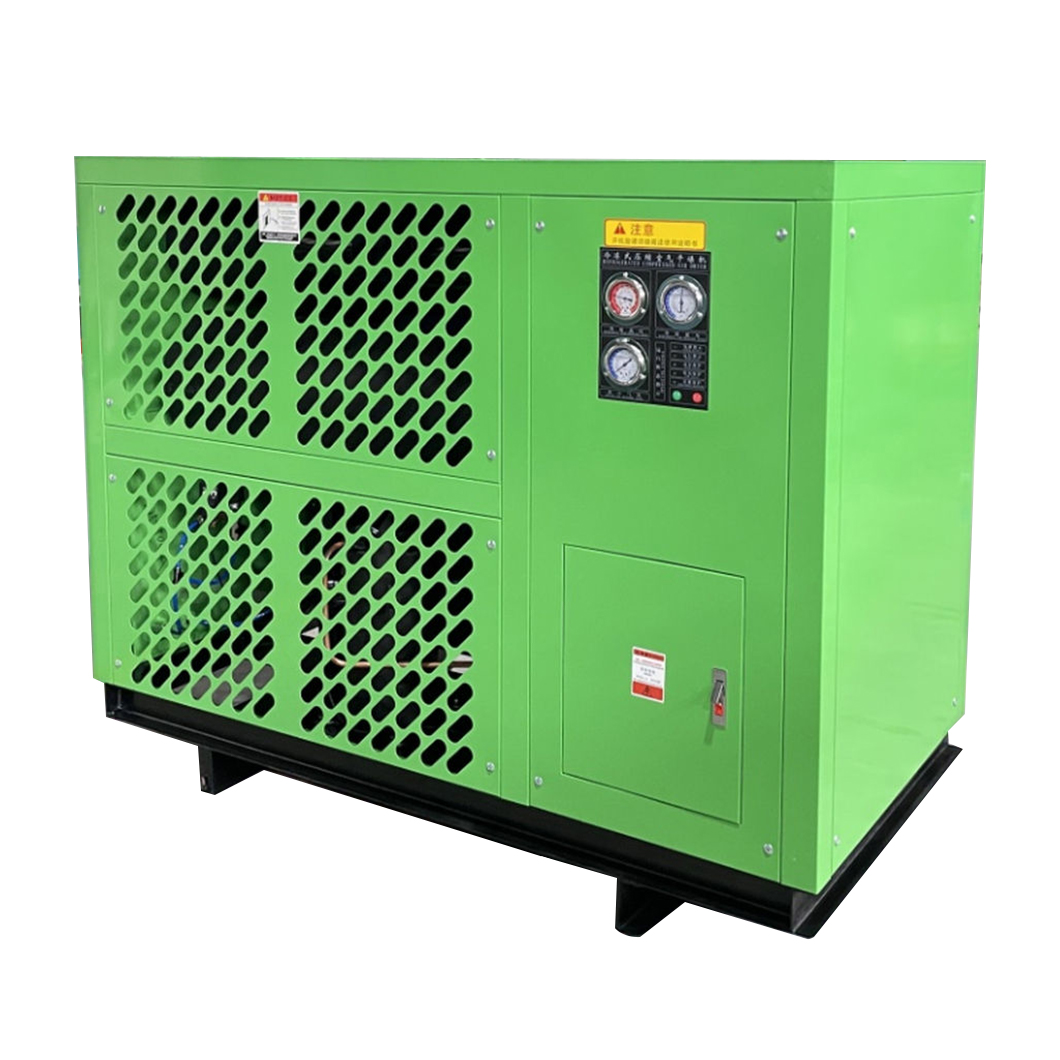
While cooling towers and chillers dominate the mainstream description, chemical plants also need auxiliary cooling for compressed air. After compression, air leaves the compressor hot and saturated with water vapor. If that air is not cooled and dried before entering instruments, valves, or pneumatic conveyors, it can cause corrosion and product contamination. A refrigerated air dryer is effectively a small-scale process cooling unit that lowers the dew point of compressed air, making it an essential part of the cooling equipment portfolio.
A standard HVAC chiller is designed for comfort cooling, but a chemical plant needs process cooling that can handle widely varying heat loads. An exothermic reaction can generate hundreds of kilowatts of heat in a short cycle, and the cooling system must respond quickly without causing thermal shock to the reactor. In addition, many process streams are not water-like; they may be viscous, crystallizing, polymerizing, or contain suspended solids.
Flow rate and temperature range are two obvious considerations. Industrial cooling also has to account for fouling factor. A heat exchanger that looks correct on paper can lose performance within weeks if the process side scales or fouls. Corrosion resistance is another critical factor. If the process fluid contains chlorides, acids, or caustics, the cooling equipment's wetted parts must be made from stainless steel, duplex steel, or non-metallic materials.
For chemical plants, cooling is also about energy recovery. Many units operate as part of a heat integration network, using hot process streams to preheat cold streams. This means the cooling equipment must be able to work with variable inlet temperatures and sometimes act as a trim cooler rather than the primary heat removal device.
Open-circuit cooling towers are the most common heat rejection device for large chemical plants. They cool process water from about 40 degrees Celsius to 30 degrees Celsius by direct contact with air. In refineries and chemical complexes, they are also a source of water loss and maintenance cost. Closed-circuit cooling towers use an internal heat exchanger to isolate the process fluid from the cooling water, avoiding contamination while still using evaporative cooling.
Air-cooled heat exchangers are preferred when water is scarce, when the plant is in a hot climate, or when the process fluid must not mix with cooling water. They are simple to operate and need no cooling tower chemicals. But they require a large area and lose capacity on hot days. In many chemical plants, air-cooled and water-cooled systems are combined to get the best of both worlds.
Shell-and-tube exchangers remain the workhorse for high-pressure, high-temperature service. They are robust and easy to clean. Plate heat exchangers offer a much higher heat transfer coefficient in a compact footprint. Their close clearances make them unsuitable for dirty or fibrous fluids, but for clean process streams they deliver excellent efficiency.
Process chillers provide cold water or brine at temperatures far below ambient. They are used for crystallization, cold chain, and reactor temperature control. A chiller is often the only way to reach a process temperature below the cooling water supply temperature. However, it is energy-intensive, so its performance should always be evaluated against the year-round cooling load.
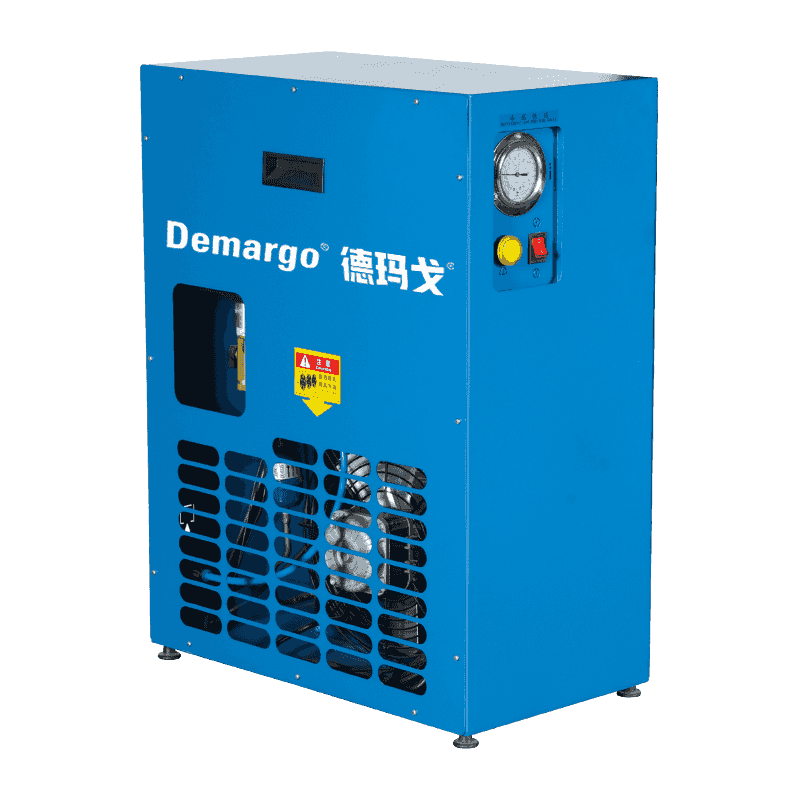
Compressed air is a utility in every chemical plant, and it needs cooling too. The heat of compression raises air temperature, and the moisture that condenses downstream can cause problems. Refrigerated or desiccant dryers lower the pressure dew point of compressed air, protecting instruments, control valves, and product quality. In most chemical plants, this is a small but essential part of process cooling equipment.
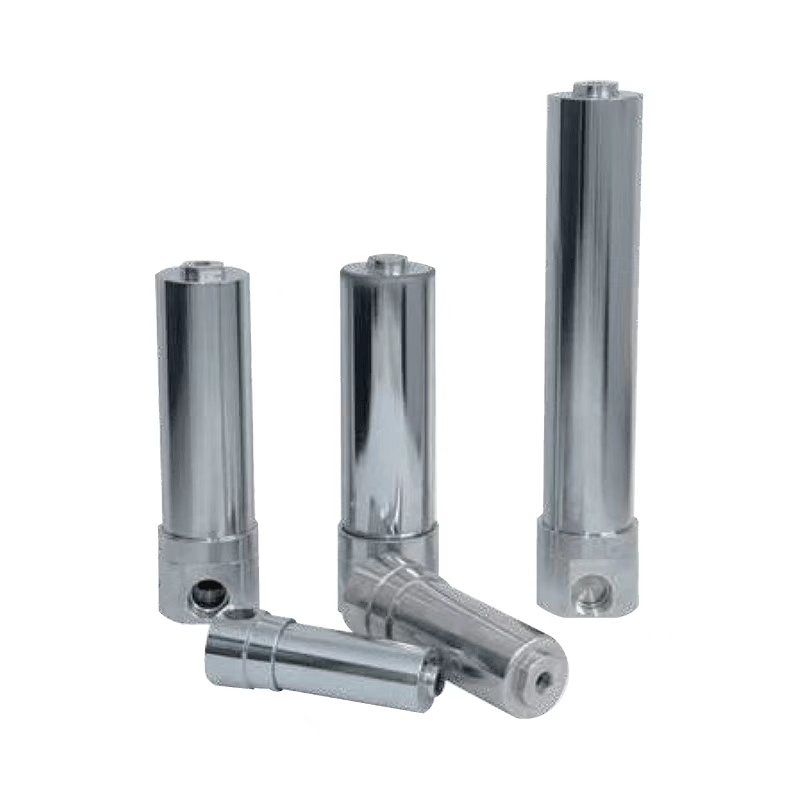
Demargo offers industrial air compressor dryer systems with refrigerated and desiccant drying that include efficient filters to remove oil and particulate matter. This combination ensures that the utility air is not only cool enough but also clean enough for sensitive process applications.
 Industrial Air Compressor Dryer Systems with Refrigerated and Desiccant DryingThis dryer system combines refrigerated and desiccant drying with efficient filters to remove oil and particulate matter, ensuring compressed air is both cool and clean for sensitive process applications.View Product →
Before buying any cooling equipment, define the performance envelope in measurable terms. The first number should be the required heat removal rate in kW. The second is the process fluid inlet and outlet temperature. The third is the allowable approach to the ambient or cooling water temperature. After that, consider pressure drop, materials of construction, and space constraints.
The table below summarizes the key factors to evaluate.
| Factor | Why It Matters | Typical Evaluation |
|---|---|---|
| Cooling capacity | Defines the total heat load | kW, tons of refrigeration |
| Temperature range | Determines feasibility of air versus water cooling | Process supply and return temperatures, approach |
| Material compatibility | Prevents corrosion and product contamination | Wetted parts, chemical resistance chart |
| Fouling tendency | Affects long-term heat transfer performance | Fouling factor, cleaning interval |
| Energy efficiency | Directly affects operating cost | kW per ton, fan or pump power |
| Maintenance access | Reduces downtime for cleaning and inspection | Tube bundle removal, header access |
Match the cooling technology to the available utility resources. If water is plentiful and cooling water quality is managed well, a cooling tower circuit may be the most economical choice. If the plant is in a dry region, air cooling can remove the need for water treatment but may require a larger footprint. For processes that need a constant low temperature, a refrigerated chiller is necessary, but it should be sized with attention to part-load efficiency.
Consider how the cooling equipment interacts with the rest of the plant. Air compressors require aftercooling and drying. The water that separates in these systems is not the same as clean condensate; it can contain oil and must be handled correctly. Demargo's compressed air oil-water separator with moisture filter is a practical component for capturing liquid hydrocarbons and water before they reach sensitive equipment.
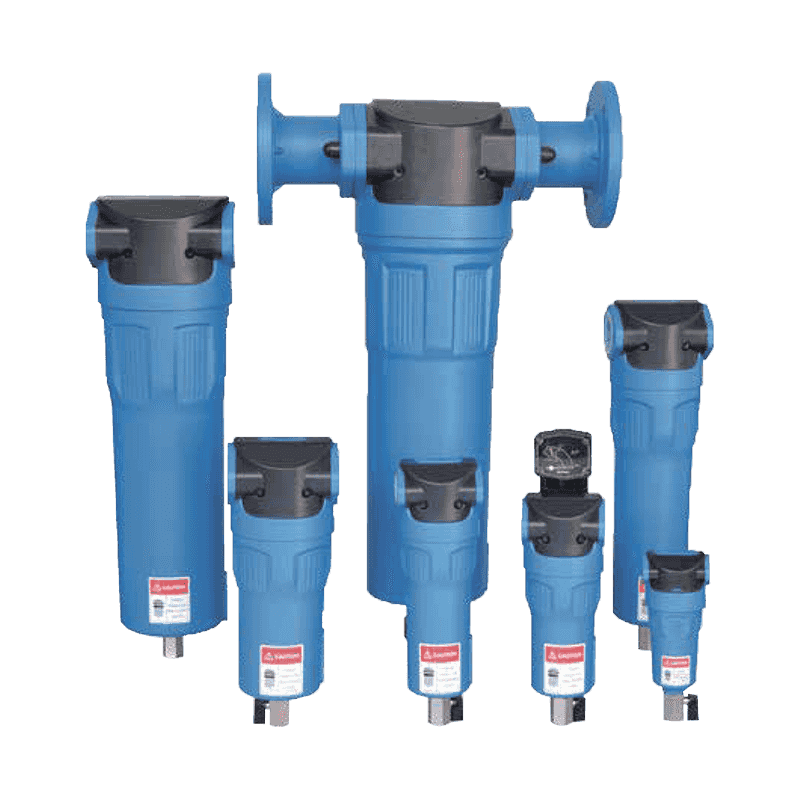 Air Compressor Oil Water Separator with Moisture FilterThis separator and filter captures liquid hydrocarbons and water from compressed air, preventing moisture-related rust, oil contamination, and particulate clogging in tools and equipment.View Product →
In any cooling system, temperature drop causes condensation. In air cooling, the water vapor in compressed air turns into liquid water. In process cooling, cooling water may evaporate and leave mineral deposits. Both conditions create contamination risks if not managed.
The key is to remove condensate as soon as it forms. If liquid water is carried into a valve or an instrument line, it can cause corrosion and erratic operation. If oil from a compressor enters a chemical reaction, it can poison catalysts or affect product purity. Filtration and separation are therefore as important as the cooling step itself.
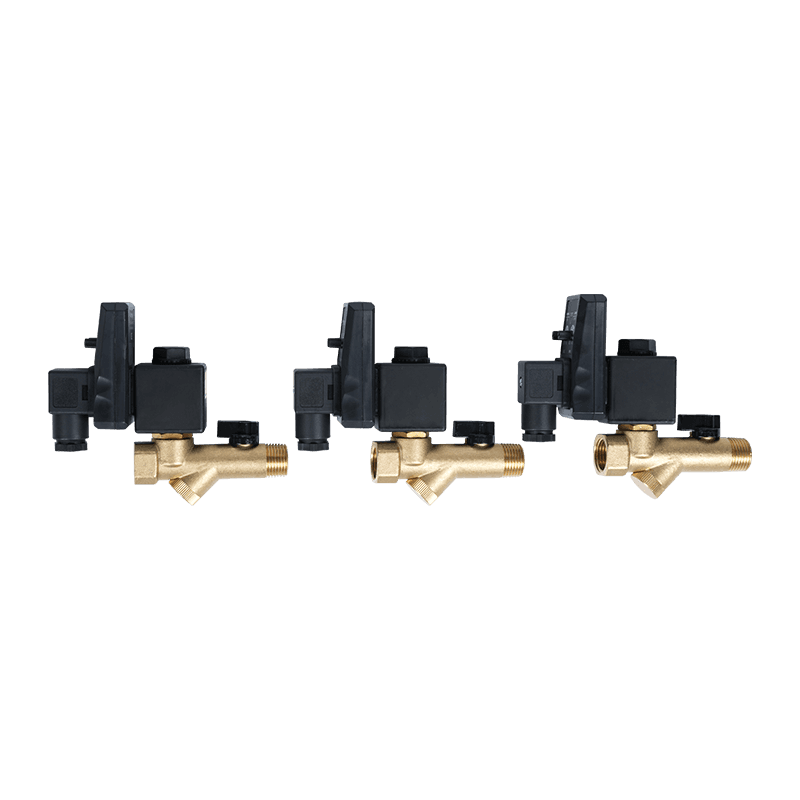
Equipment that combines separation with filtration reduces the need for multiple process vessels. An automatic drain, a pressure-driven separator, and a fine filter work together to maintain air quality. Checking the separator's operation weekly and the filter's differential pressure monthly is a simple maintenance routine that pays off in extended equipment life.
Process cooling equipment is often the last thing people think about and the first thing they blame when production slows. To keep it reliable, focus on three areas. The first is heat transfer surface cleanliness. Scale, fouling, and biological growth all reduce heat transfer. The second is mechanical integrity. Gaskets, seals, and tube sheets must be inspected for leaks, especially when the process fluid is flammable or toxic. The third is condensate management. If the drain fails, water accumulates in the system and can cause freeze or water hammer during startup.
For chemical plants, the maintenance plan should include thermal performance testing every time an exchanger is cleaned. Record the approach temperature, pressure drop, and flow rate. A change in any of these is an early sign of trouble.
Demargo supports this with an LS series condensate handler that separates oil from water in compressed air condensate, making disposal safer and simpler. For detailed maintenance guidance, check the technical documentation and downloadable specification sheets on the company website. Also, understanding why dew point is critical to compressed air quality helps operators proactively adjust dryer settings before moisture reaches the pipeline.
 LS Series Condensate Handler for Oil-Water SeparationThe LS series separates oil from compressed air condensate through filtration stages, making disposal safer and simpler while supporting maintenance of air quality in the system.View Product →
In many applications, yes, but not always. Air-cooled heat exchangers are more economical in small to medium loads and dry climates. They require more surface area and cannot achieve the low approach temperature of a cooling tower. For large heat rejection loads, a tower is usually more compact and cost-effective.
Most standards recommend a pressure dew point of 3 degrees Celsius or lower for instrument air, depending on the ambient temperature and risk of freezing. For critical chemical processes, an adsorption dryer may be needed to reach minus 40 degrees Celsius or below.
Cleaning frequency depends on fouling tendency. If the process fluid is clean, annual inspection may be enough. If the fluid scales quickly or contains solids, monthly or quarterly inspection of approach temperature is recommended.
Chemical process cooling equipment is an investment in production stability. The right choice depends on heat load, temperature, process chemistry, and operating environment. In plants that use compressed air as a utility, the cooling and drying of that air is a smaller but still critical piece of the same puzzle. By selecting equipment that combines reliable cooling with effective moisture and contaminant control, chemical plant operators can reduce unplanned downtime, protect product quality, and improve energy efficiency.
Related Products

ADD: No. 9, Lane 38, Caoli Road, Fengjing Town, Jinshan District, Shanghai, China
Tel: 0086-17321147609
Email: [email protected]
Copyright © Demargo (Shanghai) Energy Saving Technology Co., Ltd. Rights Reserved. Custom Gas Purifiers Factory