INQUIRE NOW
Content
At a petrochemical plant, a sticking control valve, a drifting analyzer, or a slow-acting emergency shutdown valve usually has one root cause: contaminated or wet instrument air. Instrument air is not a luxury utility. It is the pneumatic control medium that moves actuator diaphragms, feeds valve positioners, and activates shutdown logic. The practical conclusion is straightforward: instrument air for petrochemical service must be specified to ISO 8573-1 Class 1-2-1 or better, with a pressure dew point of -40°C or lower, and supplied by a correctly sized drying and filtration train. Getting the specification right takes only a few engineering decisions. Getting it wrong produces shutdowns, instrument failures, and maintenance costs that far outweigh the price of a proper system.
Petrochemical plants typically run two compressed air systems: plant air and instrument air. Plant air services tools, blowing and maintenance operations, and it can tolerate a reasonable amount of moisture and oil. Instrument air, by contrast, supplies pneumatic control devices where even small amounts of water, oil or solid particles cause malfunctions. A diaphragm coated with oil, or a positioner with internal passages blocked by rust and scale, will not respond accurately. In a facility where control loops are tightly packed, that can quickly turn a minor contamination problem into a process deviation or a full trip.
The main reason the two systems are kept separate is reliability. A maintenance crew that needs a blow gun should not be able to compromise the air feeding the control valves.
The table below summarises the key differences between the two utilities.
| Property | Instrument Air | Plant Air |
|---|---|---|
| Pressure dew point | -40°C or lower | +3°C to +10°C |
| Particle content | ISO Class 1 (≤0.1 μm) | ISO Class 3-4 (5-15 μm) |
| Oil content | ISO Class 1 (≤0.01 mg/m³) | ISO Class 2-3 |
| Typical service | Control valves, ESD, analyzers | Tools, purging, general use |
ISO 8573-1 is the standard used to classify compressed air contamination. It divides purity into three parts: solid particles, water, and oil. Each part is given a class number from 1 to 9 or higher, with lower numbers meaning stricter limits.
| Class | Particle content | Water content (PDP) | Oil content |
|---|---|---|---|
| Class 1 | ≤0.1 μm, ≤0.1 mg/m³ | -70°C | ≤0.01 mg/m³ |
| Class 2 | ≤1 μm, ≤1 mg/m³ | -40°C | ≤0.1 mg/m³ |
| Class 3 | ≤5 μm, ≤5 mg/m³ | -20°C | ≤1 mg/m³ |
For most petrochemical instrument air systems, the target is Class 1 for particles, Class 2 for water and Class 1 for oil. This is commonly written as 1-2-1. Some plant specifications ask for 1-1-1, especially where outdoor piping is exposed to extremely low ambient temperatures or where analyzers are particularly sensitive.
The -40°C dew point is not arbitrary. At -40°C, the moisture content of the air is low enough that water will not condense under most ambient conditions encountered at a petrochemical plant. Condensation inside a control impulse line can freeze, block the line and render the instrument inoperable. For facilities in cold climates or where lines are routed through unheated areas, -70°C is sometimes specified.
Validating and testing these purity classes is a critical part of commissioning and ongoing monitoring. It requires calibrated dew point measurement and particle or oil sampling. A plant cannot simply assume that the nameplate on the dryer guarantees the air quality at the point of use. A useful reference is our guide on validating ISO 8573-1 purity classes for the testing procedures.
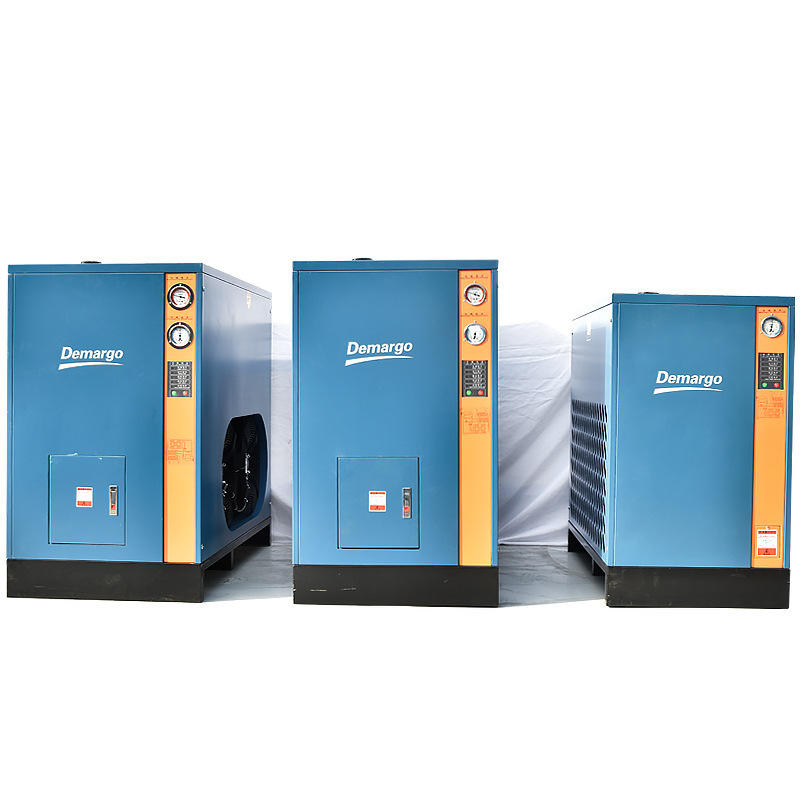
To reach a -40°C pressure dew point, a refrigerated dryer alone is not sufficient. Refrigerated dryers dry the air to +3°C or +5°C pressure dew point, which protects against condensation at normal indoor temperatures but cannot achieve the dew point required for instrument air. The selection therefore comes down to desiccant dryers, or a combined refrigerated plus desiccant system.
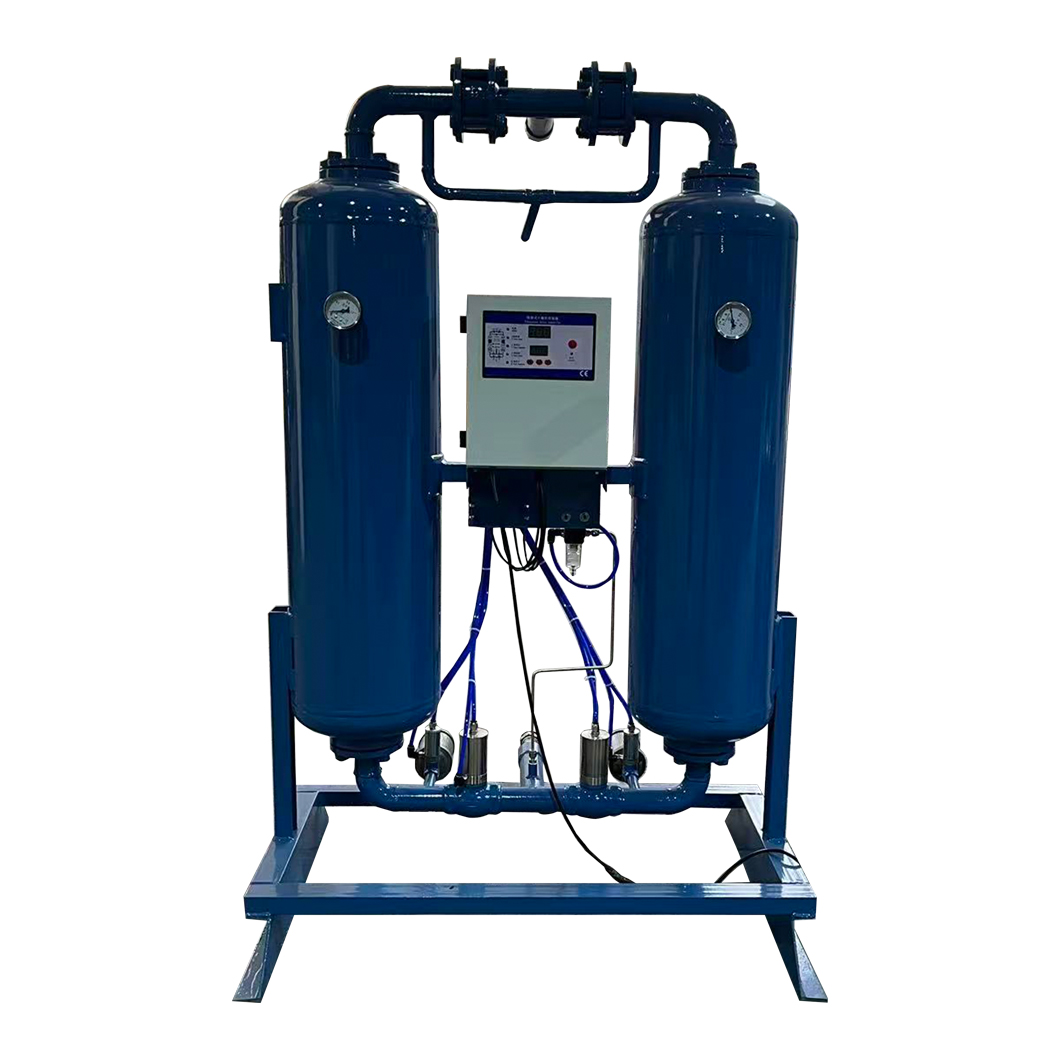
Heatless desiccant dryers are simple and reliable. They regenerate one desiccant tower by purging the other with dry air, and they typically consume 14-16% of the compressor capacity as purge air. That purge loss is a permanent operating cost. Micro-heat desiccant dryers reduce the purge air demand by adding a small regeneration heater, which is a reasonable upgrade where electric power is available.
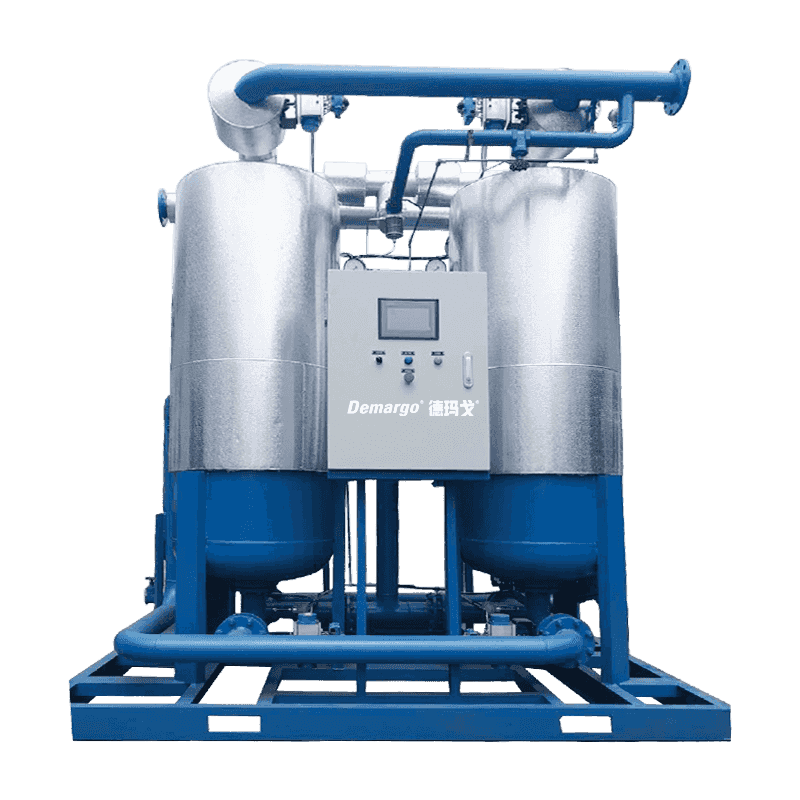
Compression heat desiccant dryers use the heat of compression from the air compressor to regenerate the desiccant. For a continuously running compressor, this can reduce purge losses to less than 2% or effectively zero. In a large petrochemical complex where instrument air demand runs 24/7, the energy savings are substantial. A compression heat dryer can reduce the energy consumption of the drying stage by more than 70% compared with a conventional heatless system, which is worth reviewing when the plant is under pressure to reduce utility costs.
Typical purge and energy comparison for a 10 Nm³/min instrument air system:
Heatless desiccant dryer: 15% purge = 1.5 Nm³/min lost
Micro-heat desiccant dryer: 6-8% purge = 0.6-0.8 Nm³/min lost
Compression heat dryer: 0-2% purge = 0-0.2 Nm³/min lost
Combined refrigerated plus desiccant dryers are often the most robust choice for instrument air. The refrigerated section removes the bulk of water at the high inlet temperature, so the desiccant only has to finish the job down to -40°C. This protects the desiccant from premature saturation and extends the service interval of the adsorbent. The application of combined drying technologies to achieve ultra-low dew points is worth reading when comparing system layouts.
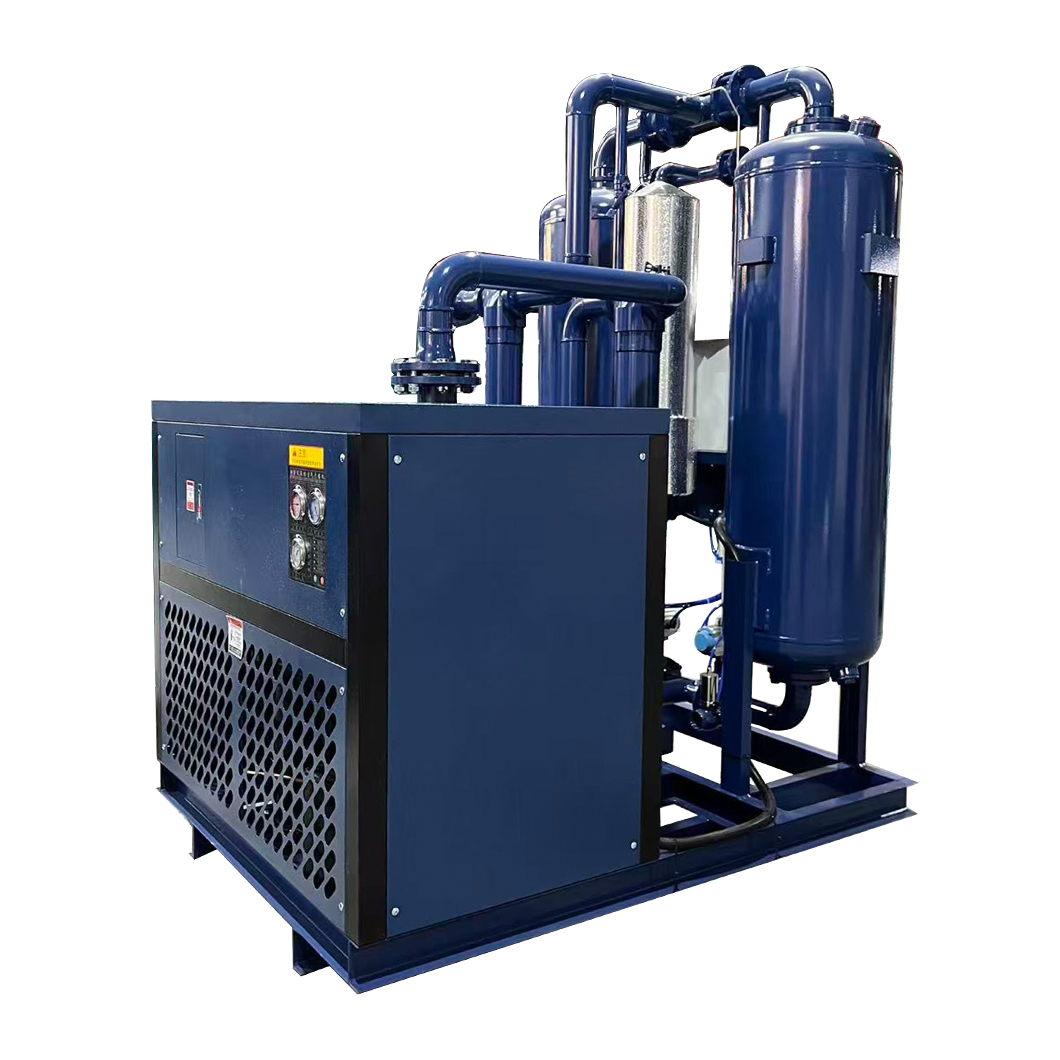
Heatless combined compressed air dryer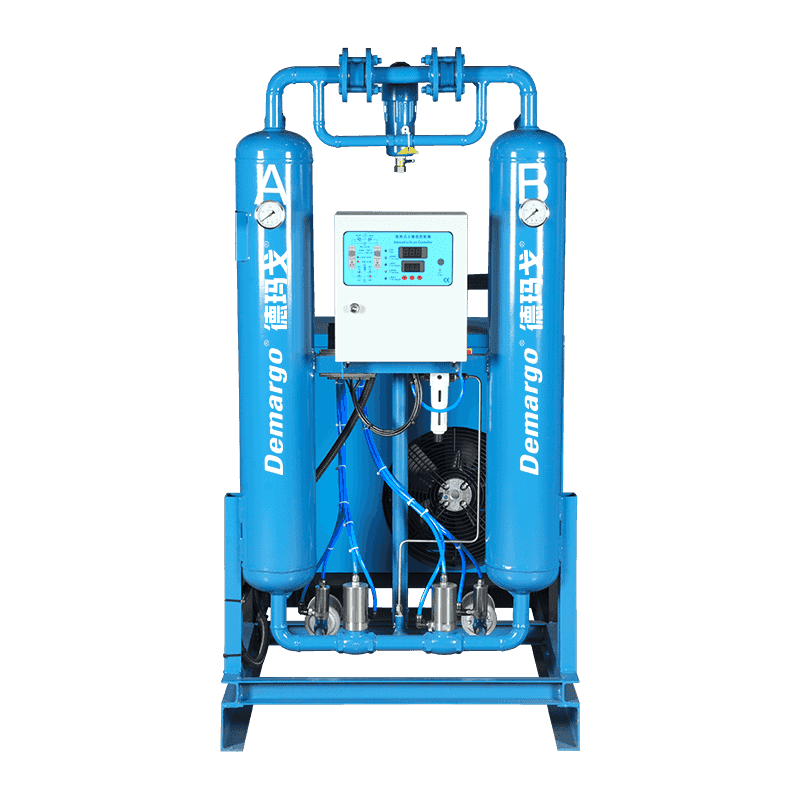 Heatless Combined Refrigerated and Desiccant Air DryerThis hybrid dryer combines a refrigerated precooling stage with heatless desiccant drying, efficiently removing bulk moisture then achieving ultra-low dew points, protecting the desiccant and extending service intervals for critical instrument air systems.View Product → Compression heat zero gas consumption adsorption dryer
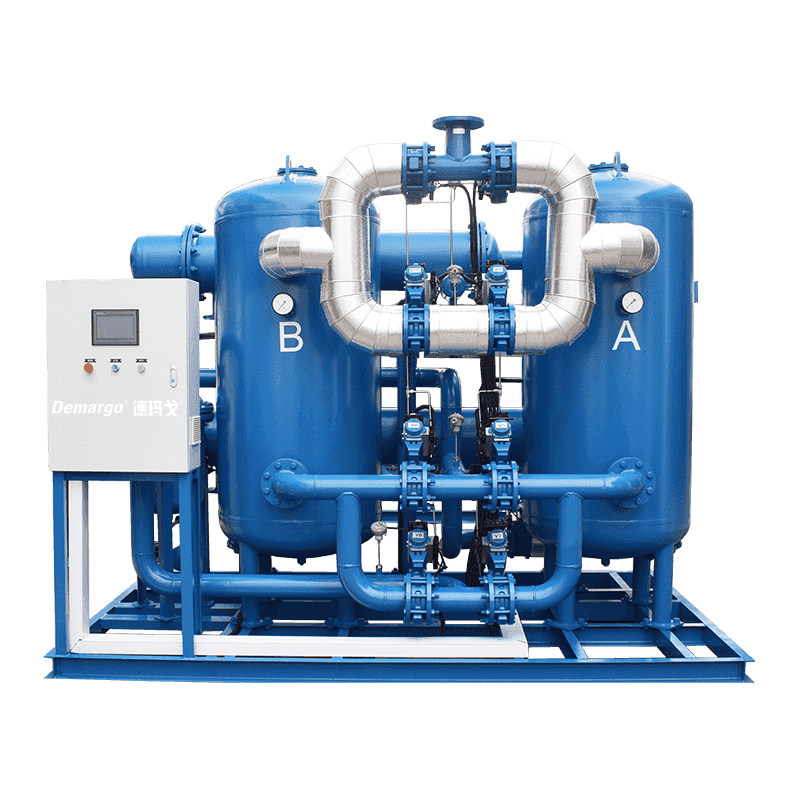 Compression Heat Zero Purge Adsorption DryerUtilizing waste heat from oil-free compressors for regeneration, this dryer achieves a -40°C dew point with zero purge gas consumption, featuring PLC control and a durable butterfly valve for reliable, energy-efficient operation.View Product →
Air from a compressor inlet always contains humidity, ambient particles and, for oil-lubricated compressors, carryover oil. The treatment train for instrument air therefore needs every component to work together. A common instrument air skid arrangement is:
For an oil-lubricated compressor, the coalescing filter must be rated to keep the oil concentration below the specified maximum. High-efficiency oil-removal elements plus activated carbon can achieve the ≤0.01 mg/m³ required for instrument air. Where the compressor is oil-free, the filtration requirement is still not zero: ambient particles, rust from piping and desiccant dust from the dryer must be removed.
Condensate from the intercooler and dryer separators contains oil and water. That condensate must be handled in an oil-water separator before disposal. Float drains, auto drains or electronic timing drains keep the separators working reliably. A dedicated instrument air receiver is also standard practice: it provides surge capacity and a stable pressure supply for control loops. Monitoring the dew point at the outlet verifies dryer performance continuously.
Petrochemical plants are full of classified hazardous areas. Dryers and filters installed in Zone 1 or Zone 2 locations must have explosion-proof electrical components. An ordinary refrigerated dryer with a standard electrical enclosure is not acceptable in a hazardous area unless it is ATEX or IECEx certified.
Demargo offers explosion-proof dryers with BT4 and CT4 ratings, which are suitable for petrochemical environments. A BT4 explosion proof dryer matches common petrochemical zone requirements with an Ex d IIB T4 rating. In addition, material selection matters. In coastal or sour service, stainless steel construction provides better corrosion resistance than painted carbon steel, especially for offshore platforms or plants processing sulfur-containing feedstocks.
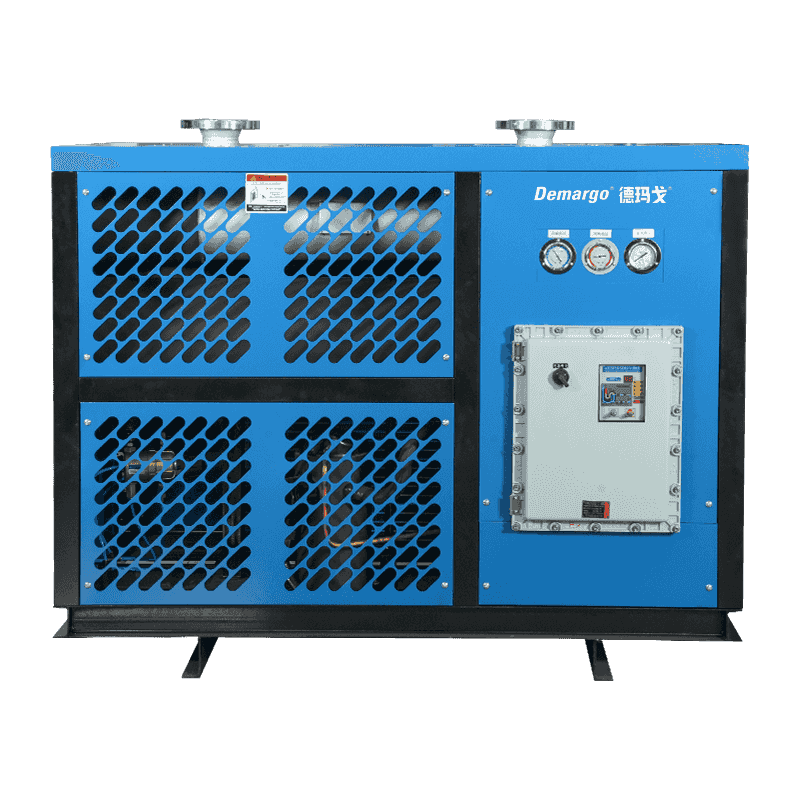 Explosion-Proof Compressed Air Dryer for Hazardous AreasDesigned for petrochemical environments, this dryer offers BT4 or CT4 explosion-proof ratings and optional stainless steel construction, ensuring corrosion resistance and safe operation in classified or sour service conditions.View Product →
The rule of thumb for a petrochemical project is simple: if the instrument air skid sits inside a classified area, every solenoid, heater, control panel and fan motor on the dryer must carry the appropriate ATEX or IECEx certificate.
When the specification is clear, selecting the right instrument air system is straightforward. The procurement questions that matter most are:
Common mistakes include sizing the dryer for a lower inlet temperature than actual summer conditions, selecting a refrigerated dryer when -40°C is required, ignoring the pressure drop through filters that were sized years ago, and forgetting condensate management downstream of the intercooler. These issues are not always visible at commissioning. They surface as instrument failures months later.
A pressure dew point of -40°C at 7 bar gauge is the typical requirement, aligned with ISO 8573-1 Class 2 water. Some plant specifications demand -70°C for outdoor lines in cold regions or when stringent analyzer protection is required.
Only when the required dew point is +3°C or lower. Refrigerated dryers do not reach -40°C, so a desiccant dryer or a combined refrigerated-desiccant dryer is needed for instrument air in petrochemical service.
In practice, yes. ISO 8573-1 Class 1 oil limit, which is ≤0.01 mg/m³, is considered oil-free. Many petrochemical projects specify oil-free compressors, but if the plant has oil-lubricated compression, high-efficiency coalescing and activated carbon filters can achieve the required oil classification.
Instrument air is conditioned to a strict purity class for pneumatic control and safety circuits. Plant air is less strictly treated and is used for tools, purging and maintenance operations.
Selecting instrument air equipment for a petrochemical plant comes down to being explicit about three things: the pressure dew point, the purity class, and the duty profile of the compressor. Once those are fixed, the dryer and filtration train can be engineered to match. A desiccant dryer for -40°C, a combined system for robust operation under variable load, and an explosion-proof unit for hazardous areas all serve the same goal: delivering reliable, dry and clean air to valves, analyzers and shutdown systems.
The cost of a correctly specified system is small compared with the cost of a plant trip caused by wet or dirty instrument air. Reviewing the system against the actual operating conditions, rather than the standard catalogue, is what separates a reliable petrochemical utility from a repeated source of maintenance work.
Related Products

ADD: No. 9, Lane 38, Caoli Road, Fengjing Town, Jinshan District, Shanghai, China
Tel: 0086-17321147609
Email: [email protected]
Copyright © Demargo (Shanghai) Energy Saving Technology Co., Ltd. Rights Reserved. Custom Gas Purifiers Factory