INQUIRE NOW
Demargo (Shanghai) Energy Saving Technology Co., Ltd.
2024-12-17The difference between a refrigerated air dryer and an adsorption dryer?
2024-12-17Principle and application of modular dryer?
2024-12-17Precautions for using refrigerated air dryers?
2024-12-17Exploring the secrets of future food preservation: Entering the world of high-efficiency freeze-drying technology - refrigerated air dryer
2025-02-20Content
Compressed air is often called the fourth utility in manufacturing, yet its contamination potential is frequently underestimated. In clean rooms, pharmaceutical lines, and food production facilities, even trace levels of micro-organisms in compressed air can lead to product recalls, spoilage, or patient health risks. The benchmark for truly sterile air is defined by ISO 8573-1 Class 0 — the most stringent classification for oil and particulate content. However, achieving this standard while simultaneously eliminating biological contaminants requires more than conventional filtration. This article explores how stainless steel microfiltration bridges the gap between regulatory ISO 8573-1 compressed air quality classes food industry requirements and practical sterility assurance, providing technical insights into media selection, validation protocols, and system design.
Recent audits by food safety authorities have highlighted compressed air as a hidden vector for pathogens like Salmonella and Listeria. The food grade gas testing protocols now explicitly require direct microbial sampling, moving beyond simple dew point or oil vapor measurements. For engineering teams, this means rethinking filter housings, drain strategies, and monitoring points. Stainless steel microfiltration offers a robust, heat-resistant, and cleanable solution that maintains sterile air filtration integrity even under aggressive sanitization cycles. We will examine real-world data from dairy and pharmaceutical facilities to illustrate performance benchmarks, then break down the design principles that ensure compliance with pharmaceutical compressed air guidelines.
The ISO 8573-1 standard establishes maximum allowable concentrations for three primary contaminant groups: solid particles, water (pressure dew point), and total oil (aerosol, liquid, and vapor). Class 0 is not a fixed numeric limit but indicates that the air is cleaner than the most stringent class (Class 1) for each pollutant. For the food industry, Class 0 is increasingly mandated by private standards (e.g., BRCGS, IFS) and national hygiene regulations, especially for direct contact applications such as product blowing, mixing, or packaging.
Class 1 particle count allows up to 20,000 particles per cubic meter in the 0.1–0.5 µm range and 400 particles per cubic meter in the 0.5–1.0 µm range. Oil content is capped at 0.01 mg/m³. While these figures are impressive, they do not guarantee the absence of viable micro-organisms in compressed air. Bacteria typically range from 0.3 µm to 5 µm and can survive in oil aerosols or water droplets. Therefore, meeting particle-based Class 1 does not automatically achieve sterility. This is why a separate validation for biological burden is essential, often referencing ISO 8573-7 (viable contaminant test method).
| Parameter | Class 1 | Class 0 | Sterile Air Target (Food/Pharma) |
|---|---|---|---|
| Solid particles (0.1-0.5 µm) per m³ | ≤ 20,000 | Below Class 1 detection | Not directly specified |
| Total oil (mg/m³) | ≤ 0.01 | < 0.01 (non-detect) | ≤ 0.01 |
| Viable microorganisms (CFU/m³) | Not defined | Not defined in 8573-1 | 0 CFU (action limit) |
As shown above, ISO 8573-1 Class 0 addresses only particles and oil. To achieve true sterility, engineers must integrate sanitary microfiltration validated for bacterial retention and apply supplementary food grade gas testing methods. The stainless steel microfilters discussed here are designed to achieve log reduction values (LRV) > 7 for Brevundimonas diminuta, the standard challenge bacterium for sterilizing-grade filters.
Compressed air systems provide ideal conditions for microbial growth: moisture, moderate temperatures, and nutrients from oil carryover. Common contaminants include Pseudomonas, Bacillus, and molds. These micro-organisms in compressed air originate from ambient air drawn into the compressor, but they proliferate in wet pipes, receivers, and dead legs. A 2021 cross-industry study (non-brand) revealed that 34% of food production lines had detectable airborne bacteria in their compressed air outlets, with counts up to 120 CFU/m³ – a clear violation of hygiene standards.
Unlike general compressed air testing, food grade gas testing focuses on viable organisms and requires specific sampling instruments such as impaction samplers or membrane filtration cassettes. Typical test points include point-of-use (POU) locations after all filters, with sample volumes of 1 m³ or more. The acceptable limit is zero CFU for products classified as high-risk (e.g., ready-to-eat meals, infant formula). For dairy aseptic filling, routine monitoring detects any micro-organisms in compressed air at frequencies ranging from weekly to monthly, depending on risk assessment.
One European confectionery plant implemented stainless steel microfilters after discovering intermittent positives in their chocolate enrobing air knives. Post-installation testing over 12 months showed zero CFU in all 47 sampling points, demonstrating that proper filtration eliminates biological risks. The filters also withstood daily steam-in-place (SIP) cycles without degradation, a critical advantage over polymer-based cartridges that soften under high temperature.
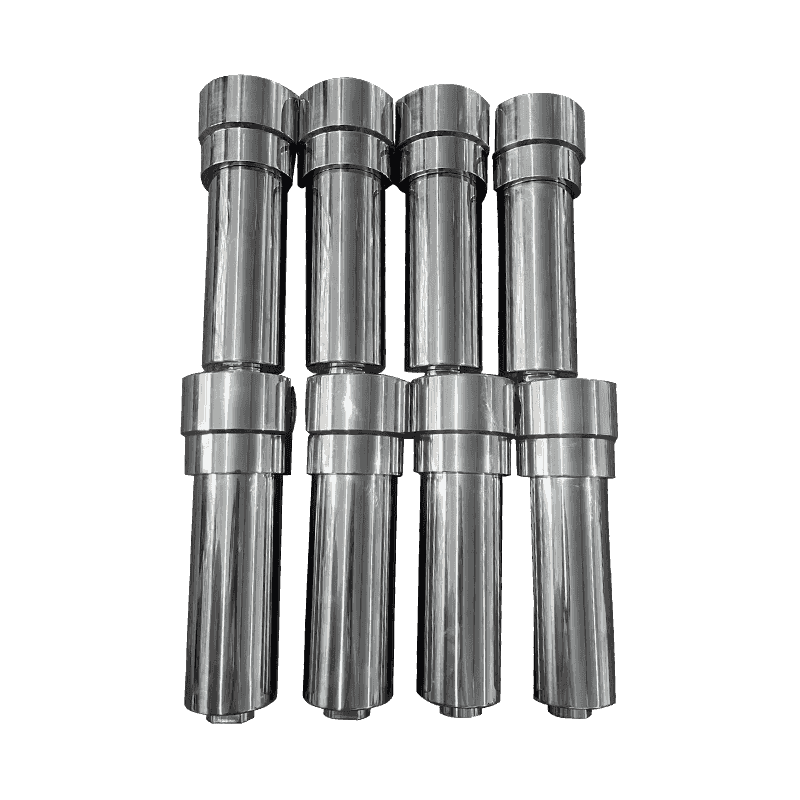
Stainless steel cleanroom filter technology employs sintered metal fiber or powder metal media with absolute ratings down to 0.01 µm. Unlike depth filters that rely on adsorption, sintered metal provides a defined pore structure, allowing accurate LRV predictions. For sterile applications, a 0.2 µm rated stainless steel filter is considered sterilizing-grade, achieving > 10^7 reduction of Brevundimonas diminuta. This performance meets the requirements of pharmaceutical compressed air systems for aseptic manufacturing.
A quantitative comparison shows that a 0.2 µm stainless steel filter element provides bacterial retention LRV > 8 for Pseudomonas aeruginosa, while a typical 0.01 µm coalescing filter (rated for oil removal) does not guarantee sterilizing performance due to variable pore structure. Therefore, dedicated bacteria removal filter elements must be installed at the point of use, preferably in sanitary housings with polished internals.
The illustrated sequence highlights the necessity of placing the sterile stainless steel filter as close to the application as possible. Any downstream piping after the sterile air filtration stage must be cleaned and maintained to prevent recontamination. For clean rooms and aseptic fillers, the filter housing is often steam-traced or equipped with a condensate drain that remains closed under sterile conditions.
The facility experienced recurring mold counts (up to 15 CFU/m³) in air blowing nozzles used to dry washed lettuce. Switching from a standard 0.01 µm coalescing filter to a 0.2 µm sanitary microfiltration element (316L stainless steel) reduced viable counts to zero in all subsequent tests. The filter housing included a sanitary clamp connection, allowing weekly validation sampling via a downstream sintered disk.
Pharmaceutical compressed air standards require zero viable organisms for drug product contact. The plant installed stainless steel sterile filters at each filling machine, with integrated steam-in-place capability. Over 18 months, no microbial breakthrough was observed, and the filters were reused after 20 autoclave cycles without loss of integrity, confirmed by bubble point testing.
These examples underscore that bacteria removal filter technology must be validated for the specific process conditions, including flow rate, pressure, and temperature. For food applications, filter integrity testing after each CIP/SIP cycle is recommended, using a water intrusion test or a bubble point method adapted for sintered metal.
To achieve and maintain ISO 8573-1 Class 0 sterility, engineering teams must address the entire compressed air system, not just the final filter. Key design principles include:
Practical recommendation: Install a dedicated stainless steel sampling port downstream of each sterile air filtration assembly. Use a 0.2 µm vent filter on the sample line to prevent back-contamination. Always run the air for 2-3 minutes before collecting a sample to purge stagnant gas.
When specifying a stainless steel cleanroom filter, request the manufacturer's validation guide including LRV data, compatibility with cleaning agents, and maximum allowable differential pressure. Over time, sintered metal elements can become clogged with particulates; cleaning by ultrasonic bath in a suitable solvent can restore pressure drop, but integrity testing is mandatory before reuse.
| Attribute | Stainless Steel (Sintered) | Polymer Membrane (e.g., PTFE) |
|---|---|---|
| Absolute rating / LRV | 0.2 µm, LRV >8 for B. diminuta | 0.2 µm or 0.01 µm, LRV variable |
| Temperature resistance | Up to 300°C continuous | Typically ≤80°C (PTFE to 120°C) |
| Cleaning/sterilization | Steam, autoclave, chemical, backflush | Limited cycles; steam may damage |
| Lifespan | 3-5 years with proper cleaning | Single-use or 6-12 months |
| Material shedding | None (metal sintered) | Possible fiber release if damaged |
| Initial cost | Higher | Lower |
For facilities that perform frequent steam sterilization or require absolute assurance against filter failure, the higher upfront investment in stainless steel is amortized over years of reliable service. Additionally, pharmaceutical compressed air auditors increasingly favor metal filters for aseptic applications due to their documented robustness in repeated SIP cycles.
No. ISO 8573-1 Class 0 only specifies limits for solid particles and oil content. It does not include any requirement for viable microorganisms. To confirm sterility, you must perform food grade gas testing according to ISO 8573-7 or equivalent methods, targeting 0 CFU.
For sterilizing-grade filtration, a 0.2 µm absolute rated sintered stainless steel filter is standard. It retains all common bacteria (e.g., Pseudomonas, E. coli) with high reliability. Some applications with high-risk viruses may require 0.1 µm, but 0.2 µm suffices for food and pharmaceutical compressed air.
For critical applications, integrity testing (bubble point or water intrusion) should be performed after each SIP cycle or at least monthly. In food production, weekly automated integrity checks are recommended. Always document the test results as part of HACCP records.
No. For oil removal, a coalescing filter (often 0.01 µm) is required upstream. The stainless steel sterile filter is installed downstream as a dedicated bacteria removal filter. Combining both functions in one element would compromise either oil removal efficiency or sterility assurance.
Yes. The element can be backflushed with clean compressed air or cleaned in an ultrasonic bath with a mild detergent, followed by thorough rinsing with WFI (water for injection) or purified water. After cleaning, always perform an integrity test and dry the element completely before reinstalling.
Key parameters include: sample volume (typically 1000 liters), culture media (e.g., TSA for bacteria, SDA for yeast/mold), incubation temperature (30-35°C and 20-25°C), and interpretation using CFU counts. Any detection of micro-organisms in compressed air above zero triggers corrective actions.
Related Products

ADD: No. 9, Lane 38, Caoli Road, Fengjing Town, Jinshan District, Shanghai, China
Tel: 0086-17321147609
Email: [email protected]
Copyright © Demargo (Shanghai) Energy Saving Technology Co., Ltd. Rights Reserved. Privacy Custom Gas Purifiers Factory