INQUIRE NOW
Demargo (Shanghai) Energy Saving Technology Co., Ltd.
2024-12-17The difference between a refrigerated air dryer and an adsorption dryer?
2024-12-17Principle and application of modular dryer?
2024-12-17Precautions for using refrigerated air dryers?
2024-12-17Exploring the secrets of future food preservation: Entering the world of high-efficiency freeze-drying technology - refrigerated air dryer
2025-02-20Content
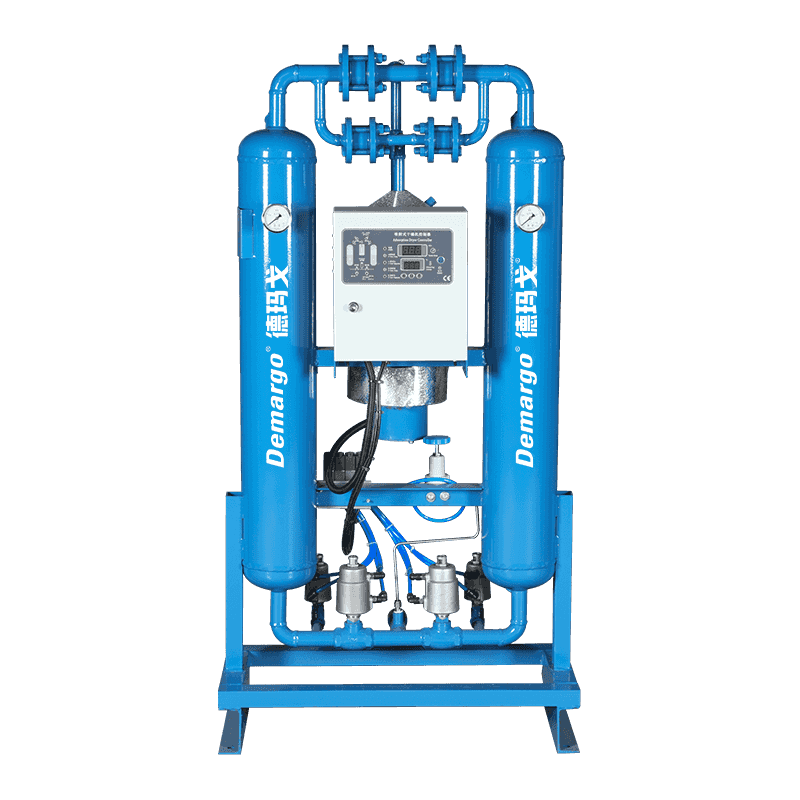
A regenerative desiccant air dryer removes moisture from compressed air by passing it through a vessel filled with desiccant material—typically activated alumina or molecular sieves—which adsorbs water vapor from the airstream. Once the desiccant becomes saturated, it is regenerated (dried out) and reused, which is why the process is called "regenerative." The system typically uses two towers that alternate between drying and regenerating, ensuring a continuous supply of dry air with a pressure dew point as low as -40°F (-40°C) or even -100°F (-73°C).
This technology is fundamental to industries where moisture in compressed air causes corrosion, product contamination, freeze damage, or instrument malfunction—such as pharmaceuticals, food processing, electronics, and automotive manufacturing.
The core mechanism is adsorption—not absorption. In adsorption, water molecules adhere to the surface of the desiccant material rather than being absorbed into it. Desiccant materials used in these dryers have an extremely high surface area. For example, one gram of activated alumina can have a surface area exceeding 200 square meters, providing an enormous number of adsorption sites for water molecules.
Common desiccant materials and their characteristics:
| Desiccant Type | Typical Dew Point Achieved | Best Application |
|---|---|---|
| Activated Alumina | -40°F (-40°C) | General industrial use |
| Silica Gel | -40°F (-40°C) | Moderate humidity conditions |
| Molecular Sieves (3Å/4Å) | -100°F (-73°C) | Ultra-low dew point requirements |
The adsorption process is exothermic—it releases heat. This is important to understand because the heat generated affects regeneration strategy and efficiency.
A regenerative desiccant dryer uses two towers (vessels) filled with desiccant. While one tower dries the incoming compressed air, the other tower is regenerating its saturated desiccant. This alternating cycle ensures uninterrupted dry air output.
The standard cycle works as follows:
This cycle repeats continuously. The switching is controlled by a timer or dew point sensor-based control system, ensuring optimal performance and desiccant longevity.
The most common and energy-efficient type of regenerative desiccant dryer for many applications is the Heatless Regeneration Adsorption Dryer. In this design, no external heater is used. Instead, regeneration relies on two physical principles:
The key advantage is simplicity—no heaters, no complex controls for heat management—but the trade-off is purge air consumption, which represents an ongoing energy cost. For applications requiring consistent -40°F dew points and flow rates under 500 SCFM, heatless regeneration is often the most practical and cost-effective choice.
Beyond heatless regeneration, there are other regeneration strategies, each with different energy and cost profiles:
| Regeneration Type | Heat Source | Purge Air Used | Energy Efficiency | Best For |
|---|---|---|---|---|
| Heatless (PSA) | None | ~15–18% | Moderate | Small to medium flow, simple installations |
| Heated Purge | Electric heater | ~7–10% | Good | Medium flow, energy savings priority |
| Blower Purge | Electric heater + blower | ~0–1% | Excellent | Large flow, high energy efficiency demands |
| Heat of Compression | Compressor heat | 0% | Highest | Oil-free compressors, maximum efficiency |
For many standard industrial operations, the heatless type remains the dominant choice due to its low capital cost, minimal maintenance, and reliable dew point performance.
Understanding the internal components helps in both selection and troubleshooting:
The most important output specification of any regenerative desiccant dryer is its pressure dew point (PDP)—the temperature at which moisture will begin to condense in the compressed air system at line pressure. The lower the dew point, the drier the air.
Common dew point standards and their applications:
Dew point performance degrades if the inlet air temperature is too high, the flow rate exceeds rated capacity, or the desiccant is contaminated with oil. Monitoring dew point with an online sensor and using demand-based cycle control can maintain consistent performance while reducing purge air waste by up to 30–50% compared to fixed-timer systems.
Dryer capacity is rated in SCFM or Nm³/h at specific inlet conditions (typically 100 psig / 7 bar, 100°F / 38°C inlet temperature). If actual inlet conditions differ—for example, higher temperature or lower pressure—the effective capacity is reduced and correction factors must be applied. Undersizing leads to premature desiccant saturation and wet air breakthrough.
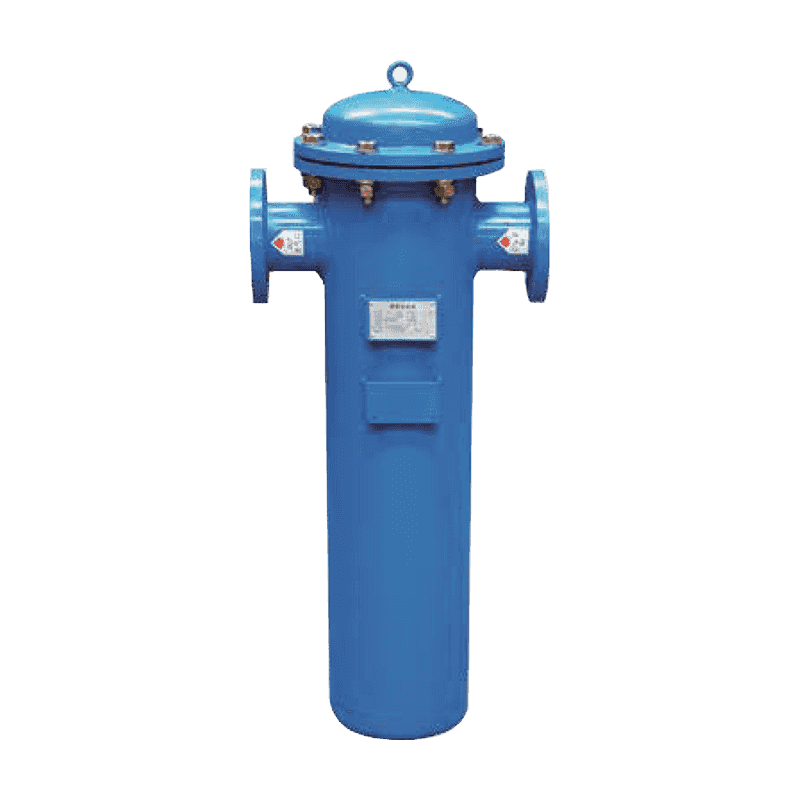
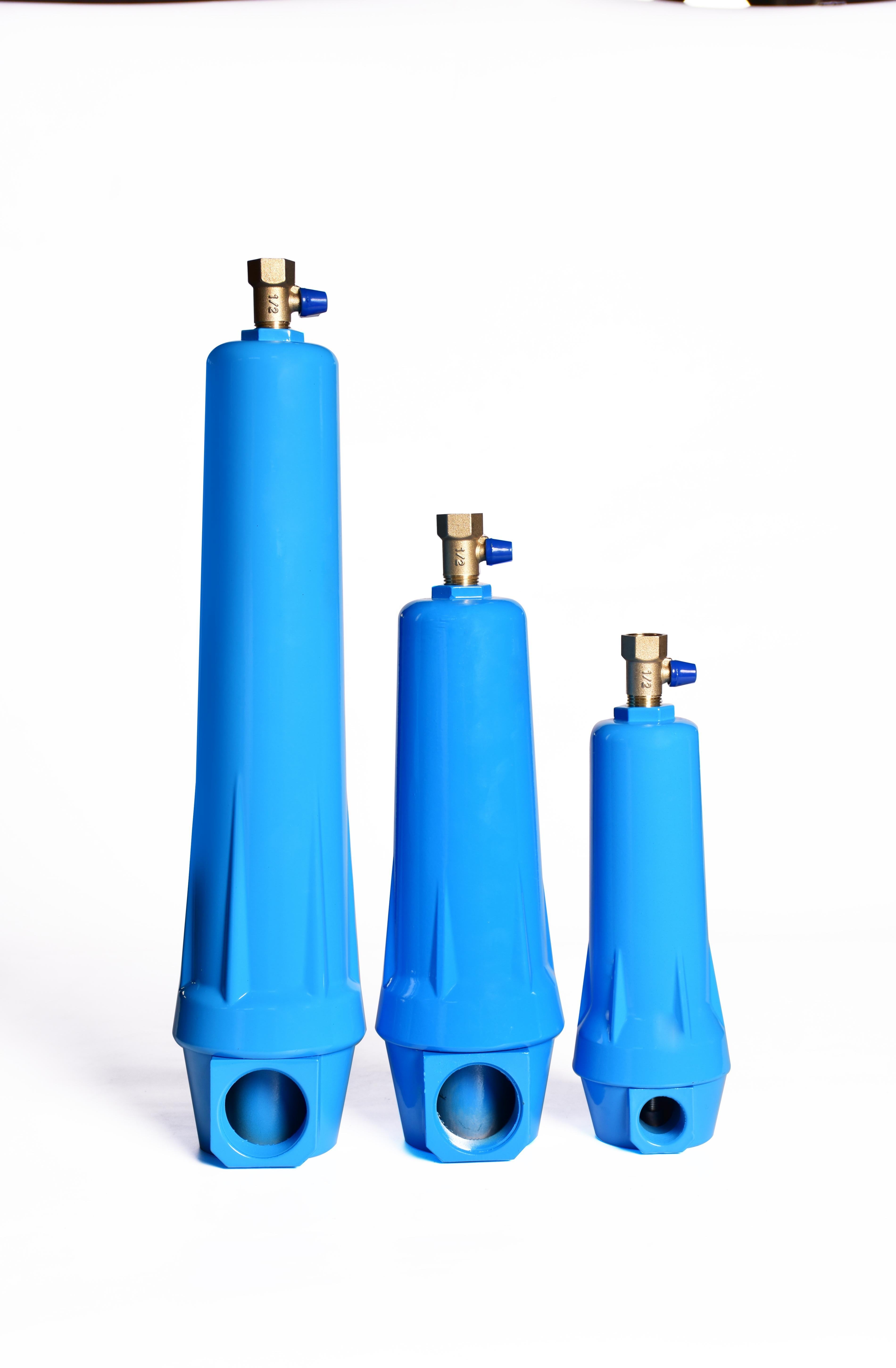
Oil contamination from upstream compressors is the single most common cause of premature desiccant failure. A coalescing pre-filter rated to 0.01 mg/m³ oil carryover should always be installed upstream of the dryer inlet. Even oil-free compressors should use particulate filters to prevent dust ingress.
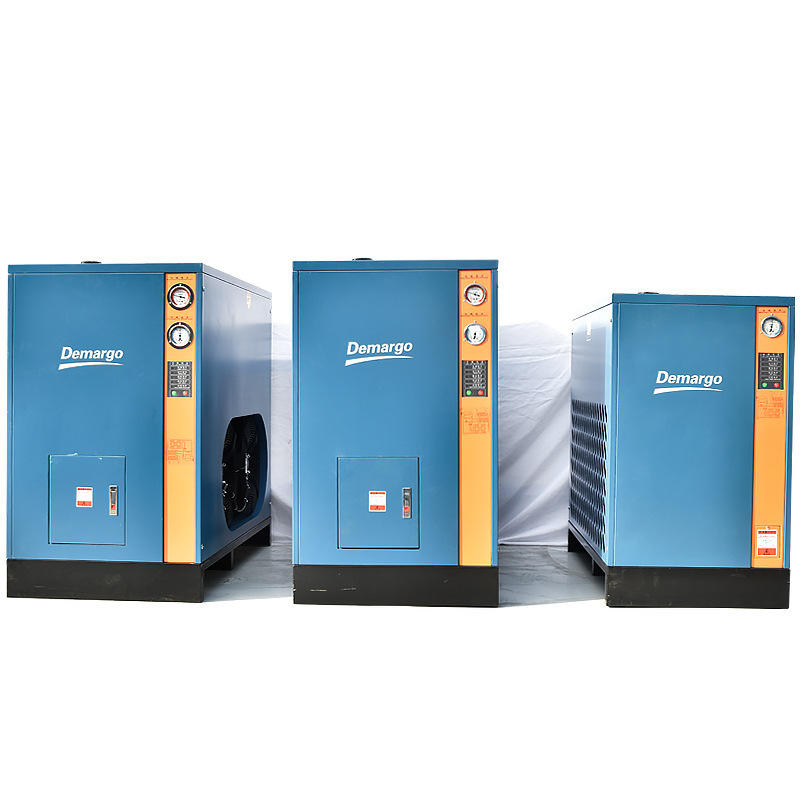
A refrigerated dryer cools air to condense and drain liquid water, achieving dew points of around 35–50°F (2–10°C). A desiccant dryer uses adsorption to achieve much lower dew points of -40°F to -100°F (-40°C to -73°C), making it essential when freezing temperatures or moisture-sensitive processes are involved.
Typically 15–18% of the rated flow capacity. For example, a dryer rated at 100 SCFM will use approximately 15–18 SCFM of dry air for regeneration, which is exhausted to atmosphere. Demand-cycle control systems can reduce this consumption significantly during periods of lower air usage.
Under clean, oil-free conditions with proper pre-filtration, desiccant typically lasts 3–5 years. Oil contamination, excessive temperatures, or physical breakdown of beads can shorten this significantly. Dew point degradation is the primary indicator that desiccant replacement is needed.
No. Liquid water (slugs or heavy condensate) will rapidly saturate and damage desiccant. An aftercooler, moisture separator, and coalescing filter should always be installed upstream to remove bulk liquid before the dryer inlet.
Common causes include: flow rate exceeding rated capacity, inlet air temperature above design conditions, oil-contaminated desiccant, failed switching valves, clogged purge exhaust mufflers, or a depleted desiccant bed due to age. A dew point alarm helps identify this condition promptly.
Yes, with precautions. The dryer itself is not damaged by cold ambient temperatures, but the compressed air system must be protected from freezing before the air enters the dryer. The dryer's output at -40°F dew point means condensation will not occur even in very cold environments, which is one key reason these dryers are used for outdoor pipeline and instrument air applications.
Related Products

ADD: No. 9, Lane 38, Caoli Road, Fengjing Town, Jinshan District, Shanghai, China
Tel: 0086-17321147609
Email: [email protected]
Copyright © Demargo (Shanghai) Energy Saving Technology Co., Ltd. Rights Reserved. Custom Gas Purifiers Factory