INQUIRE NOW
Content
Every compressed air network eventually reveals the weakest link in its filtration chain, and in most caustic or high-humidity plants, that weak link is the filter housing itself. A carbon steel or aluminum housing may perform well for the first year, then begin pitting internally once condensate mixes with chlorides, acidic vapors, or wash-down chemicals common in food, marine, offshore, and chemical processing sites. Once pitting starts, particulate shedding contaminates downstream air, seal surfaces lose their finish, and unplanned housing replacement becomes a recurring line item rather than a one-time capital cost.
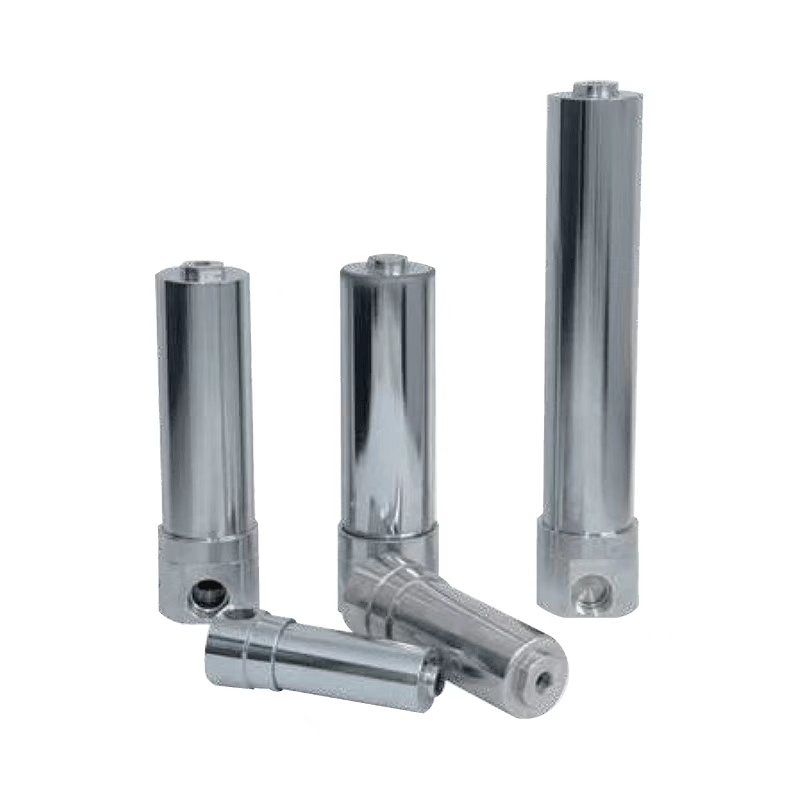
A properly specified stainless steel compressed air filter removes this failure mode almost entirely. Because the housing itself resists chemical attack, the filtration element inside can do its job for the full rated service interval instead of being undermined by a housing that is quietly degrading around it. This distinction matters more in industrial procurement than it first appears, because a filter housing failure rarely stays contained; it usually forces a full system shutdown for inspection, cleaning, and replacement of downstream piping that has been contaminated with rust particulate.
| Housing Material | Typical Service Life in Caustic Air | Primary Failure Mode | Relative Maintenance Frequency |
|---|---|---|---|
| Carbon steel, painted | 1 to 3 years | Internal pitting corrosion | High |
| Aluminum, anodized | 2 to 4 years | Galvanic corrosion at fittings | Moderate to High |
| 304 stainless steel | 5 to 8 years | Chloride stress cracking in extreme cases | Low to Moderate |
| 316 stainless steel | 8 to 12 plus years | Rare, isolated pitting under prolonged chloride exposure | Low |
These figures are drawn from field observations across chemical processing, marine fabrication, and food-grade compressed air installations rather than any single manufacturer's laboratory data, and actual results vary with humidity control, condensate drainage design, and how consistently the compressor room is ventilated.
The mechanism behind this failure pattern is straightforward once it is traced through the system. Compressed air always carries some level of moisture, and as air cools after leaving the compressor, that moisture condenses inside downstream piping and filter housings. In a plant with any level of chloride, acid, or caustic exposure, that condensate is rarely pure water. It picks up trace contaminants from the surrounding atmosphere, and when it sits against an unprotected metal surface for extended periods, it initiates localized corrosion cells. Left unaddressed, these cells grow into pits, and pits eventually become through-wall leaks or structural weak points that fail under pressure cycling rather than steady load.
What makes this particularly costly in an industrial setting is that the failure is rarely detected early. A slowly pitting housing does not usually announce itself with an obvious symptom until either a visible leak appears or a scheduled inspection catches it. By the time a leak is visible, the housing has often been shedding fine rust particulate into the airstream for months, and that particulate travels downstream into valves, cylinders, and instrumentation that were never designed to tolerate it. The repair cost, in other words, is rarely limited to the housing itself.
Not every housing labeled stainless is built to the same standard. Wall thickness, weld quality at end caps, gasket chemistry, and the internal flow path all influence how the filter behaves once it is under continuous pressure cycling rather than sitting on a bench.

Industrial-duty housings are typically machined or drawn from thicker stock than consumer-grade equivalents, giving the vessel a wider safety margin against pressure spikes and mechanical impact during maintenance work.
Continuous, fully penetrated welds at end caps prevent crevice corrosion from forming at seam gaps, which is one of the more common early failure points in lower-cost fabricated housings.
A housing shaped to minimize turbulence around the filter element reduces pressure drop and helps the element load evenly, extending the interval between element changes.
Elastomer selection needs to match the specific chemical exposure of the plant, since a gasket that is compatible with mild condensate may still degrade quickly when exposed to solvent vapor or acidic wash-down residue.
When these elements are specified correctly together, the resulting housing behaves predictably across its rated pressure range instead of developing localized weak points that only become visible after a leak or a failed inspection.
Surface finish is another detail that gets overlooked during procurement, yet it has a direct effect on long-term reliability. A rougher internal surface gives condensate and airborne particulate more places to cling to, which accelerates both fouling and, in aggressive environments, the onset of pitting. A properly finished interior sheds condensate more readily toward the drain point, which keeps the housing walls drier between drain cycles and reduces the window of time during which corrosive contact can occur. This is a small manufacturing detail, but across a service life measured in years, it compounds into a meaningfully different outcome for two housings that otherwise look identical on a datasheet.
Procurement teams evaluating corrosion-resistant compressed air filtration housings should also ask about certification traceability, since mill test reports confirming actual alloy composition matter more in this category than in most other mechanical components. A housing stamped as stainless but sourced without verified material certification carries real risk in a plant where the entire justification for the higher upfront cost is long-term corrosion performance.
Corrosion resistance solves the housing problem, but it does not solve air quality on its own. Oil carryover from lubricated compressors, along with fine aerosols generated during compression, still needs to be captured before the air reaches instrumentation, paint booths, pharmaceutical packaging lines, or pneumatic tooling that is sensitive to contamination.

This is the role of a coalescing stage, often marketed as a high efficiency oil remover. Coalescing media works by forcing air through a densely packed fiber bed that captures fine oil aerosol droplets and merges them into larger droplets heavy enough to drain out through the bottom of the housing rather than traveling downstream with the airflow.
Pairing a corrosion-resistant housing with a properly rated coalescing element gives a plant two separate reliability improvements at once: the housing stops degrading from the outside in, while the element inside continues to protect air quality on schedule rather than being compromised by internal rust particulate mixing with the media bed.
It is worth noting that coalescing performance is not static across the life of the element. In the first stage of service, a clean element operates at low pressure drop but has not yet built up the thin oil film across its fiber matrix that actually improves capture efficiency. As the element loads further, efficiency typically climbs before pressure drop eventually becomes the limiting factor and the element needs replacement. Understanding this curve helps explain why some plants see slightly better air quality readings a few weeks after installing a new element rather than immediately on day one, and why running an element well past its rated pressure drop threshold does not necessarily continue improving air quality even though it may seem intuitive that a more loaded element would capture more contaminant.
Different industries push filtration housings toward failure in different ways, and understanding which stress dominates in a given facility helps narrow down the right specification rather than defaulting to a generic mid-range product.
| Environment | Dominant Stress | Recommended Housing Focus |
|---|---|---|
| Marine and offshore platforms | Salt-laden humid air, constant condensation | 316 stainless steel, sealed drain ports |
| Chemical and petrochemical plants | Acidic or caustic vapor exposure | 316 stainless steel with chemically compatible gaskets |
| Food and beverage processing | Frequent wash-down, chlorine-based sanitizers | 304 or 316 stainless steel, smooth internal finish |
| Pharmaceutical and cleanroom air | Contamination sensitivity rather than corrosion alone | Stainless housing paired with high efficiency coalescing stage |
| High-pressure industrial air, above standard line pressure | Mechanical stress cycling | Thicker wall housings rated with margin above working pressure |
In each of these settings, the cost of a housing failure extends well beyond the price of the part itself. A leak in a chemical plant can trigger a full safety shutdown procedure, and a contamination event in food or pharmaceutical air can require documented corrective action and, in regulated environments, batch review.
Selecting a pressure rating with adequate margin above normal operating pressure is equally important in high-pressure applications, since repeated cycling near the upper limit of a housing's rating accelerates fatigue at welds and threaded connections even when the material itself is corrosion resistant. A housing rated comfortably above the actual working pressure of the line tends to show far fewer stress-related issues over a multi-year service period.
Facilities operating multiple compressed air branches often find it useful to segment filtration specification by zone rather than applying one blanket standard across the entire plant. A branch feeding outdoor equipment or a wash-down area justifies the higher upfront cost of a fully stainless housing, while an indoor, climate-controlled branch feeding general shop air may not need the same level of investment. This zone-based approach lets a facility direct its filtration budget toward the areas where corrosion risk is actually concentrated, rather than either overspending on low-risk branches or underspending on high-risk ones because a single plant-wide standard was applied without considering local conditions.
A single filter rarely does everything a plant needs. Most reliable compressed air systems use a staged approach, where each filter in the sequence targets a specific contaminant class rather than asking one element to do all the work.
Positioning a stainless steel housing at the pre-filter and coalescing stages protects the most exposed part of the system, since these are the filters most likely to sit in humid compressor rooms or outdoor enclosures where condensate collects. Point-of-use filtration further downstream can often use lighter-duty housings because the air reaching that stage has already been conditioned.
Purchasing decisions for filtration equipment are frequently made against the lowest quoted price rather than the total cost the plant will absorb over the equipment's realistic service life. Housing material is one of the clearest places where this shortcut becomes expensive, because the price gap between a carbon steel housing and a stainless equivalent is often recovered several times over once replacement labor, downtime, and downstream contamination cleanup are included in the comparison.
| Cost Category | Carbon Steel Housing | Stainless Steel Housing |
|---|---|---|
| Initial purchase price | Lower | Higher |
| Expected replacements over 10 years | 2 to 4 | 0 to 1 |
| Labor cost for housing swaps | Recurring | Rare or none |
| Downstream contamination risk | Elevated after early corrosion onset | Low across service life |
| Unplanned downtime exposure | Higher | Lower |
The labor and downtime columns are where the comparison shifts most dramatically. Swapping a housing is rarely a quick task in an operating plant, since it typically requires isolating a section of the air system, draining pressure safely, and in some facilities coordinating the work with a broader maintenance shutdown window. When that disruption happens two or three times over a decade instead of zero or one, the cumulative labor and lost-production cost can exceed the original price difference between housing materials many times over.
Even a well-specified stainless housing still requires a maintenance plan, since the filtration element inside has a finite service life regardless of how corrosion-resistant the housing itself is.
Pressure differential is the most reliable replacement indicator. Tracking the pressure drop across a filter element over time gives a far more accurate replacement schedule than a fixed calendar interval, because loading rate depends heavily on actual air quality and duty cycle rather than the passage of time alone.
Plants that track this data over several years typically find that filtration costs become predictable rather than reactive, which makes budgeting for consumables far easier than treating every element change as an emergency.
Documentation also plays a larger role in regulated industries than maintenance teams sometimes expect. In food, beverage, and pharmaceutical operations, filtration maintenance logs are often part of what an auditor requests during a compliance review, since air quality is treated as a process input rather than a background utility in these settings. A plant that can produce a clear history of element changes, pressure trends, and drain inspections demonstrates a controlled process, while a plant relying on memory or informal notes creates unnecessary audit risk even if the actual air quality has been perfectly acceptable throughout.
Field experience across chemical and marine facilities generally shows stainless housings lasting several times longer than painted carbon steel equivalents, though the exact multiple depends heavily on condensate drainage design and how consistently the compressor room is ventilated.
304 stainless performs well in most general industrial settings, while 316 is typically reserved for environments with chloride exposure, such as coastal, marine, or certain chemical processing applications where 304 can be more prone to localized pitting over time.
A coalescing stage primarily targets oil aerosols and fine liquid droplets, so it does capture some moisture, but it is not a substitute for a dedicated dryer when a plant requires consistently low dew point air.
Replacement should be driven by pressure differential rather than a fixed calendar date, since loading rate varies with actual air quality, ambient humidity, and compressor duty cycle across different facilities.
In most cases yes, since stainless housings are typically manufactured to match standard port sizes and mounting configurations, though it is worth confirming pressure rating and connection type against the existing line before ordering.
The most common mistake is focusing only on the filtration element's efficiency rating while overlooking the housing material, which allows corrosion to compromise the system from the outside even when the element itself is performing correctly.
Related Products

ADD: No. 9, Lane 38, Caoli Road, Fengjing Town, Jinshan District, Shanghai, China
Tel: 0086-17321147609
Email: [email protected]
Copyright © Demargo (Shanghai) Energy Saving Technology Co., Ltd. Rights Reserved. Custom Gas Purifiers Factory