INQUIRE NOW
Content
When a packaging line rejects sealed trays because a pilot valve sticks in cold weather, the compressor is rarely the root cause. The compressed air may be clean enough for general workshop use, but it is not dry enough for a low dew point process. A low dew point dryer selection guide should begin with one number: the target pressure dew point at the actual operating pressure. Dryer type, desiccant choice, regeneration method, and filter selection all follow from that number.
Most low dew point problems are selection problems, not maintenance problems. A refrigerated dryer rated at +3 °C pressure dew point cannot be pushed to −40 °C by lowering its set point. A heatless adsorption dryer can reach −40 °C or lower, but it consumes purge air. A combined dryer can bridge the gap, yet it still needs correct sizing and reliable drainage. The sections below show how to match the dryer to the duty, avoid common sizing errors, and judge operating cost before purchase.
Pressure dew point is the moisture level in compressed air at line pressure. Atmospheric dew point describes moisture at atmospheric pressure. They are not interchangeable. A specification that says −40 °C atmospheric dew point is not the same as −40 °C pressure dew point, and using the wrong one can undersize the dryer by a wide margin. The pressure dew point explained in more detail shows why the distinction matters at 7 bar and above.
ISO 8573-1 water classes give a practical starting point for selection. The class number should be written into the inquiry before any model is discussed.
| ISO 8573-1 water class | Maximum pressure dew point | Typical drying route |
|---|---|---|
| Class 1 | −70 °C / −94 °F | Heatless or heated adsorption with molecular sieve |
| Class 2 | −40 °C / −40 °F | Heatless adsorption, micro-heat adsorption, or combined dryer |
| Class 3 | −20 °C / −4 °F | Adsorption or high-performance combined dryer |
| Class 4 | +3 °C / +37 °F | Refrigerated dryer |
| Class 5 | +7 °C / +45 °F | Refrigerated dryer in moderate ambient |
| Class 6 | +10 °C / +50 °F | Refrigerated dryer, light duty |
If the process requires Class 2, a refrigerated dryer alone will not meet the duty. A combined low dew point dryer uses a refrigerated stage to remove bulk water, then an adsorption stage to reach the lower pressure dew point. This reduces the moisture load on the desiccant and lowers regeneration loss compared with a standalone heatless dryer.
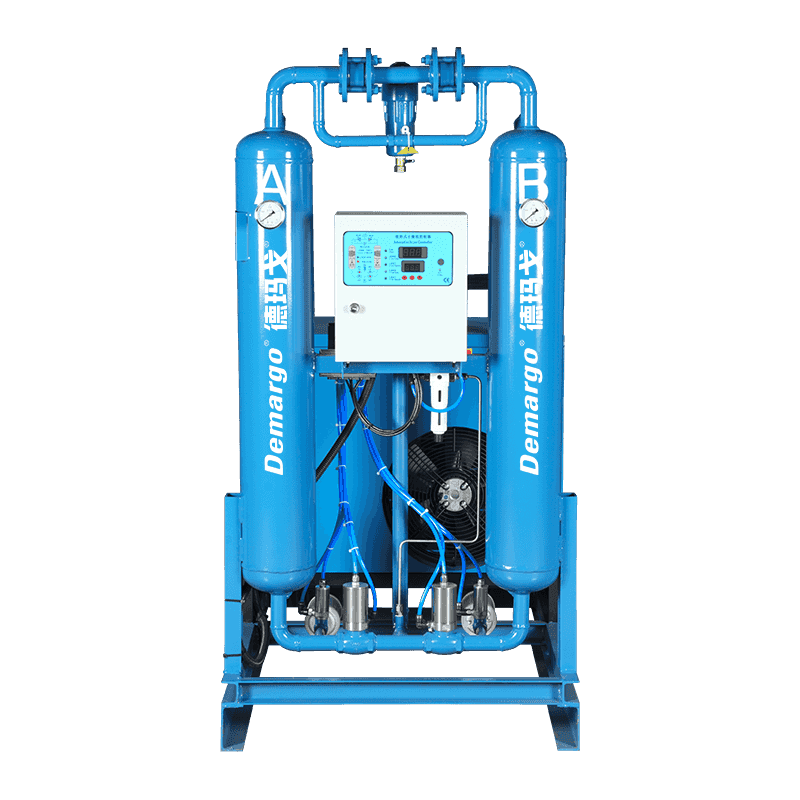 Heatless Combined Compressed Air DryerCombines refrigerated precooling with heatless desiccant adsorption for lower pressure dew points when refrigerated drying alone cannot satisfy Class 2 requirements.View Product →
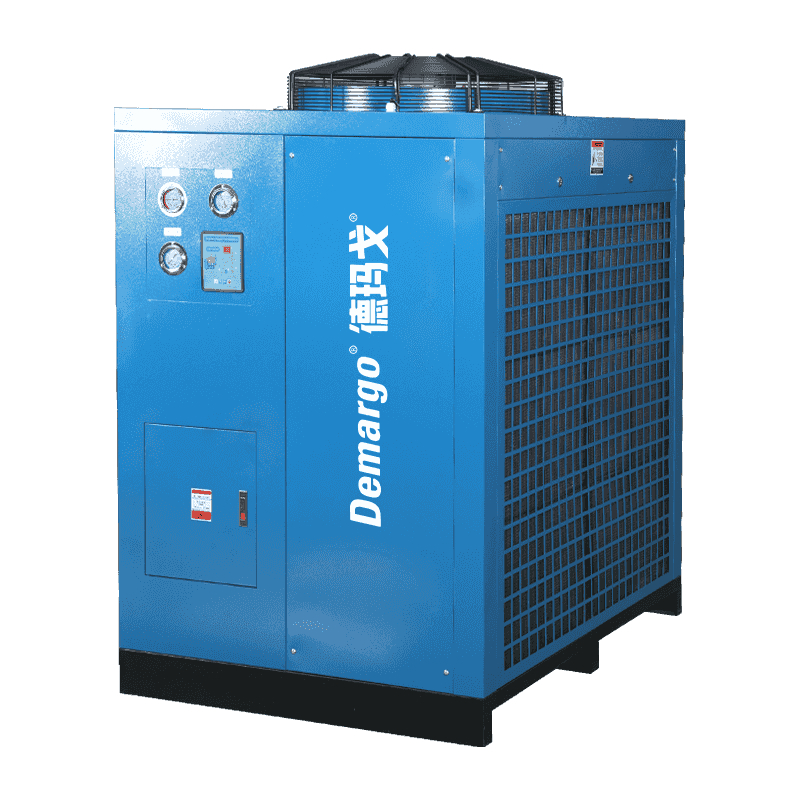
The dryer type should follow the dew point class, the load profile, and the acceptable operating cost. A refrigerated dryer is usually the lowest-cost option when +3 °C to +10 °C pressure dew point is acceptable. It has no desiccant to replace and is simple to maintain. It is not a low dew point machine in the −40 °C sense.
Load profile matters as much as dew point. A plant that runs at full flow for one shift and at low flow for another may prefer a cycling refrigerated dryer or a properly sized adsorption dryer with stable regeneration. A dryer that is oversized for the average flow but undersized for the peak flow will show dew point spikes during production peaks.
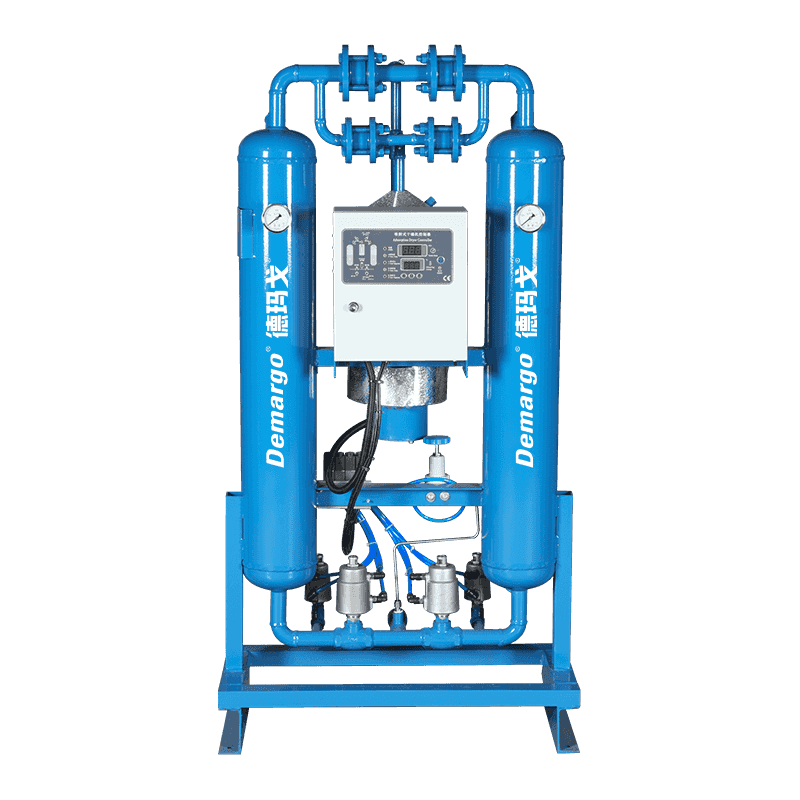 Energy-Saving Micro Heat Regeneration Adsorption DryerHybrid PSA/TSA adsorption dryer with low purge consumption and stable dew point under varying loads, suited to process and instrument air.View Product →
Dryer capacity on a nameplate is not the capacity at the site. Adsorption and refrigerated dryers are rated at reference conditions such as 35 °C inlet temperature, 25 °C ambient, 7 bar working pressure, and a specified pressure dew point. Real plants rarely stay inside those conditions. Inlet temperature above the reference reduces desiccant capacity and increases the moisture load. High ambient temperature makes the refrigerated stage work harder and raises the pressure dew point if the dryer is not corrected.
| Inlet air temperature | Approximate correction factor | Ambient temperature | Approximate correction factor |
|---|---|---|---|
| 35 °C | 1.00 | 25 °C | 1.00 |
| 40 °C | 1.15 | 30 °C | 1.10 |
| 45 °C | 1.30 | 35 °C | 1.20 |
| 50 °C | 1.50 | 40 °C | 1.35 |
For example, a plant needs 1000 m³/h of compressed air at −40 °C pressure dew point. Inlet temperature is 45 °C and the compressor room reaches 40 °C in summer. The corrected flow is 1000 × 1.30 × 1.35, or 1755 m³/h. A dryer selected at 1000 m³/h would be overloaded and would likely fail the dew point target during summer. Confirm whether the flow is stated in Nm³/h or m³/h, and confirm the pressure at the dryer inlet, because lower pressure increases the actual volumetric flow through the dryer.
Regeneration is where low dew point dryers separate on total cost. Heatless dryers use part of the dried compressed air to regenerate the offline bed. That purge air is already paid for at the compressor. Heated and compression heat designs reduce or eliminate purge loss, but they add heater power, blower power, or require a heat source from the compressor.
| Regeneration method | Purge air loss | Added energy | Typical fit |
|---|---|---|---|
| Heatless | 12% to 20% | Low | Small to medium flow, −40 °C to −70 °C |
| Micro-heat | 5% to 8% | Heater power | Medium flow, −40 °C |
| Blower heat | 0% | Blower and heater power | Large flow, low purge priority |
| Compression heat | 0% | Uses compressor heat | Large oil-free or oil-injected screw systems |
A simple check makes the comparison concrete. A 1000 m³/h system with a heatless dryer at 15% purge loses 150 m³/h of compressed air. Over 8000 operating hours, that is 1,200,000 m³ of treated air used for regeneration. If the compressor specific power is 0.1 kWh/m³, the purge represents roughly 120,000 kWh per year. A zero purge compression heat dryer can remove that loss, but it needs a suitable heat source and a higher initial investment.
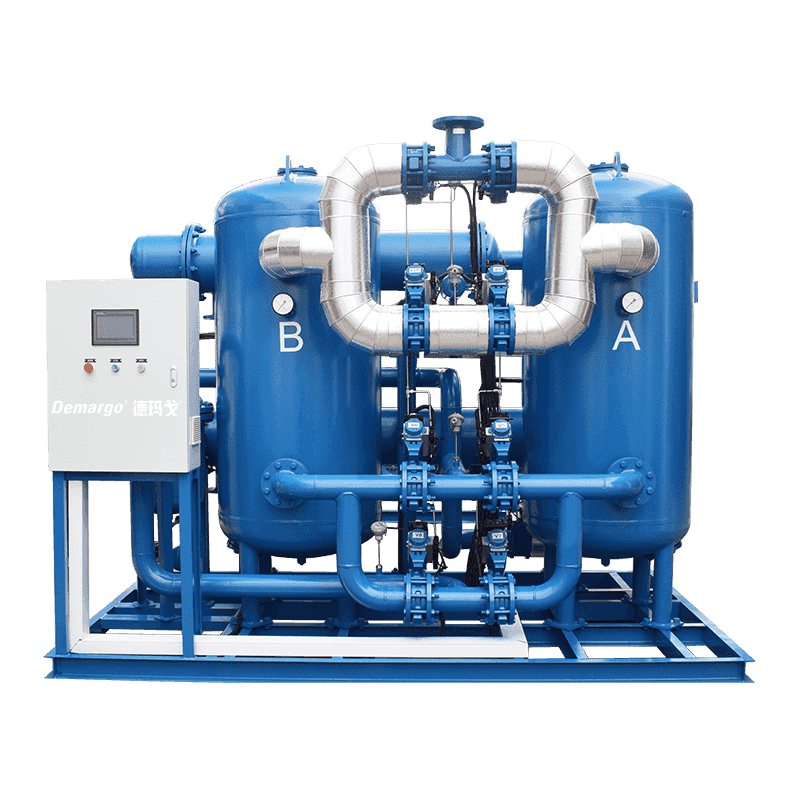 Compression Heat Zero Gas Consumption Adsorption DryerUses oil-free compressor waste heat for desiccant regeneration, eliminating purge air loss where a suitable heat source is available.View Product →
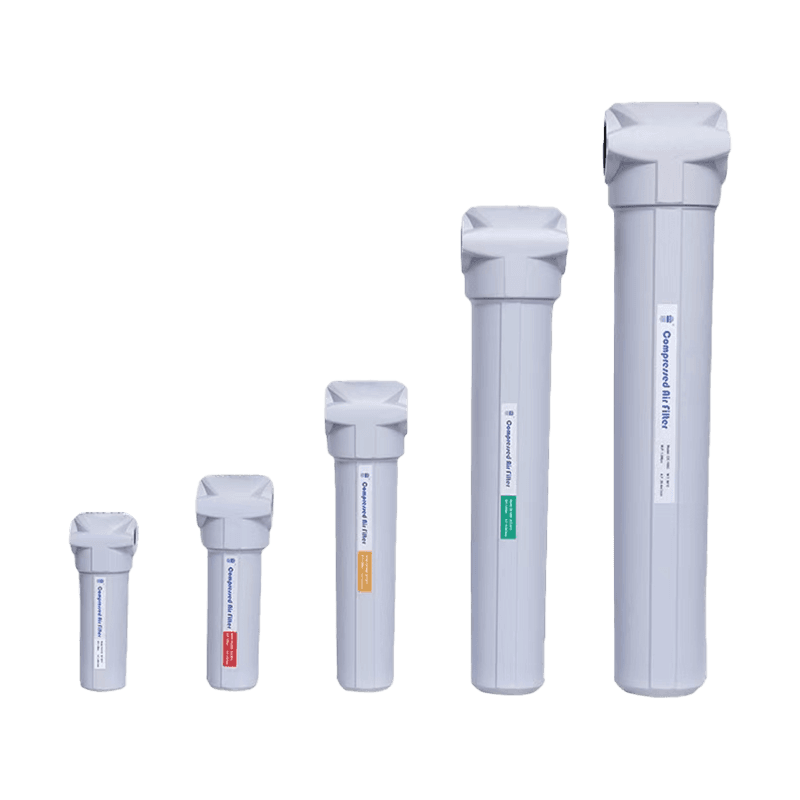
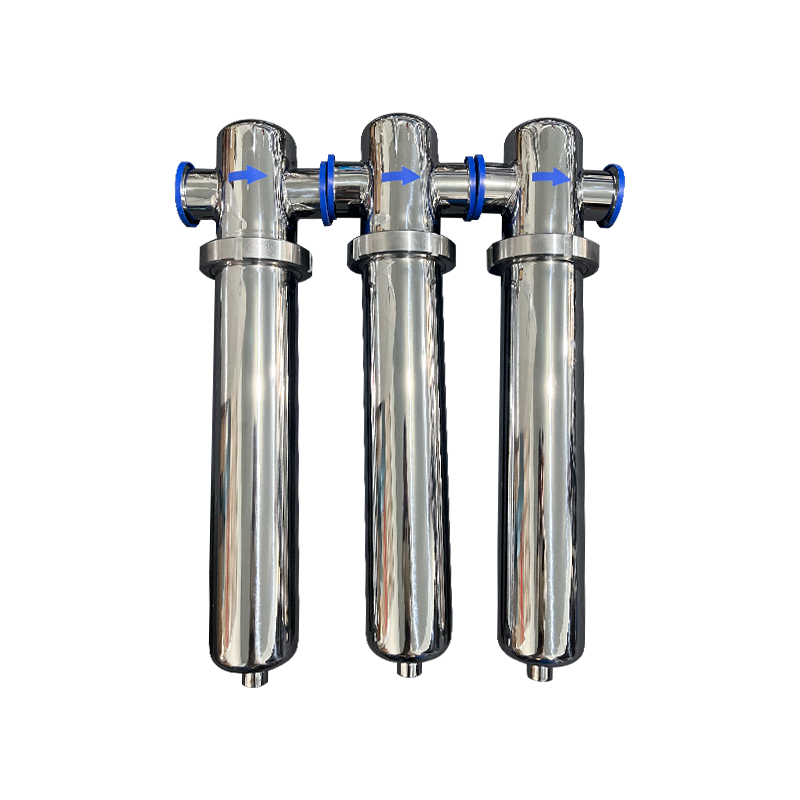
A low dew point dryer does not work alone. Oil carryover, particulate, and liquid water must be removed before the air reaches the desiccant. If condensate is not drained reliably, it can flood the dryer, carry oil into the adsorption bed, and permanently reduce capacity. The treatment train usually includes a pre-filter for oil and water removal, a coalescing filter for fine oil mist, a drain system that removes condensate without losing compressed air, and a post-filter to capture desiccant dust.
Specification sheets and flow correction tables can be reviewed during quotation. The downloadable specification sheets can help confirm the pressure dew point, corrected flow, connection size, and drain requirements before the order is placed.
Most failed low dew point projects can be traced to a short list of selection gaps. These are worth checking before the purchase order is issued.
A low purchase price is a risk signal when the corrected flow, regeneration loss, and drainage details are missing. The dryer may meet the dew point on the first day of commissioning and drift above it in summer, at peak flow, or after the first desiccant charge ages.
Typically +3 °C to +10 °C. +3 °C is the practical low limit for a standard refrigerated dryer. It cannot reach −40 °C.
Around 15% of rated flow under reference conditions. At high ambient or high inlet temperature, purge can rise to 18% or 20% if the dryer is not correctly sized.
When the target pressure dew point is below +3 °C, but the plant wants lower regeneration loss than a standalone heatless dryer. The refrigerated stage removes bulk water first.
Yes. Oil carryover and particulate can poison desiccant and foul heat exchangers. Filtration protects both the dryer and the final air quality.
Use a calibrated dew point sensor at the dryer outlet under actual flow, pressure, and temperature. Do not rely only on the dryer controller display.
Low dew point dryer selection is a sequence, not a product lookup. Define the pressure dew point class, correct the flow for inlet and ambient temperature, choose the regeneration method based on real operating cost, and protect the dryer with filtration and reliable drainage. That sequence keeps a −40 °C process from being sold a +3 °C solution.
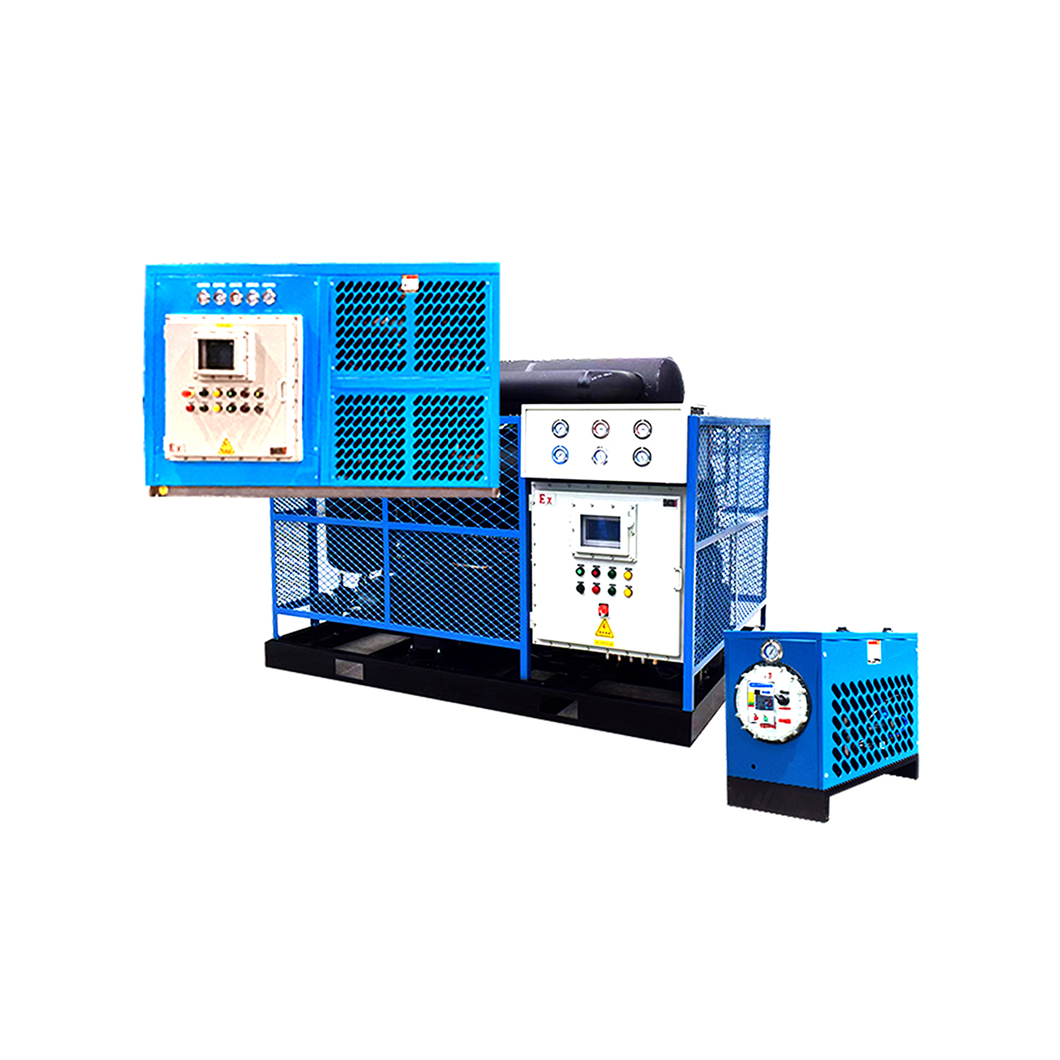
When the duty involves laser cutting, clean rooms, explosion-proof areas, or special gases, bring those constraints into the first conversation. They change the dryer type, materials, and controls. A selection guide is useful only when it ends with a specification that can be checked against the actual operating data.

ADD: No. 9, Lane 38, Caoli Road, Fengjing Town, Jinshan District, Shanghai, China
Tel: 0086-17321147609
Email: [email protected]
Copyright © Demargo (Shanghai) Energy Saving Technology Co., Ltd. Rights Reserved. Privacy Custom Gas Purifiers Factory