INQUIRE NOW
Content
Start with a number you can check on your own compressor. A 75 kW lubricated screw unit running at 7 bar moves about 13 m³/min (roughly 460 cfm) of free air. In saturated 30 °C conditions that air carries about 30 g of water per cubic metre, so roughly 23 litres of water enters the system every hour. The aftercooler removes part of it. What remains stays as vapour until something cools it further, which is usually the inside of a pipe run, a cylinder or a spray gun.
A refrigerated air dryer is the usual answer, and for most plants it is the correct one. The conclusion first: choose a refrigerated air dryer when the required pressure dew point is between +3 °C and +10 °C, when the pipework and end uses stay above freezing, and when the air serves general plant duty rather than a moisture-critical process. Move outside those three conditions and the job belongs to a desiccant, combined or membrane dryer instead.
The decision is rarely about which drying technology is "better". It is about what dew point the process needs, what the coldest point in the system will be, and how much purge air the site can afford to throw away.
A refrigerated dryer works like a small chiller. Compressed air passes over a refrigerant-cooled heat exchanger and is pushed down to roughly +2 °C to +10 °C. Water vapour condenses into liquid, a separator removes it, and a drain valve expels it. The air then leaves the dryer within a few degrees of that evaporator temperature.
Two numbers matter here. The first is a +3 °C pressure dew point, the usual rating at 7 bar, 38 °C inlet and 25 °C ambient. The second is that dew point is measured at line pressure: +3 °C at 7 bar corresponds to roughly −20 °C at atmospheric pressure. That gap is the reason a refrigerated dryer protects tools and cylinders even though the air is not bone dry in absolute terms. Compared with published pressure dew point targets for refrigerated dryers under ISO 8573-1, a +3 °C pressure dew point lands around class 4 for water, which covers the large majority of general industrial demand.
The design also explains the limit. The evaporator cannot be driven below 0 °C without ice forming in the condensate path, so a refrigerated dryer will never deliver a −40 °C dew point, however large or well controlled it is.
Refrigerated drying has a hard boundary, and it is set by the coldest point in the system, not by the dryer nameplate.
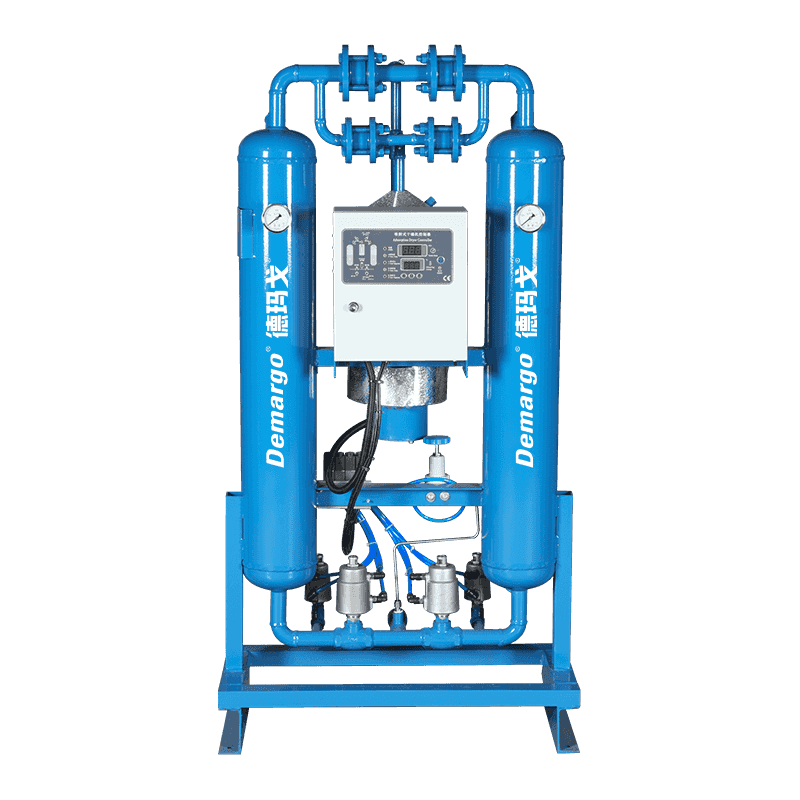
When a low dew point is genuinely required, the practical answer is usually a two-stage arrangement rather than a bigger refrigerated unit: refrigerated drying first, then a desiccant stage that only has to remove the moisture still remaining. A combined low-dew point dryer is built exactly that way, which keeps the regeneration load and the purge loss far below those of a desiccant-only installation.
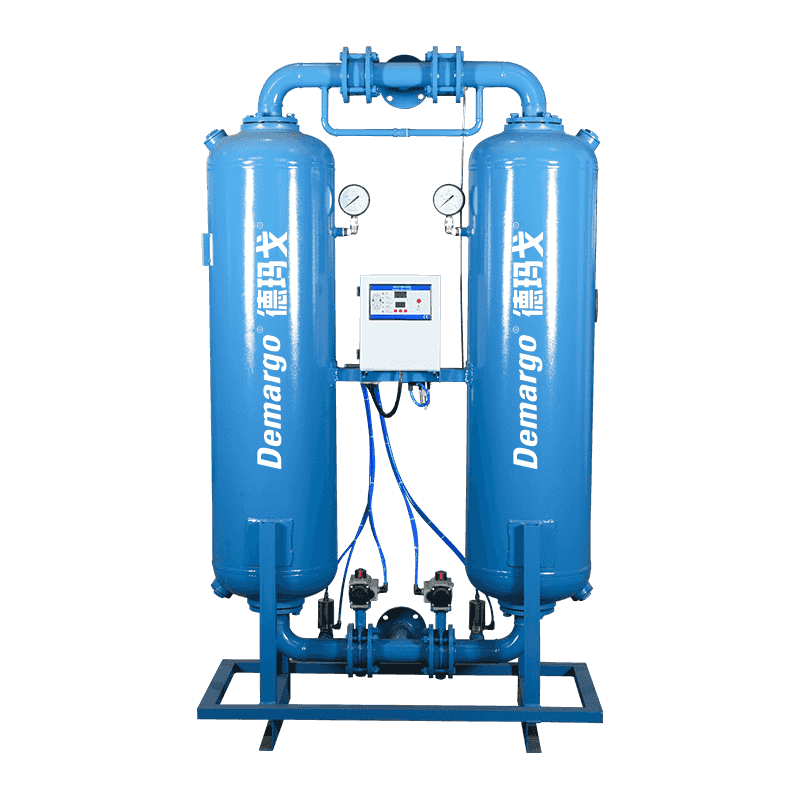
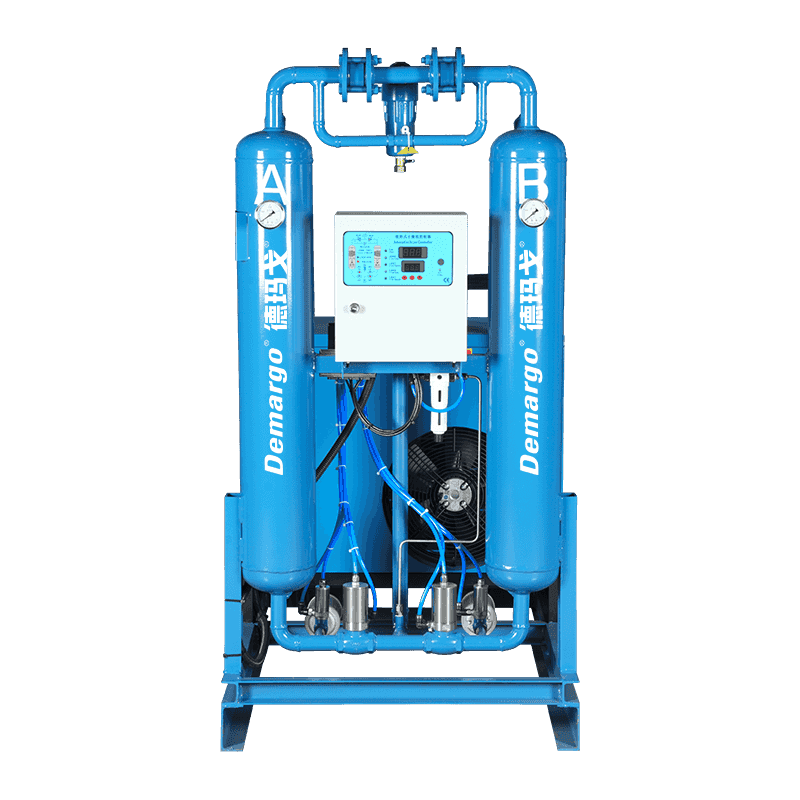 Heatless Combined Refrigerated and Desiccant Compressed Air DryerDual-stage refrigerated precooling plus heatless desiccant adsorption for low pressure dew points, with reduced regeneration load and purge compared with desiccant-only drying.View Product →
Nameplate capacity is measured at one reference point, usually 7 bar, 38 °C inlet air and 25 °C ambient. Most sites do not match it. These corrections decide whether the dryer actually holds dew point in July.
| Variable | Value | Multiplier |
|---|---|---|
| Inlet air temperature | 38 °C | 1.00 |
| Inlet air temperature | 42 °C | 0.86 |
| Inlet air temperature | 45 °C | 0.78 |
| Cooling air / ambient | 25 °C | 1.00 |
| Cooling air / ambient | 32 °C | 0.92 |
| Cooling air / ambient | 38 °C | 0.85 |
| Working pressure | 7 bar | 1.00 |
| Working pressure | 5 bar | 0.85 |
| Working pressure | 4 bar | 0.73 |
A worked example: 13 m³/min at 42 °C inlet and 32 °C ambient on a 7 bar system. Divide 13 by 0.86 and then by 0.92, giving about 16.4 m³/min of required capacity. A 600 cfm unit, roughly 17 m³/min, is the correct selection, while a dryer chosen on 13 m³/min alone would sit near the top of its range and drift above target dew point on the hottest afternoons.
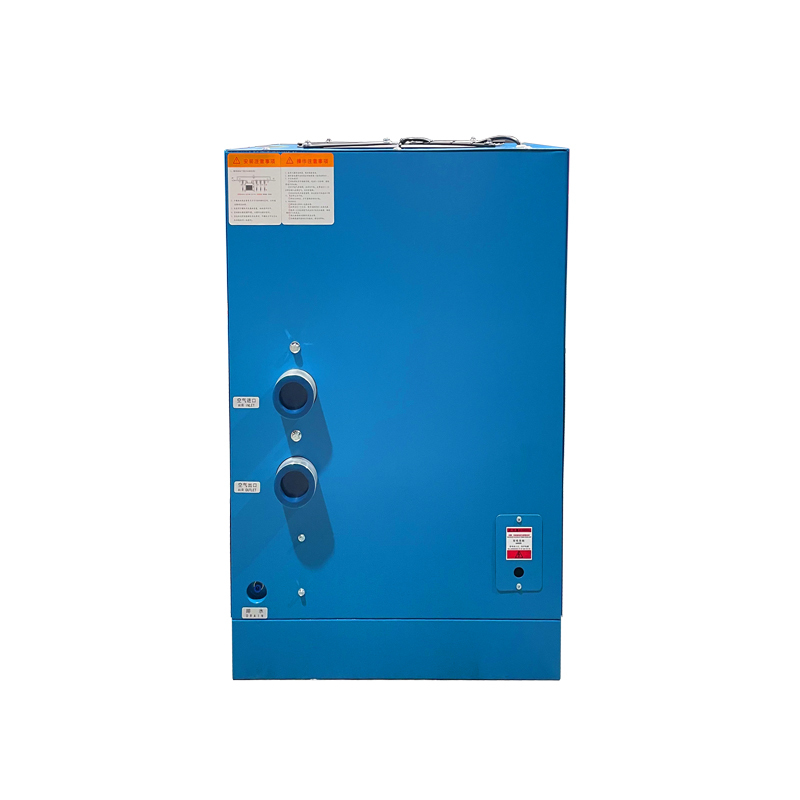 Demargo 600CFM Plate Aluminum Refrigerated Compressed Air DryerInstalled after an air compressor, this 600CFM dryer uses a plate aluminum heat exchanger and integrated filtration for stable pressure dew point.View Product →
| Consideration | Refrigerated dryer | Desiccant dryer |
|---|---|---|
| Pressure dew point | +3 °C to +10 °C | −40 °C to −70 °C |
| Purge air loss | None | 12–15% of flow (heatless) |
| Energy demand | Low | High unless heat regenerated |
| Footprint | Compact, single unit | Two towers plus controls |
| Routine maintenance | Drain, condenser cleaning | Desiccant replacement every 3–5 years |
| Best fit | Plant air above freezing | Outdoor lines, instrument and process air |
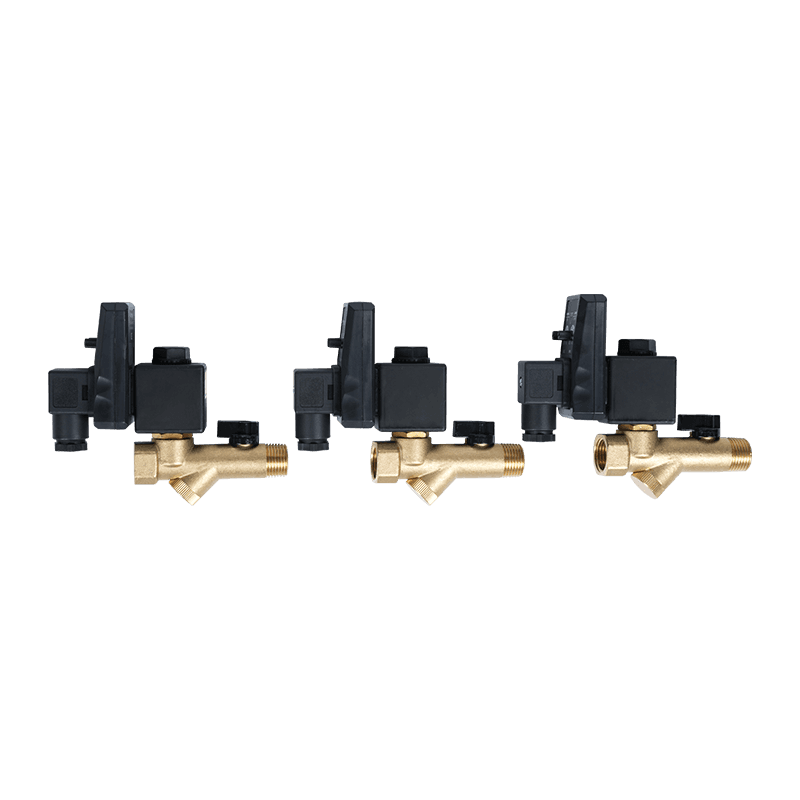
The drain deserves separate attention. Water that the dryer has already condensed must leave the system reliably, and a float-operated automatic drain that discharges on level avoids both failure modes: a stuck-closed valve that floods moisture downstream, and a timer valve that opens on schedule and wastes compressed air when there is nothing to discharge.
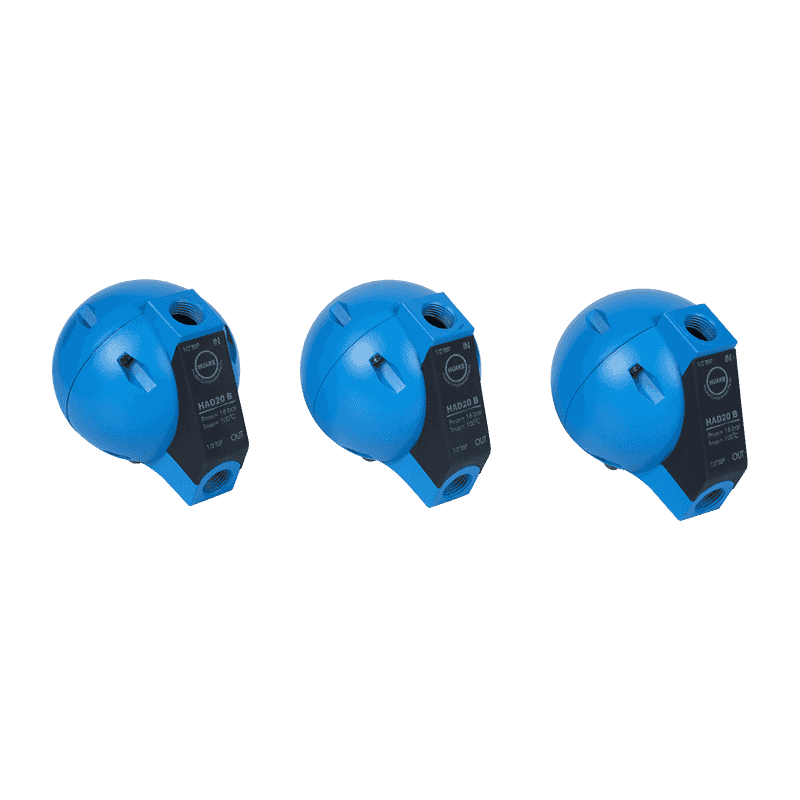 HAD20 Float Automatic Drainer for Compressed Air SystemsFloat-operated drain discharges condensate only when needed, helping avoid stuck-closed flooding and timer-valve compressed air waste.View Product →
Capital cost alone rarely separates the two technologies by much once installation is included. Energy does, because purge is a permanent tax on the compressor.
Where the required dew point is only +3 °C, that gap is pure waste. Where the process truly needs −40 °C, the purge is the price of the dew point and the correct move is to minimise it with compression-heat or blower-heat regeneration rather than to remove the desiccant stage.
Use the real aftercooler outlet temperature, not the room temperature. For an air-cooled compressor that is often 40–45 °C, which costs roughly 15–25% of nameplate capacity once corrected. Water-cooled aftercoolers normally give a lower, more stable inlet.
Yes. The aftercooler condenses a large share of the water and the receiver gives it somewhere to settle, but the air leaving the tank is still saturated at tank temperature. Any further cooling downstream produces more liquid water.
Only with a low-ambient option or a heated enclosure. Below about +2 °C the condensate path is at risk of freezing, and standard air-cooled units are not rated for it. Outdoor piping downstream of the dryer also needs freeze protection.
Check the drain function weekly during the first month, then monthly, and inspect the pre-filter element on its pressure drop rather than on a calendar. Most reported "dryer failure" cases turn out to be a blocked drain or a saturated filter element.
Put the three variables in order before you open a catalogue: the pressure dew point the process actually needs, the lowest temperature any part of the system will see, and the real corrected flow at your worst-case summer conditions. When the dew point requirement is modest and everything stays above freezing, a refrigerated air dryer is the simplest, cheapest and most reliable way to protect the system, and a smaller unit correctly sized beats a larger one selected from nameplate figures alone.
If you are unsure which combination fits your site, the specification documents and technical literature in the download area cover dew point, flow and correction data for each dryer family, and they are the fastest way to match a model to measured site conditions.

ADD: No. 9, Lane 38, Caoli Road, Fengjing Town, Jinshan District, Shanghai, China
Tel: 0086-17321147609
Email: [email protected]
Copyright © Demargo (Shanghai) Energy Saving Technology Co., Ltd. Rights Reserved. Privacy Custom Gas Purifiers Factory