INQUIRE NOW
Content
A 600 CFM refrigerated air dryer that looks correctly matched to a 75 hp compressor can still leave water in your lines by August. The nameplate rating is tied to one inlet temperature, one ambient temperature and one working pressure, and moving any of those three values reduces real drying capacity.
The short answer: choose a refrigerated air dryer by corrected flow and required pressure dew point, not by the CFM printed on the cabinet. Heat exchanger material, drain type, refrigerant and pressure drop all follow from those two decisions.
What follows is the order in which those decisions affect the purchase, the corrections most often skipped, and the spec sheet details worth arguing about before you sign a PO.
Pressure dew point is the temperature at which water vapor in compressed air begins to condense at working pressure. It is the only dew point value that matters for equipment selection; atmospheric dew point figures quoted in some catalogs sit several degrees lower and cannot be compared directly.
A refrigerated dryer chills the air to roughly 2 to 10 °C, so it cannot deliver a dew point below about +3 °C without risking ice in the evaporator. If the process specification calls for -20 °C or lower, refrigerated drying is the wrong technology and oversizing will not fix it.
| Water class | Pressure dew point | Typical application |
|---|---|---|
| Class 4 | +3 °C | General plant air, painting, pneumatic tools |
| Class 3 | -20 °C | Outdoor pipe runs, instrument air |
| Class 2 | -40 °C | Critical instrumentation, electronics, pharmaceutical |
| Class 1 | -70 °C | Special processes, not achievable with a refrigerated dryer |
For most plants, Class 4 is the working target and a refrigerated dryer is the cheapest way to reach it. If you want to see how a realistic dew point target is set and defended, read how ISO dew point targets translate into practice before the specification is frozen.
Published capacities are normally stated at 38 °C inlet air, 38 °C ambient and 7 bar working pressure. Your compressor room rarely sits at all three. Use the manufacturer's correction table, or expect the following losses:
Worked example: a dryer rated 600 CFM at reference conditions, installed with 43 °C inlet air, 45 °C ambient and 6 bar line pressure, may handle only about 380 to 420 CFM in practice. If the compressor delivers 500 CFM at full load, that dryer is undersized even though the catalog suggests otherwise.
Rule of thumb: after corrections, keep 20 to 30 percent headroom above peak demand. A dryer running at 95 percent of corrected capacity has no reserve for a hot week or a fouled condenser.
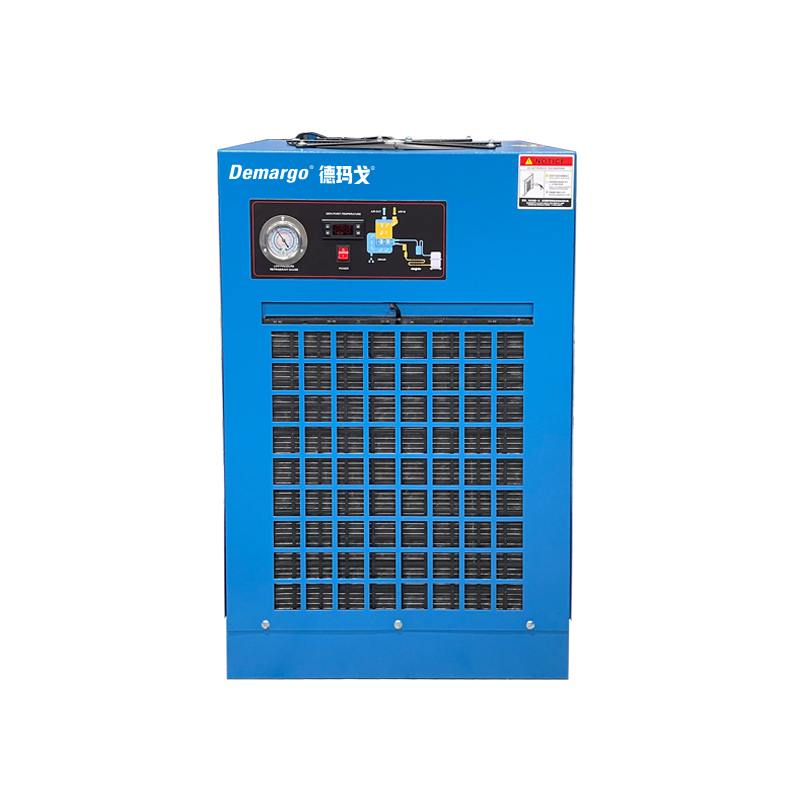
 Demargo Aluminum Plate Fin Refrigerated Compressed Air DryerRefrigerated compressed air dryer with aluminum plate-fin exchanger for efficient drying where a +3 to +10 C pressure dew point meets general factory air needs.View Product →
Refrigerated dryers win on running cost, pressure drop and simplicity wherever a +3 to +10 °C pressure dew point is acceptable. They are the standard choice for general factory air, packaging, machine tools, blasting and most pneumatic automation.
Choose a different technology when any of the following applies:
In those cases a heatless or micro-heat regeneration twin-tower adsorption dryer, typically delivering around -40 °C pressure dew point, is the appropriate upstream choice.
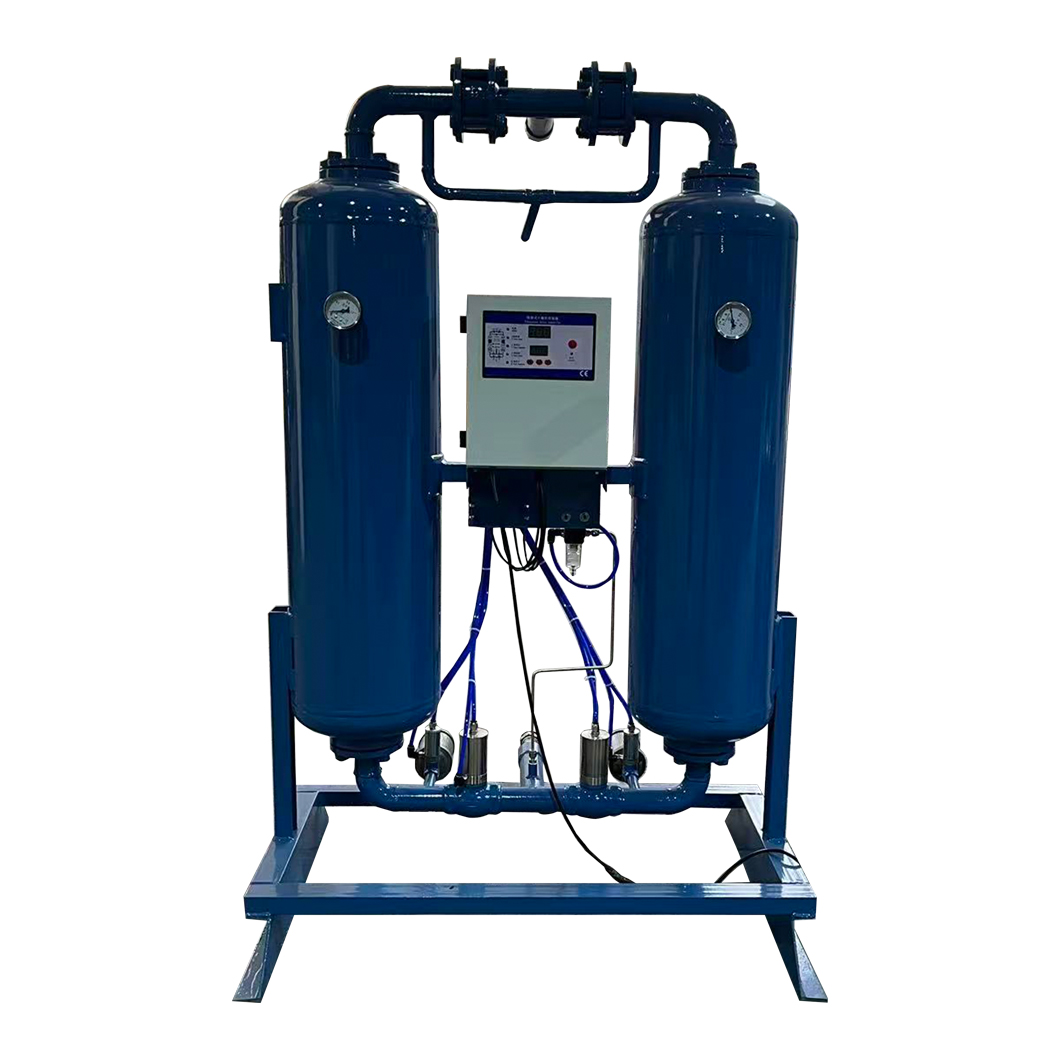
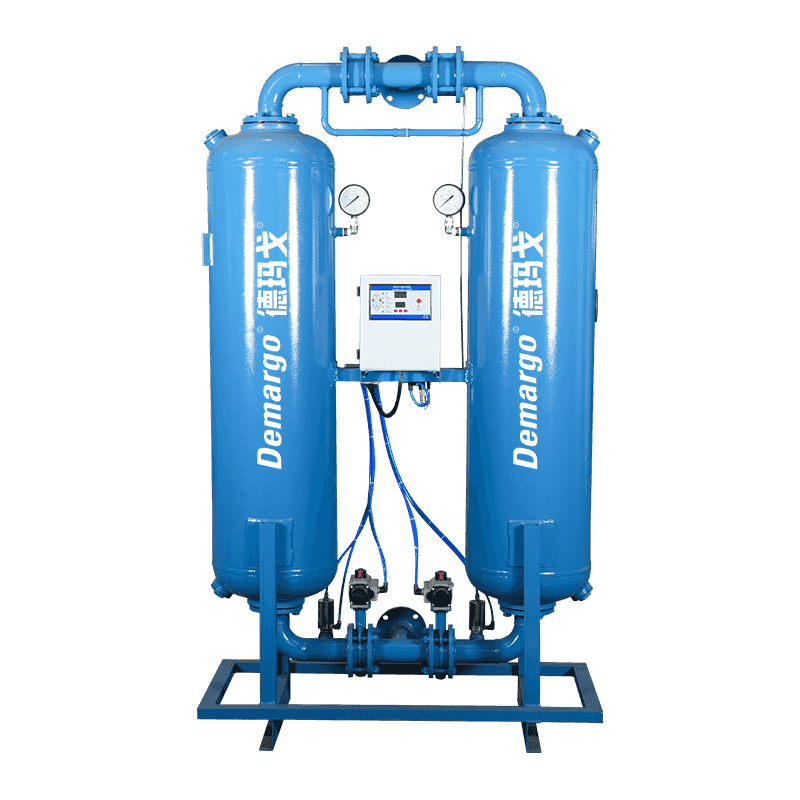 Heatless Regeneration Twin-Tower Adsorption Compressed Air DryerCompact PSA adsorption air dryer with twin desiccant towers and no external heater, suited where -20 to -70 C pressure dew point is needed.View Product →
Aluminum plate-fin exchangers are compact and economical, but less tolerant of aggressive condensate and generally not repairable. Shell-and-tube stainless steel designs cost and weigh more, and handle corrosive air, higher pressures and washdown areas better. In a coastal or chemical plant this is not a cosmetic upgrade.
Some datasheets quote an approach temperature instead of a guaranteed pressure dew point. An approach figure is not a performance guarantee. Ask for the pressure dew point at stated inlet conditions, in writing, with the correction table attached.
A dryer alone does not deliver clean, dry air to the point of use. Condensate carryover, oil aerosol and pipe scale still reach the tool or the process, and a dryer starved of upstream filtration fouls its exchanger faster.
A practical train for general plant air is a bulk liquid separator before the dryer, the refrigerated dryer itself, then a coalescing filter for oil aerosol and a fine particulate filter downstream. Select filter grades by the particle, water and oil classes the process actually requires rather than by habit.
Condensate also has to go somewhere legal. Level-controlled drains plus a condensate treatment unit separate the oil fraction so the water can be discharged within local limits.
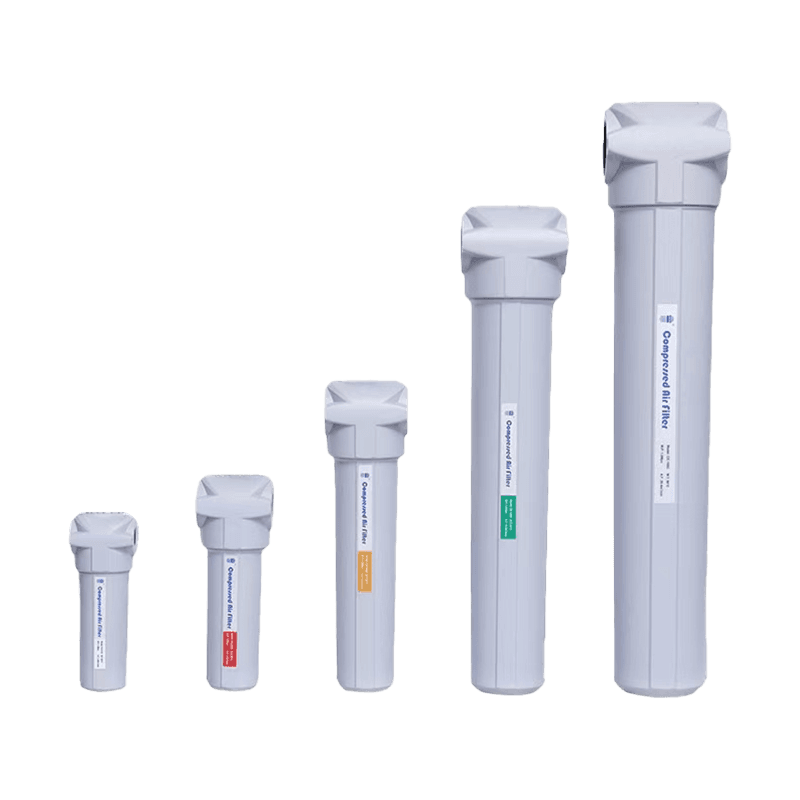 E Series Precision Compressed Air Impurity Removal FilterHigh-precision compressed air filter for removing oil, water, and dust using imported filter media, with anti-corrosion construction for industrial and laboratory filtration.View Product →
Purchase price is often the smallest part of a ten-year cost when a unit is sized or controlled badly. Three items dominate:
Suppliers quote accurately when five numbers are on the table: flow in CFM or m³/min, working pressure in bar, inlet air temperature, ambient temperature and required pressure dew point. Add these items to the request:
Between about +2 °C and +10 °C at the outlet under rated conditions. The limit is the evaporator temperature: below roughly 0 °C, condensate freezes and blocks the exchanger. For -20 °C or lower you need an adsorption or desiccant dryer.
Watch for water at low points in the piping, trips during summer afternoons and a dew point that climbs as ambient temperature rises. Measure the actual inlet temperature before blaming the dryer; it is usually the missing correction, not a faulty machine.
If the plant rarely runs at full load, usually yes. Cycling units store refrigeration capacity in a thermal mass and shut the compressor down as load falls, which cuts drying energy significantly. If the dryer runs flat out continuously, the savings are much smaller.
Air-cooled units depend on ambient temperature and most are rated around 38 to 45 °C. Outdoor installation also exposes controls, drains and condensate lines to freezing. If it cannot be avoided, keep condenser airflow clear and protect the drain line.
The purchase decision comes down to three numbers: required pressure dew point, corrected flow at your worst-case inlet and ambient conditions, and acceptable pressure drop. Get those right and brand comparison becomes straightforward; get them wrong and even a well-built dryer will disappoint in the first humid month.
Write the dew point, the flow and the site conditions into your inquiry, ask for the correction table in writing, and treat the CFM on the nameplate as a starting point rather than a specification.

ADD: No. 9, Lane 38, Caoli Road, Fengjing Town, Jinshan District, Shanghai, China
Tel: 0086-17321147609
Email: [email protected]
Copyright © Demargo (Shanghai) Energy Saving Technology Co., Ltd. Rights Reserved. Privacy Custom Gas Purifiers Factory